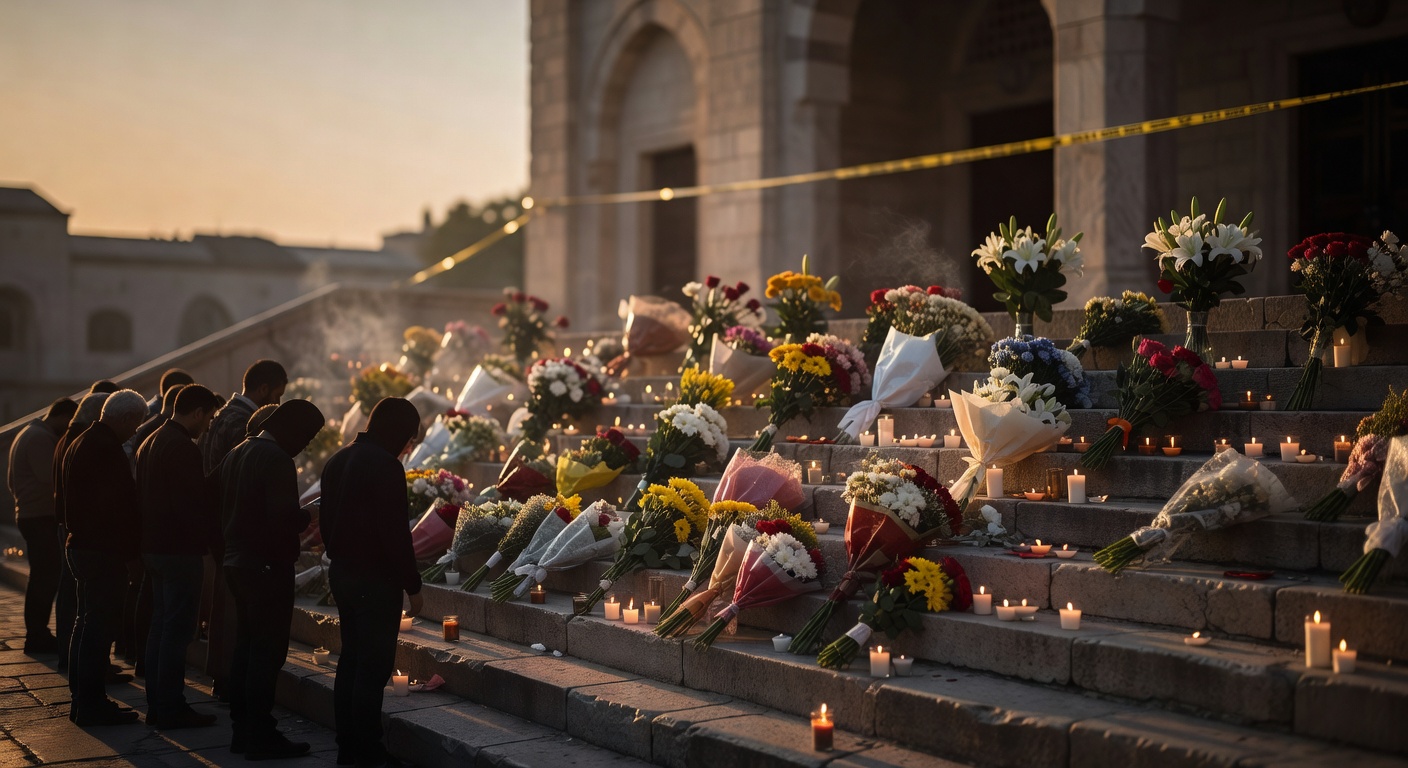
On 18 May 2026, a shooting struck the Islamic Center of San Diego, killing five people: three civilian victims and two suspects, teenagers aged 17 and 19, found dead in a vehicle from apparently self-inflicted wounds. Among the victims was a security guard posted at the center's entrance, whose role the police chief said likely limited the toll. All children and staff at the Al Rashid school, part of the complex, were found safe.
Within hours, U.S. authorities opened a hate-crime investigation with assistance from the FBI. The mosque's imam and the U.S. president each responded publicly to the attack the same day.
The event unfolds against a domestic backdrop marked by a rise in acts of violence targeting places of worship, persistent community tensions, and a recurring debate over gun control in the United States. International coverage reveals diverging interpretive frames across regions, reflecting less a disagreement over the facts than differing readings of the attack's root causes and symbolic significance.
Several actors immediately described the attack as Islamophobic, stressing the symbolism of a place of worship and an Islamic school as well as the vulnerability of Muslim communities in the West, while others kept to the official hate-crime designation without extrapolating about the ideological motive. Some placed the episode within a broader analysis of American gun violence and internal political tensions, while others stayed focused on the day's events and on the operational response of law enforcement.
The suspects' young age was noted unevenly, at times framed as revealing social tensions, more often mentioned without analysis. The precise motive remains, at this stage, undetermined, and several characterizations put forward by some actors precede the conclusions of the investigation.