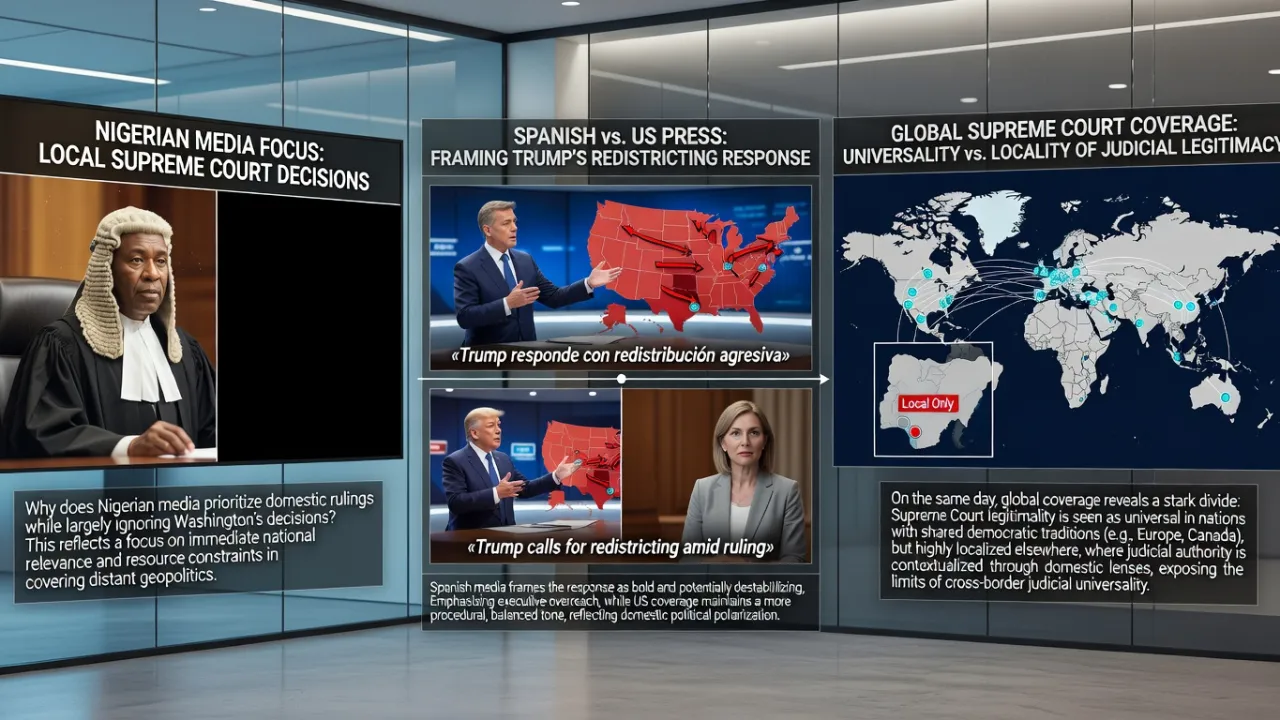
The United States Supreme Court, led by Chief Justice Roberts, issued a ruling that significantly weakens the Voting Rights Act of 1965, the landmark federal law designed to protect minority access to the ballot. In its wake, the Trump administration announced a wave of electoral redistricting in several Republican-led states. Louisiana became the first state to suspend its House of Representatives primaries following the decision.
The ruling fits into a longer trajectory that began with the 2013 Shelby County v. Holder decision, through which the Court has progressively reduced federal protections against barriers to voting for minority voters. Several analysts argue that the new decision could give Republicans a structural advantage in the midterm elections by making it easier to redraw electoral maps ahead of the vote.
Interpretations of the event diverge sharply. Some actors see it as a rollback of long-secured civil rights, while others emphasize the strategic use the executive branch is making of it to strengthen its electoral position. Still others place the decision within a broader reflection on how the American electoral system functions.
Several areas of uncertainty remain. The precise details of the decision are still to be documented, as is its exact bearing on the upcoming Senate elections and on the concrete implementation of redistricting in states such as Tennessee and Louisiana.