
DOMINANT ANGLE
Copenhagen recalls the portrait of a leaderless student movement that overthrew the strongman of Belgrade, a victory born of the catastrophe of Novi Sad and a corruption accusation.
Dominant angle identified — does not reflect unanimity of this country’s media
KEY POINTS
- 01
Vučić stated, according to Reuters: "It is clear that we have lost this election", with 135 to 140 seats for the student movement against 105 for the SNS.
- 02
The movement emerged from the collapse of the Novi Sad train station canopy in November 2024, which killed 16 people, attributed by protesters to corruption.
- 03
Turnout is approaching 70%, the highest since the breakup of Yugoslavia, according to Reuters as cited by Politiken.
ANALYSIS
Copenhagen, October 26, 2026. Berlingske and Politiken, which pick up the Reuters dispatch, report that Serbian leader Aleksandar Vučić has acknowledged his defeat in Sunday's legislative elections to a protest movement led by students. Politiken describes him as the "strongman" of Serbia. The two dailies quote his words: "It is clear that we have lost this election, the student movement has won, it gets between 135 and 140 seats, and we have 105." He specifies that no other force will enter Parliament, and that the final result is not yet known.
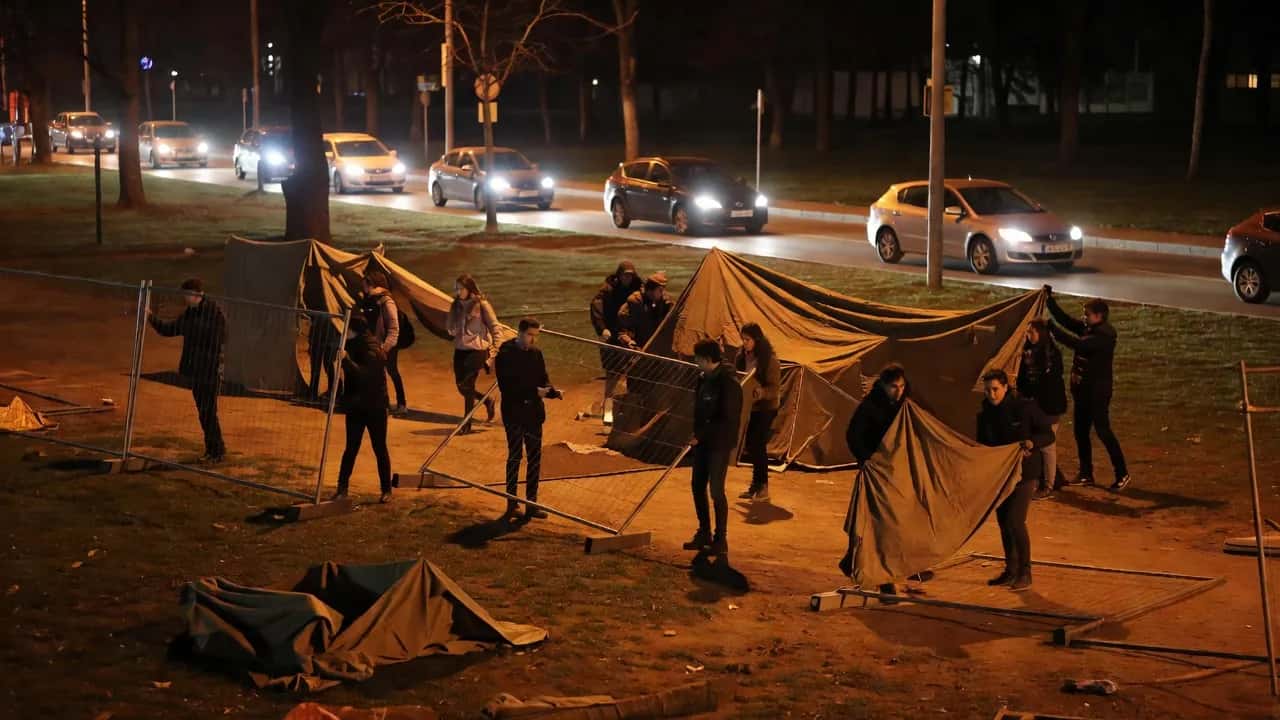
The Danish press looks back at the origins of the vote. Vučić had resigned from the presidency and dissolved Parliament before calling these elections. These follow nearly two years of student-led protests, triggered by the collapse of a concrete awning at Novi Sad station in November 2024, which killed 16 people. Protesters see this as a consequence of corruption: the station had just been renovated, and some accuse the government of not spending the announced sums on the project.
Politiken emphasizes the paradox of a movement "that has no leader" but has gained broad popular support and was seen as the greatest threat to Vučić since he took office as Prime Minister in 2014, then as President in 2017. An article published before the vote spoke of a quasi-"referendum for or against one man," and recalled that Vučić had left the presidency on September 27 to run for the post of head of government.
The Danish account gives a voice to the victorious camp. Radomir Sajčić, a professor at the University of Belgrade and spokesperson for the movement, says: "Tonight, we celebrate the victory. Tomorrow, we build the future." Reuters, cited by Politiken, describes cars honking in the streets of Belgrade and residents shouting "victory" and "he's finished." Turnout is approaching 70%, which would be the highest since the breakup of Yugoslavia, according to Reuters.
The articles leave one question open: it is not yet known who, within the student movement, could lead Serbia. The coverage remains factual and focused on the result and its social roots; it barely touches on the consequences for Belgrade's foreign policy.