What the comparison reveals
Common ground and differences in coverage across the media analysed.
What the media report in common
Vučić announced his coming resignation at a rally of supporters in Belgrade, declaring he would remain president for 'a few more weeks' without specifying an exact date.
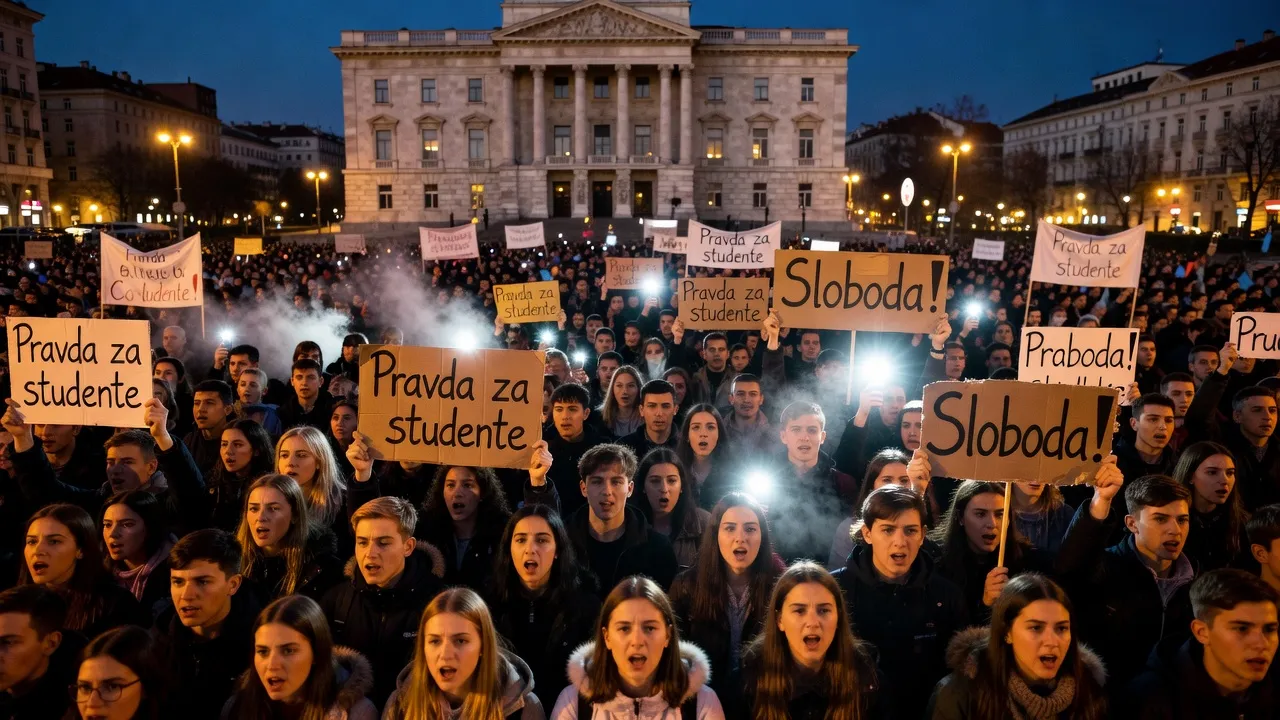
The November 2024 disaster in Novi Sad — the collapse of a train station awning that killed 16 people — is identified as the trigger for the protest movement that has lasted eighteen months.
Anti-corruption student and citizen demonstrations directly pressured Vučić into this early announcement, with his presidential mandate normally set to end in mid-2027.
Where media coverage diverges
Nature of Vučić's withdrawal
Germany and Ukraine emphasize the tactical dimension of the withdrawal — Vučić would be aiming for the Prime Minister position — while Romania and Greece favor a factual framing centered on popular pressure as the primary cause.
How each country reads it
Preview: 3 of 6 media perspectives. Syntheses of the media analysed — not direct quotations.
Bucharest observes the announced fall of Vučić with careful attention, discerning both a signal of regional democratic change and a source of uncertainty for the Western Balkans at its border.
3 sources ·
Berlin reads Vučić's resignation announcement as a tactical repositioning rather than genuine capitulation to protesters, noting that the Serbian president is not leaving the political stage but seeking to reinvent himself as Prime Minister.
3 sources ·
Warsaw interprets Vučić's announced resignation as a direct outcome of an unprecedented student-led mobilization movement, underscoring the anti-corruption dimension of the protests and the political uncertainty opening for a European Union candidate nation.
2 sources ·