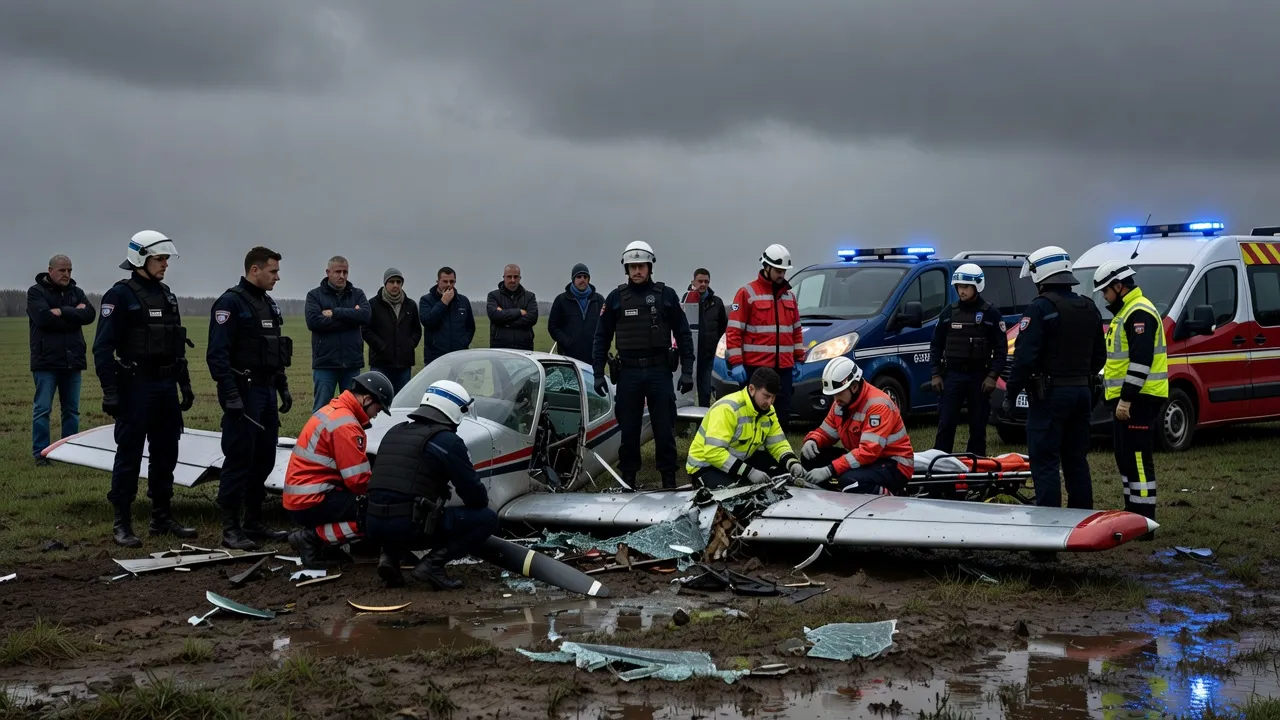
On 28 June 2026, shortly after taking off from the Nancy-Essey aerodrome, a parachuting aircraft crashed at Tomblaine, in northeastern France, about 300 metres from the runway. The accident killed eleven people — the pilot, five instructors and five beginner skydiving students — with no casualties on the ground. The aircraft, a single-engine Pilatus registered in Germany, was operated by a local parachuting school.
At the time of the first reports, the causes of the crash remained undetermined. A dual investigation, both technical and judicial, was opened by the French air accident bureau (BEA) and the Nancy prosecutor's office. The transport minister described the event as the most serious parachuting-related accident in France in roughly thirty years. Relatives present at the aerodrome witnessed the scene.
The tragedy is first and foremost a national disaster, with no direct geopolitical dimension. It nonetheless occurs in a particular context: France was going through an exceptional heatwave, and the aircraft's German registration raises latent questions about regulatory coordination between aviation authorities within European airspace overseen by EASA.
With no established cause, several readings coexist. Some actors emphasise the cross-border regulatory responsibility tied to the foreign registration, while others see it merely as a factual detail. Likewise, the possible role of the heatwave as a contextual factor is put forward by some and dismissed by others, who establish no link between weather conditions and the accident. The open leads — aircraft maintenance, the oversight of sport parachuting, extreme conditions — remain for the investigation to settle.