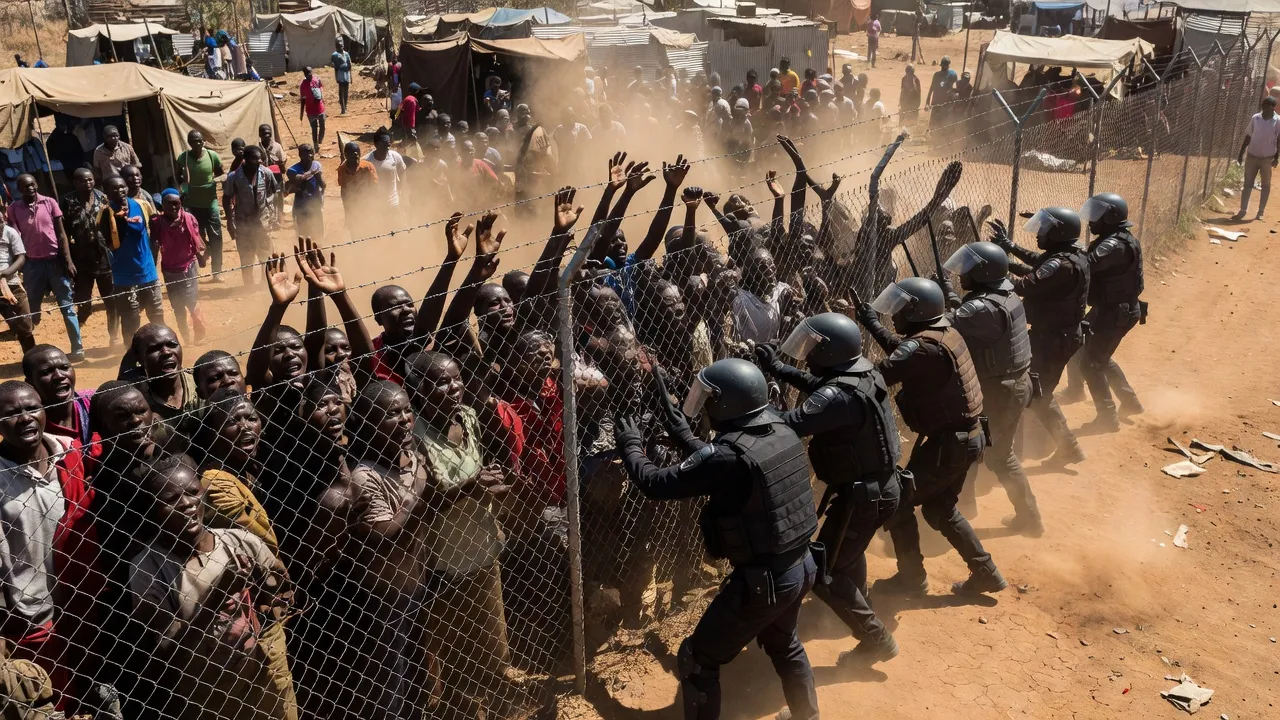
In Durban, thousands of migrants, most of them Malawian nationals, gathered at a community site (Sherwood Community Hall) after being driven from their homes by anti-migrant groups. There, clashes broke out between these displaced people and law enforcement. The movement behind this mass displacement crystallised around a deadline set for 30 June 2026 by the March and March collective and the ActionSA party, demanding that foreigners without legal status leave.
The events coincide with the 50th anniversary of the Soweto uprising of 16 June 1976. On that occasion, President Cyril Ramaphosa publicly condemned the scapegoating of foreigners, urging South Africans not to turn against their African neighbours.
The crisis unfolds against a backdrop of very high structural unemployment, with a youth rate exceeding 60%, and instability in several countries of origin in the region. Organised groups channel economic frustration toward migrant targets, bypassing the authority of the state. The migratory pressure is regional: Nigeria is conducting its own deportation operations at the same time, while in Europe the Parliament has approved offshore deportation centres.
Readings of the affair diverge. Some actors attribute the crisis chiefly to governance failures, corruption and unemployment, contesting the migration thesis; others present xenophobia as a reaction to real inequalities. Also disputed is the quality of the state's response, with some documenting deportations of displaced people carried out early in the morning and without logistical support, while others mainly relay official statements. That divergence feeds into a broader debate over the very scope of the episode, read by some as a local crisis specific to Durban and by others as a symptom of a global migratory trend.