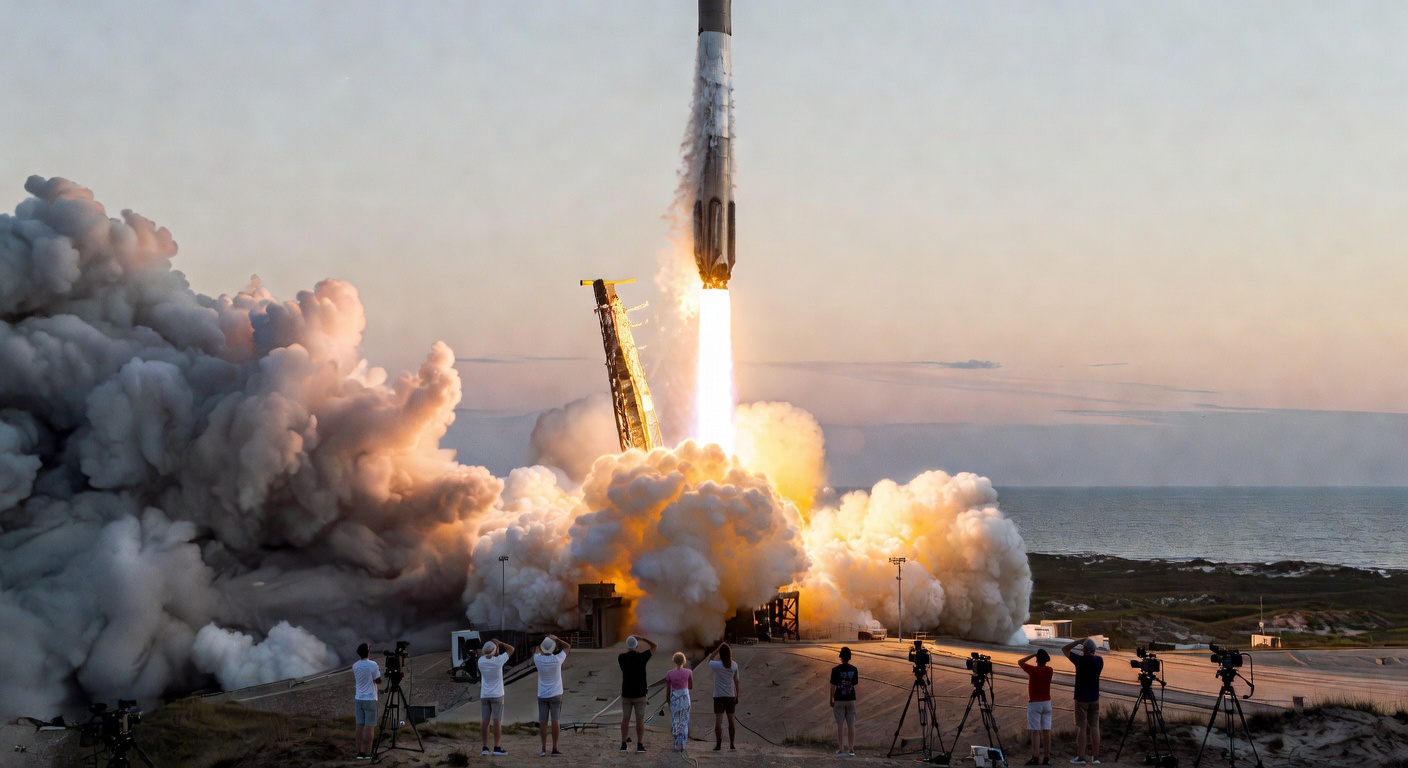
Starship V3, standing 124 metres tall and now the largest rocket ever built, completed its inaugural test flight from Texas. It was the twelfth test flight of the programme and the first of this new version. The vehicle met most of its objectives: deploying simulated Starlink satellites, surviving atmospheric re-entry and splashing down in the Indian Ocean.
The flight also saw failures. An upper-stage engine cut out during flight, and the Super Heavy booster did not perform its controlled return manoeuvre, falling in an uncontrolled manner into the Gulf of Mexico. The test came two days after SpaceX announced an initial public offering, presented as potentially the largest in Wall Street history.
The stakes go beyond technical performance. Starship is the centrepiece of NASA's Artemis lunar programme, which aims to return astronauts to the Moon during the Artemis IV mission. The United States has chosen to entrust the heavy-lift capabilities needed for that return to private actors, a model that combines massive public funding with private market valuation.
This arrangement draws diverging readings. Some actors see a technological acceleration and a credible milestone, while others emphasise the failures and the opening of an FAA review concerning debris that fell into a declared danger zone. Also under debate is the concentration of the lunar contract in a single company, which some question and others treat as a settled fact. The simultaneous IPO announcement further blurs the line between scientific event and financial operation.