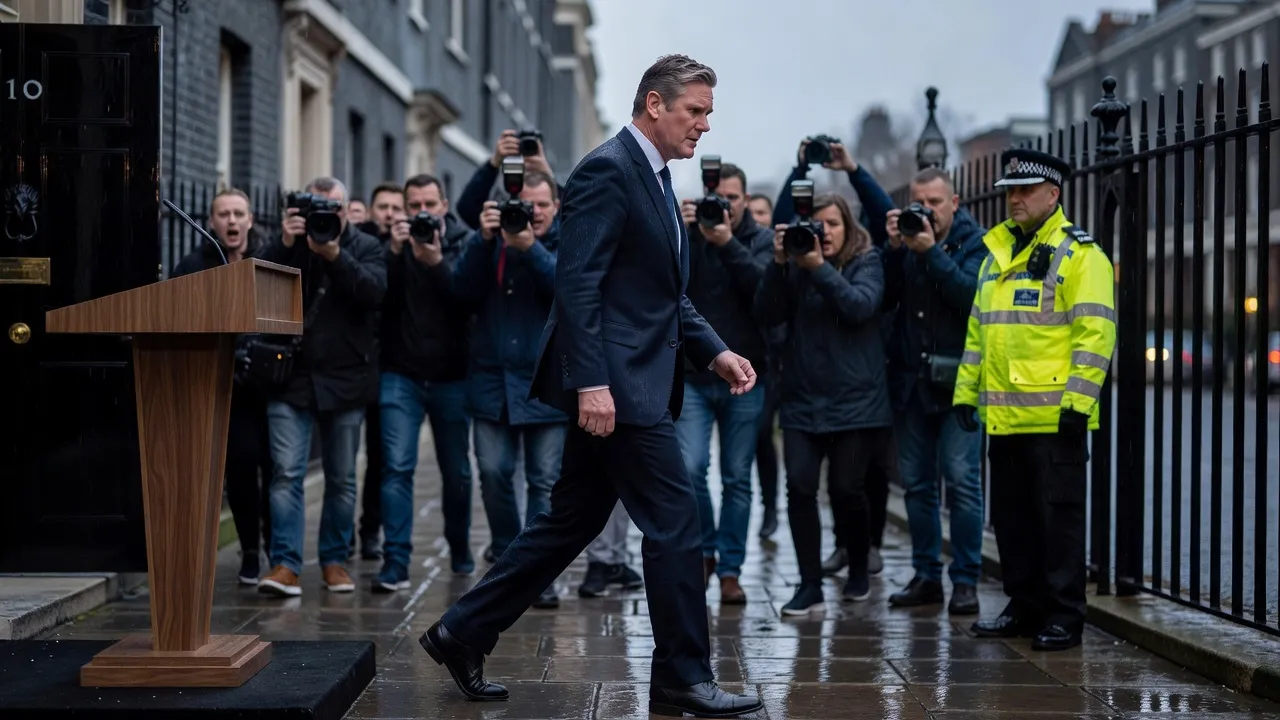
On 23 June 2026, British Prime Minister Keir Starmer announced his resignation from 10 Downing Street, after less than two years in office. The immediate trigger was Andy Burnham's win in the Makerfield by-election, secured with 54 to 55 % of the vote: the result crystallised a revolt already under way within the Labour Party. Burnham, the former mayor of Greater Manchester, stands out as the clear frontrunner to succeed him, backed by around two hundred MPs.
The fall comes against a strained economic backdrop, marked by a persistent cost-of-living crisis and a heavy Labour defeat in the May 2026 local elections. With this departure, the United Kingdom will have had six to seven heads of government in a decade, an instability described as unprecedented in two centuries. The transition also arrives at a sensitive moment for diplomacy: a summit between the European Union and the United Kingdom, scheduled for 22 July to finalise the post-Brexit realignment, has been postponed with no new date.
Several readings clash over his record. Some actors highlight one of the strongest growth rates in the G7 in the first quarter and steady support for Ukraine, while others point to austerity, internal scandals and stagnating living standards. The deeper causes remain disputed: for some they trace back to the 2016 Brexit; for others they stem from a broader difficulty in governing over time. Burnham's future positions on defence, NATO and European re-engagement remain uncertain.