Common ground and differences in coverage across the media analysed.
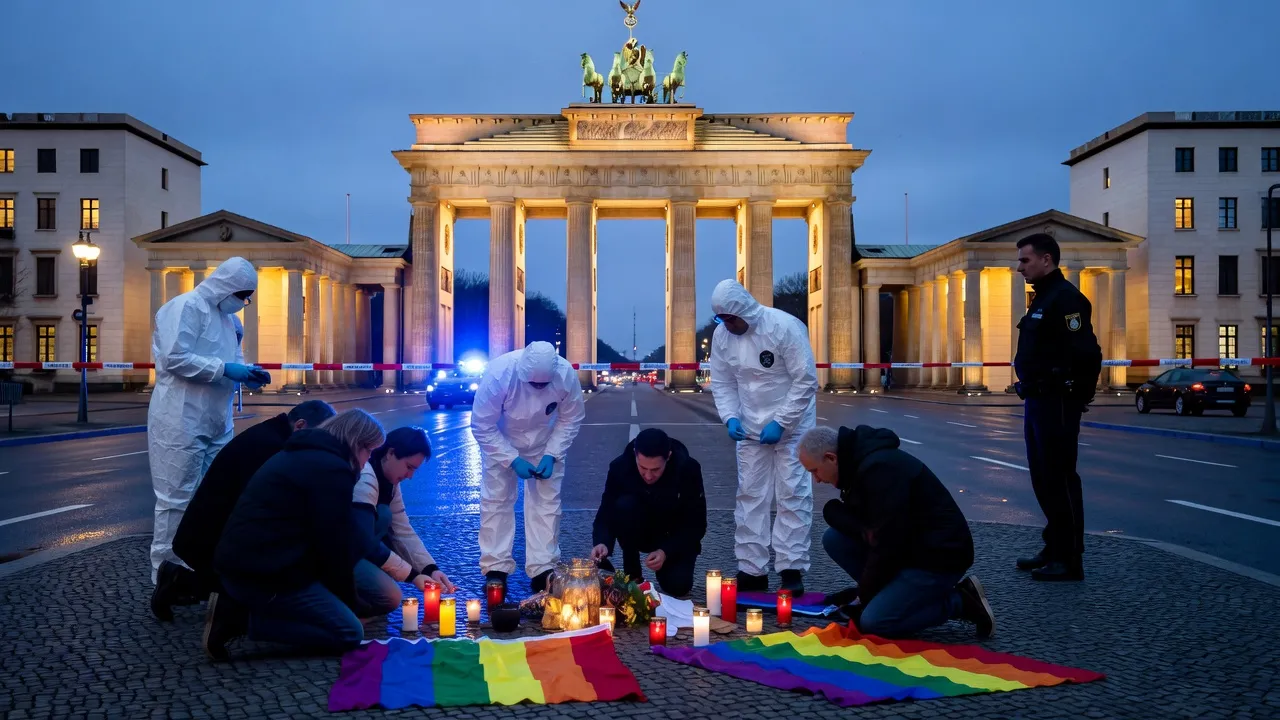
The suspect, Abdul B. (Ballout), 21, a German citizen of Lebanese descent born in Berlin, was shot dead on Sunday around 6 p.m. by a special police unit (SEK) in an allotment garden complex in Spandau after charging armed officers with a blade.
The suspect had been sentenced in May 2026 for preparing a serious act of violence linked to an attempted crossing to join the Islamic State in Syria via Lebanon, and was enrolled in a judicial deradicalization program at the time of the attack.
German authorities, notably Interior Minister Alexander Dobrindt and Chancellor Friedrich Merz, characterized the attack as Islamic terrorism and reported the toll at approximately 29 injured, plus one woman killed.
Most national coverage reports without question the official account of the police operation that killed the suspect, while the British press adopts a more critical tone by questioning gaps in the deradicalization monitoring and drawing parallels to its own cases of convicted terrorists who were released before reoffending.
Coverage aligned with this reading
Coverage that diverges
Italian press reports the arrest of a second suspect of Iranian nationality whose connection to the vehicle used remains to be established, while most other national coverage presents the death of the main suspect as case closure, without mentioning possible accomplices.
Coverage aligned with this reading
Coverage that diverges
Nearly all international official reactions limit themselves to consensual messages of solidarity with Germany, whereas in Italy the political class divides between calls for European unity led by Giorgia Meloni and Antonio Tajani and Matteo Salvini's more aggressive rhetoric denouncing 'Islamic fanaticism'.
Coverage aligned with this reading
Coverage that diverges
This grouping describes the publications analysed, not the position of these countries’ populations or of their governments.
What the coverage of each country leaves aside, while others put it forward.
Australia
Canada
Germany
France
Preview: 3 of 11 media perspectives. Syntheses of the media analysed — not direct quotations. Method & limitations
Berlin closes its manhunt with the suspect's death, but Germany now questions failures in its deradicalization monitoring and scrutinizes the legitimacy of the SEK's lethal force.
4 sources · View sources
Paris reads the swift close of the Berlin manhunt, balancing security reassurance against ongoing scrutiny of the assailant's documented radicalization.
4 sources · View sources
London weighs troubling parallels between Abdul Ballout's death and its own track record of convicted radicals released from prison who later carried out attacks.
3 sources · View sources
DOMINANT ANGLE
Berlin closes its manhunt with the suspect's death, but Germany now questions failures in its deradicalization monitoring and scrutinizes the legitimacy of the SEK's lethal force.
ANALYSIS
Berlin, July 27, 2026.
DOMINANT ANGLE
Paris reads the swift close of the Berlin manhunt, balancing security reassurance against ongoing scrutiny of the assailant's documented radicalization.
ANALYSIS
Paris, July 27, 2026.
DOMINANT ANGLE
London weighs troubling parallels between Abdul Ballout's death and its own track record of convicted radicals released from prison who later carried out attacks.
ANALYSIS
London, July 27, 2026.
DOMINANT ANGLE
Washington views the swift death of the Berlin Pride attack suspect as confirmation of an Islamist threat openly acknowledged by Berlin, while drawing parallels to vehicle-ramming attacks familiar on American soil.
ANALYSIS
Washington, July 27, 2026.
DOMINANT ANGLE
Australian media examines the rapid police operation by Berlin's special forces while raising questions about the suspect's exact involvement in the attack.
ANALYSIS
Sydney, July 27, 2026.
DOMINANT ANGLE
Canadian media examines the speed of Germany's police response, balancing relief in LGBTQ+ communities against scrutiny of how the suspect became radicalized.
ANALYSIS
Ottawa, July 27, 2026.
DOMINANT ANGLE
Rome presents unified support for Berlin following the suspect's death, yet Italian political rifts emerge between calls for European solidarity and security-centered discourse on Islamism.
ANALYSIS
Rome, July 27, 2026.
DOMINANT ANGLE
Warsaw examines the swiftness of German police response following the death of the suspected Berlin Pride attack perpetrator, while questioning monitoring gaps for an individual previously known to security services.
ANALYSIS
Warsaw, July 27, 2026.
DOMINANT ANGLE
Ankara examines Berlin's handling of the attack, balancing rapid suspect neutralization against lingering questions about gaps in early radicalization monitoring.
ANALYSIS
Ankara, July 27, 2026.
DOMINANT ANGLE
South Africa reads the shooting death of the Berlin Pride suspect as swift closure, yet shadowed by unanswered questions about an attack that devastated the German capital's LGBTQI+ community.
ANALYSIS
Johannesburg, July 27, 2026.
DOMINANT ANGLE
New Delhi tracked the Berlin manhunt after the Pride attack, following police pursuit of the suspected attacker from initial identification through the fatal police response.
ANALYSIS
New Delhi, July 27, 2026.
Explore every perspective on this subject across 11 countries.
Compare viewpoints and see where they diverge.
published on
countries
sources
articles
gap
The suspected perpetrator of the vehicle-ramming attack on Berlin's Pride march, 21-year-old Abdul Ballout, was shot dead on Sunday 26 July 2026 by a police special unit in Spandau after charging officers while armed with a knife. The attack, which took place on Saturday evening near the Tiergarten during Christopher Street Day, killed one woman and left an injury toll revised up to 29 according to Interior Minister Alexander Dobrindt, who described it as an Islamist attack. The suspect, a German citizen of Lebanese origin, had been given a suspended prison sentence in May 2026 for preparing a terrorist act. Police also arrested a second suspect, an Iranian national whose link to the attack remains to be established.
Measured with the previous method (distance between texts), on a different scale.