
Common ground and differences in coverage across the media analysed.
Donald Trump publicly warned Taiwan against any formal declaration of independence following the Trump-Xi summit in Beijing, stating he did not want to 'travel 9,500 miles to wage war'.
Xi Jinping explicitly cautioned Trump that the Taiwan question, if mishandled, could drive the two powers toward direct confrontation.
Taipei reaffirmed that Taiwan is 'a sovereign and independent nation not subordinate to the People's Republic of China', citing the 1979 Taiwan Relations Act as legal guarantee for U.S. arms sales.
Some perspectives interpret Trump's statements as a break from Washington's traditional strategic ambiguity, others view them as a reaffirmation of long-standing status quo.
German and Qatari coverage presents arms sales as a transactional negotiating tool with Beijing, while Taipei and Paris emphasize their legal anchoring in the Taiwan Relations Act.
India reports detection of eight Chinese military vessels around Taiwan in the aftermath of the summit, a fact absent from European and Japanese coverage.
Coverage aligned with this reading
Coverage that diverges
This grouping describes the publications analysed, not the position of these countries’ populations or of their governments.
What the coverage of each country leaves aside, while others put it forward.
France
Qatar
United Kingdom
Preview: 3 of 8 media perspectives. Syntheses of the media analysed — not direct quotations. Method & limitations
Paris reads this sequence as a signal of reconfiguration in American security guarantees toward Taiwan, after Trump, returning from Beijing, cautioned the island against declaring independence under direct pressure from Xi Jinping.
4 sources · View sources
Berlin watches with concern Trump's decision to suspend arms sales to Taiwan as a bargaining chip against Beijing, viewing it as a weakening of Western deterrence posture in the Indo-Pacific.
2 sources · View sources
Tokyo watches with relief as Trump-Xi summit ends without shifting U.S. policy on Taiwan; Washington has held firm against Beijing's pressures, preserving the status quo that regional allies feared might be compromised.
2 sources · View sources
published on
countries
sources
articles
gap
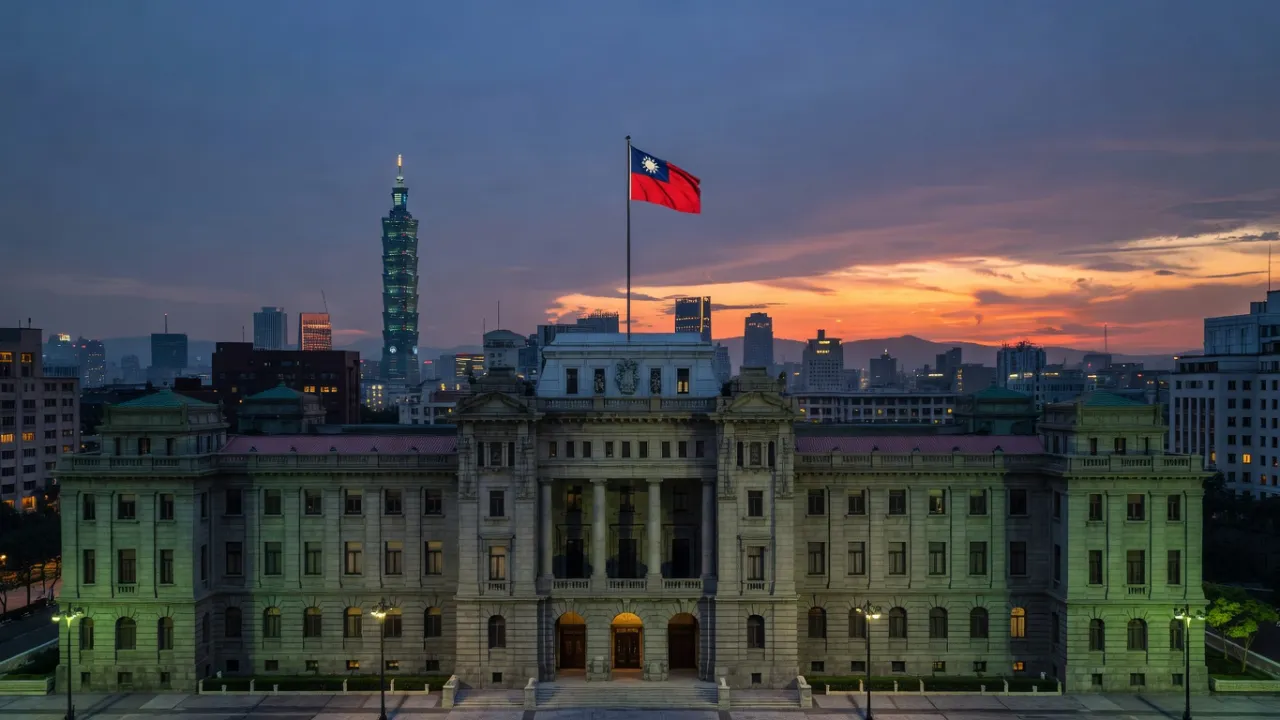
Following the China-U.S. summit in Beijing (15-16 May 2026), Donald Trump publicly warned Taiwan against any formal declaration of independence, stating he did not want to "travel 9,500 miles to go to war." For his part, Xi Jinping cautioned that the Taiwan question, if mishandled, could lead the two powers toward a direct confrontation.
Taipei responded by reaffirming that Taiwan is "a sovereign and independent nation not subordinate to the People's Republic of China," invoking the 1979 Taiwan Relations Act, the legal framework that governs U.S. arms sales to the island. Secretary of State Marco Rubio, meanwhile, stated that U.S. policy toward Taiwan remained "unchanged."
One issue remains unresolved: a U.S. arms package valued at between 11 and 14 billion dollars, on which Trump said he had made "no commitment one way or the other." The fate of these deliveries concentrates much of the uncertainty generated by the summit.
The matter unfolds within a posture of strategic ambiguity that Washington has maintained since 1979: neither formal recognition of Taiwanese sovereignty nor an explicit military commitment, but a continuous supply of defensive equipment. Democratically governed and home to 23 million people never administered by the People's Republic, the island remains at the heart of the competition between Washington and Beijing.
Interpretations diverge over what Trump's remarks mean: some actors read them as a break with that traditional ambiguity, others as a mere reaffirmation of the status quo. The nature of the arms sales — a transactional bargaining lever or a guarantee anchored in law — and the scale of Chinese naval activity around the island after the summit likewise remain disputed.
DOMINANT ANGLE
Paris reads this sequence as a signal of reconfiguration in American security guarantees toward Taiwan, after Trump, returning from Beijing, cautioned the island against declaring independence under direct pressure from Xi Jinping.
ANALYSIS
Paris, May 16, 2026.
DOMINANT ANGLE
Berlin watches with concern Trump's decision to suspend arms sales to Taiwan as a bargaining chip against Beijing, viewing it as a weakening of Western deterrence posture in the Indo-Pacific.
ANALYSIS
Berlin, May 16, 2026.
DOMINANT ANGLE
Tokyo watches with relief as Trump-Xi summit ends without shifting U.S. policy on Taiwan; Washington has held firm against Beijing's pressures, preserving the status quo that regional allies feared might be compromised.
ANALYSIS
Tokyo, May 16, 2026.
DOMINANT ANGLE
Doha reads the Trump-Xi summit closely and interprets Washington's statements as signaling a notable retreat from American support for Taiwan, favoring instead a tacit agreement with Beijing to preserve the status quo.
ANALYSIS
Doha, May 16, 2026.
DOMINANT ANGLE
Taipei seeks to separate Trump's ambiguous statements on independence from institutional US guarantees, emphasizing continuity of US policy while maintaining its de facto sovereignty position amid pressures from the Trump-Xi summit.
ANALYSIS
Taipei, May 17, 2026.
DOMINANT ANGLE
New Delhi observes with close attention the apparent retreat of Washington on Taiwan, viewing it as a strong signal about the recomposition of power balances in Asia and the limits of American security guarantees in the region.
ANALYSIS
New Delhi, May 18, 2026.
DOMINANT ANGLE
Kyiv closely monitors the American policy shift on Taiwan, reading it as a signal of a strategic partner reassessing security commitments under pressure from a direct adversary—a pattern Ukraine knows intimately.
ANALYSIS
Kyiv, May 16, 2026.
DOMINANT ANGLE
London watches intently as American resolve weakens over Taiwan: Trump refuses any war 9,500 miles away, leaving the island facing growing strategic ambiguity in the aftermath of the Beijing China-US summit.
ANALYSIS
London, May 18, 2026.
Explore every perspective on this subject across 8 countries.
Compare viewpoints and see where they diverge.
Measured with the previous method (distance between texts), on a different scale.