Common ground and differences in coverage across the media analysed.
Donald Trump announced suspending what he presents as a major strike against Iran, promising to resume negotiations on Monday, August 3 on the reopening of the Strait of Hormuz and Iranian denuclearization.
Gulf leaders (Saudi Arabia, Qatar, United Arab Emirates) were in direct contact with Trump before the announcement of the suspension, a factor cited by the majority of perspectives as determining in his decision.
Iran is conducting separate negotiations with Oman on a new maritime route through the Strait of Hormuz, with no acknowledged link by Tehran to any agreement concluded with Washington.
Washington claims that the parameters of an agreement on Hormuz and denuclearization have been found, while Tehran calls this announcement a pure lie; perspectives are divided according to whether they relay the American version without contradiction or highlight the Iranian denial.
Coverage aligned with this reading
Coverage that diverges
The Saudi, Qatari, and Israeli narratives credit Gulf mediators with securing the suspension of strikes, while Iraq emphasizes that this mediation resolves none of the regional tensions, and the Russian version references a Qatari proposal rather than an Omani one.
Brazil, South Africa, and India interpret the episode primarily through its market effects (oil, gold, tariffs), while France, the United Kingdom, Saudi Arabia, and Israel center their narrative on the diplomatic timeline and presidential statements.
Coverage aligned with this reading
Coverage that diverges
This grouping describes the publications analysed, not the position of these countries’ populations or of their governments.
What the coverage of each country leaves aside, while others put it forward.
Israel
France
Saudi Arabia
Preview: 3 of 13 media perspectives. Syntheses of the media analysed — not direct quotations. Method & limitations
Pretoria gauges the barrel price that Washington and Tehran negotiate without it.
3 sources · View sources
New Delhi gauges the ceasefire announced by Trump through oil and gold prices rather than the diplomacy on display in Washington.
3 sources · View sources
Tehran denies Trump's claim of a deal as a 'pure lie' and insists the Strait of Hormuz will not return to its pre-war status.
2 sources · View sources
DOMINANT ANGLE
Pretoria gauges the barrel price that Washington and Tehran negotiate without it.
ANALYSIS
Pretoria, August 3, 2026.
DOMINANT ANGLE
New Delhi gauges the ceasefire announced by Trump through oil and gold prices rather than the diplomacy on display in Washington.
ANALYSIS
New Delhi, August 3, 2026.
DOMINANT ANGLE
Tehran denies Trump's claim of a deal as a 'pure lie' and insists the Strait of Hormuz will not return to its pre-war status.
ANALYSIS
Tehran, August 3, 2026.
DOMINANT ANGLE
Moscow examines the divergence between Trump's deal announcement and Tehran's categorical denial, while documenting competing accounts of the Strait of Hormuz standoff.
ANALYSIS
Moscow, August 3, 2026.
DOMINANT ANGLE
Washington places the president's Truth Social post as the primary source for the deal announcement, ahead of any independent diplomatic confirmation from Tehran.
ANALYSIS
Washington, August 3, 2026.
DOMINANT ANGLE
Jerusalem faces a widening diplomatic rift: Washington announces an imminent Hormuz accord while Tehran denies it outright, leaving Israel caught between competing versions of American presidential intent.
ANALYSIS
Jerusalem, August 3, 2026.
DOMINANT ANGLE
Doha mobilizes its telephone diplomacy to preserve a fragile respite over the Strait of Hormuz, without endorsing the narrative of an agreement already struck between Washington and Tehran.
ANALYSIS
Doha, August 3, 2026.
DOMINANT ANGLE
Riyadh leverages Crown Prince Mohammed bin Salman's call to Trump to position itself as a de-escalation broker, amid U.S. claims of an agreement and Iranian denials.
ANALYSIS
Riyadh, August 3, 2026.
DOMINANT ANGLE
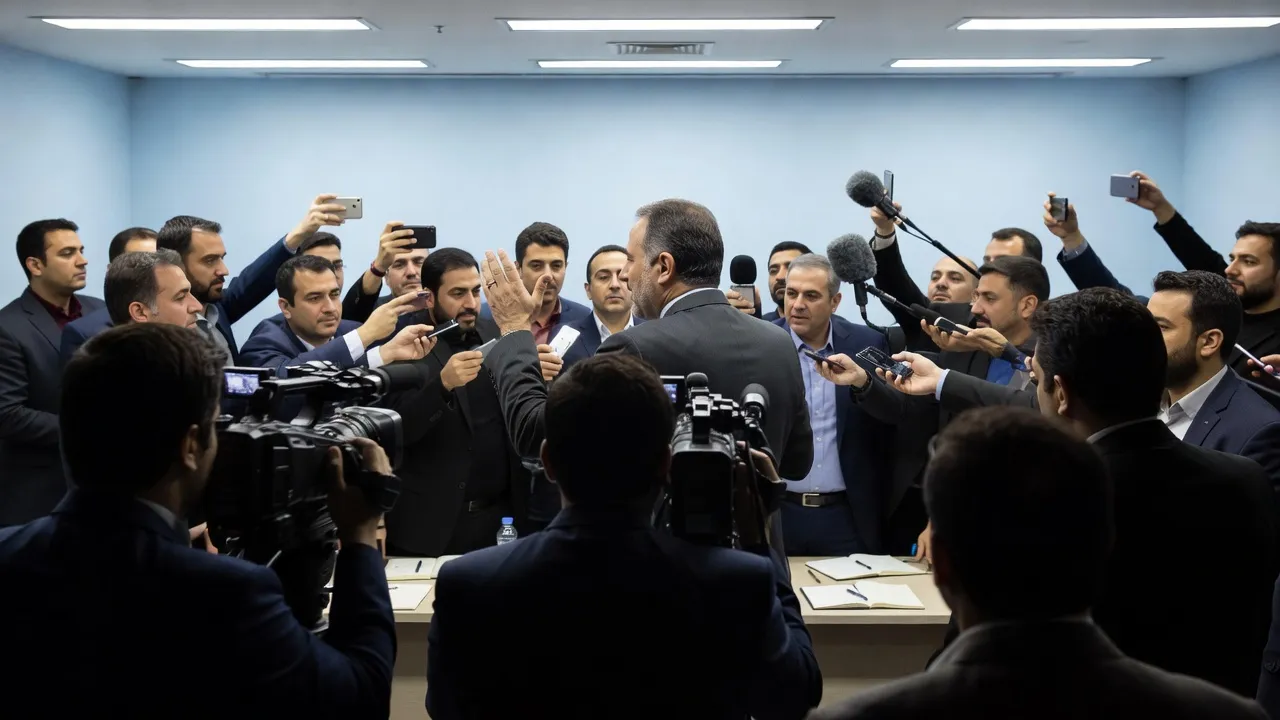
Baghdad weighs the price of regional chaos as Washington and Tehran clash over the reality of a deal
ANALYSIS
Baghdad, August 3, 2026.
DOMINANT ANGLE
Cairo measures the diplomatic and economic costs of Trump's shift, balancing active mediation toward Washington with vigilance over regional oil traffic.
ANALYSIS
Cairo, August 3, 2026.
DOMINANT ANGLE
London discerns two distinct readings of the same episode: the BBC's measured coverage of talks resuming Monday, and the dramatic framing of Trump's statements by The Independent and Daily Mail, caught between a 'Hormuz deal' promise and Tehran's denial of 'psychological warfare'.
ANALYSIS
London, August 3, 2026.
DOMINANT ANGLE
Paris reads Trump's announcement as a diplomatic trial balloon rather than a sealed deal, highlighting the gap between the optimism displayed in Washington and Iran's denial of any formal compromise with the United States.
ANALYSIS
Paris, August 3, 2026.
DOMINANT ANGLE
Brasilia reads Trump's announcement as another jolt of unpredictable diplomacy, with Brazil already paying the price through oil price swings and expanded tariffs.
ANALYSIS
Brasilia, August 3, 2026.
Explore every perspective on this subject across 13 countries.
Compare viewpoints and see where they diverge.
published on
countries
sources
articles
gap
On Saturday, August 1, Donald Trump announced on Truth Social that he had called off a planned strike on Iran, saying “the parameters of a deal” had been reached on reopening the Strait of Hormuz and ending the Iranian nuclear threat, with new Washington-Tehran negotiations set for Monday, August 3. Iranian Foreign Ministry spokesman Esmail Baghaei and the Mehr News agency called the announcement “a sheer lie,” stating that no agreement on reopening Hormuz had been concluded. Tehran separately confirms talks with Oman, in their final phase, on a new maritime route through the strait. Trump's announcement sent oil prices down more than 5 percent on Sunday.
Measured with the previous method (distance between texts), on a different scale.