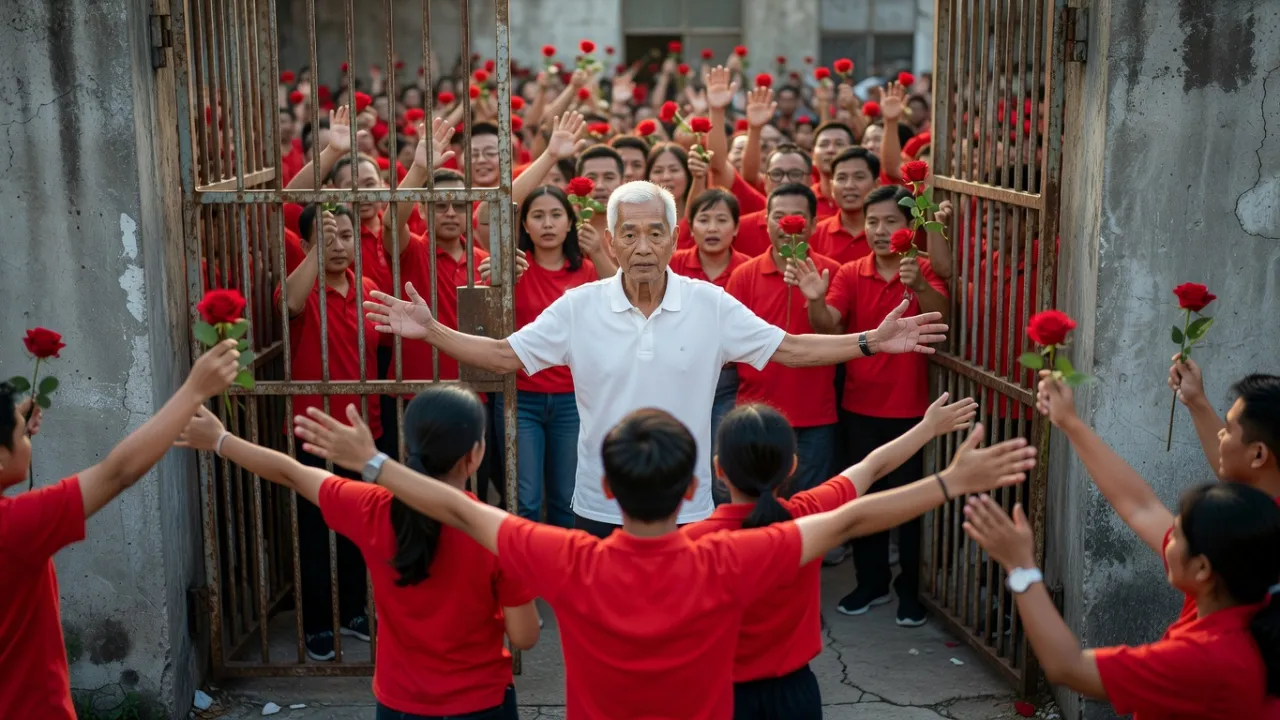
Thaksin Shinawatra, the 76-year-old former prime minister of Thailand, was released from prison on 11 May 2026 after eight months of detention for corruption. His release came under conditional terms, including an electronic monitoring bracelet. Upon his release, he was greeted by hundreds of supporters wearing red shirts, along with his three children, among them former prime minister Paetongtarn.
The event unfolds in a deeply reshaped political landscape. His party, Pheu Thai, suffered its worst electoral defeat in 2026, finishing third. His daughter Paetongtarn, whom he had helped bring to power, had been removed from office in August 2025, and the coalition government is now led by his longtime rival, Anutin Charnvirakul.
To grasp the significance of this return, it must be placed against two decades of Thai turbulence: two military coups, in 2006 and 2014, several judicial reversals, and a lasting polarization between Thaksin's supporters, rooted in the rural working classes, and an elite close to the monarchy and the military. The country is also undergoing a regional realignment that affects ASEAN economic circuits.
The central question remains disputed: will Thaksin return to politics in a context that has turned unfavorable to him, or does his release mark the closing chapter of an era? His supporters consider him innocent, while his opponents argue he should have served a longer sentence. He himself has pledged to stay out of the spotlight, without dispelling questions about his actual influence.