
Common ground and differences in coverage across the media analysed.
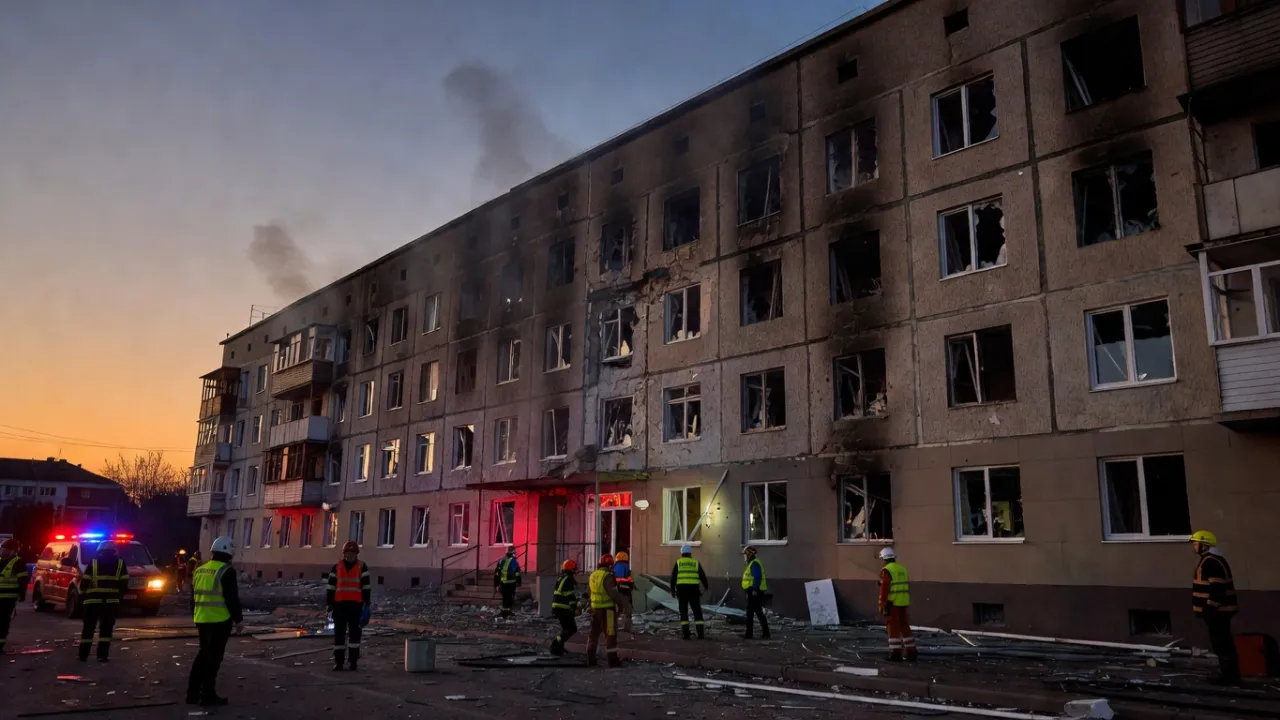
Three people were wounded and more than 25 residential buildings damaged in two waves of Russian drone strikes on the Kholodnohirskyi and Novobavarskyi districts of Kharkiv on May 19, 2026.
Strikes on Kharkiv reflect mutual air escalation: Ukraine simultaneously conducted long-range drone offensives targeting the Moscow region.
The UN documents a cumulative death toll of at least 15,850 civilians killed in Ukraine since February 2022, with April 2026 marking the deadliest month in ten months.
France, Turkey, and Ukraine center coverage on civilian casualties and material destruction in Kharkiv, while Spain, the United Kingdom, and Singapore prioritize strategic and technological analysis of drone warfare.
Singapore, Spain, and the United Kingdom treat Russian strikes on Kharkiv and Ukrainian strikes on Moscow as two equivalent aspects of the same escalation dynamic, while Ukraine and France emphasize the specificity of Ukrainian civilian losses.
Coverage aligned with this reading
Serbia and Qatar center analysis on UN statistics (15,850 civilian deaths, record April toll) as the primary interpretive framework, whereas Western media outlets (France, United Kingdom) mention them peripherally or omit them entirely.
Coverage that diverges
This grouping describes the publications analysed, not the position of these countries’ populations or of their governments.
What the coverage of each country leaves aside, while others put it forward.
France
Turkey
United Kingdom
Preview: 3 of 8 media perspectives. Syntheses of the media analysed — not direct quotations. Method & limitations
Madrid assesses the escalating dynamic between Russian strikes on Kharkiv and Ukrainian attacks that breach Moscow's defenses, raising questions about what a nuclear power can do in the face of repeated conventional attacks.
1 source · View sources
Paris condemns a new Russian drone strike on residential areas of Kharkiv, highlighting the persistence of attacks against Ukrainian civilians as both sides' long-range striking capabilities continue to intensify.
1 source · View sources
Doha anchors the Kharkiv drone strike within a broader sequence: a conflict entering its fifth year with a human toll of 15,850 civilian deaths, including 791 children, as per the UN's Department of Political and Peacebuilding Affairs.
1 source · View sources
DOMINANT ANGLE
Madrid assesses the escalating dynamic between Russian strikes on Kharkiv and Ukrainian attacks that breach Moscow's defenses, raising questions about what a nuclear power can do in the face of repeated conventional attacks.
ANALYSIS
Madrid, May 19, 2026.
DOMINANT ANGLE
Paris condemns a new Russian drone strike on residential areas of Kharkiv, highlighting the persistence of attacks against Ukrainian civilians as both sides' long-range striking capabilities continue to intensify.
ANALYSIS
Paris, May 19, 2026.
DOMINANT ANGLE
Doha anchors the Kharkiv drone strike within a broader sequence: a conflict entering its fifth year with a human toll of 15,850 civilian deaths, including 791 children, as per the UN's Department of Political and Peacebuilding Affairs.
ANALYSIS
Doha, 19 May 2026.
DOMINANT ANGLE
Belgrade highlights Ukraine civilian losses in a UN- documented sequence of massive casualties, signaling that the conflict has reached unprecedented levels since summer 2025.
ANALYSIS
Belgrade, May 19, 2026.
DOMINANT ANGLE
Singapore frames Russia's drone strikes on Kharkiv within a logic of symmetrical escalation, documenting simultaneously Ukrainian reprisals towards Moscow and growing economic implications for Russia.
ANALYSIS
Singapore, May 19, 2026.
DOMINANT ANGLE
Istanbul maintains its double standard in response to Russian strikes on Ukraine: condemnation of civilian casualties in principle, while preserving diplomatic channels open with Moscow and Kyiv.
ANALYSIS
Ankara, May 19, 2026.
DOMINANT ANGLE
Kyiv documents a simultaneous escalation across the entire territory: Kharkiv hit twice in one night, Pryluky struck by a ballistic missile, and Naftogaz facilities targeted for the fourth consecutive day — all while claiming its own long-range strikes inflict lasting economic damage on Russia.
ANALYSIS
Kyiv, May 19, 2026.
DOMINANT ANGLE
London frames the Russian drone strike on Kharkiv as another episode in a increasingly total and symmetrical drone war, where each civilian city becomes an interchangeable target.
ANALYSIS
London, May 19, 2026.
Explore every perspective on this subject across 8 countries.
Compare viewpoints and see where they diverge.
published on
countries
sources
articles
gap
On 19 May 2026, two waves of Russian drones struck the Kholodnohirskyi and Novobavarskyi districts of Kharkiv, wounding three people and damaging more than 25 residential buildings. Located less than 40 km from the Russian border, the city has absorbed a significant share of the impacts sustained since the start of the invasion in 2022.
The strike is part of a mutual aerial escalation. That same week, Ukraine carried out one of its largest drone offensives against the Moscow region, breaching several defensive rings and forcing airports to suspend operations. Both sides have made drones their primary means of attack, shifting the conflict beyond the front line toward a deep war that can reach up to 300 km.
The stakes go beyond the purely military. Repeated Ukrainian strikes on Russian oil infrastructure have contributed to a downward revision of Moscow's 2026 growth forecast, lowered from 1.3% to 0.4%. On the human side, the UN documents a cumulative toll of at least 15,850 civilians killed since February 2022, with April 2026 the deadliest month in ten months.
Several readings of the event coexist. Some actors focus attention on civilian casualties and destruction in Kharkiv, while others treat the strikes on Kharkiv and on Moscow as two equivalent facets of the same escalation. The weight given to UN statistics and to economic effects likewise varies from one actor to another.
Diplomatic negotiations remain stalled, with the conditions set by Moscow still incompatible with the Ukrainian position. The role of potential mediators and the outcome of these talks remain uncertain.
Measured with the previous method (distance between texts), on a different scale.