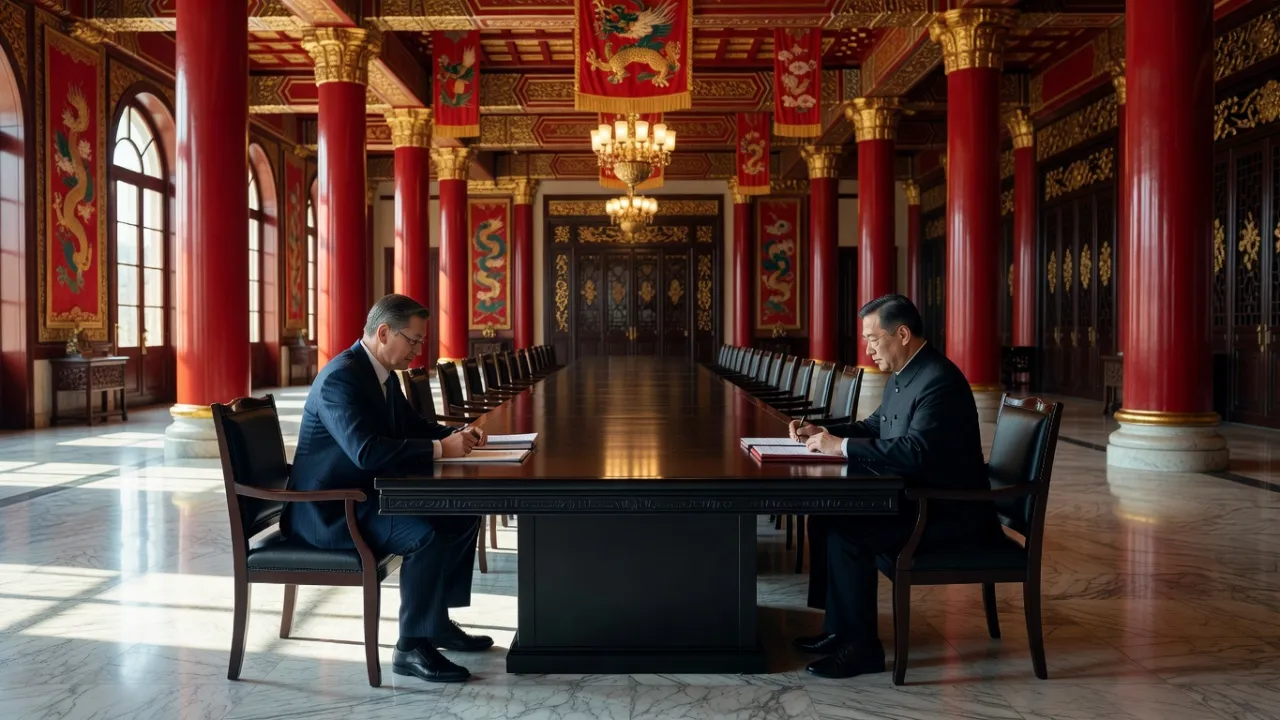
From 13 to 15 May 2026, the US president travelled to Beijing for the first visit by an American head of state to China in nine years. The trip was accompanied by a record delegation of US corporate leaders, including Nvidia, Tesla, Apple and BlackRock, giving the summit a commercial dimension unusual for a state visit. On the Chinese side, Beijing set out its red lines on Taiwan before the talks even opened, immediately narrowing the room for manoeuvre.
The meeting comes amid interlocking crises. The war between the United States and Iran has lasted ten weeks and cost roughly 29 billion dollars, while disruptions in the Strait of Hormuz weigh on energy prices. Iran — the war, the strait and the nuclear programme — dominates the agenda of every actor present, alongside tariffs, rare earths and artificial intelligence.
The underlying stake goes beyond these files: it is about defining the balance of power between the two powers for the coming decade. This is precisely the point that remains most disputed. Some actors describe a position of relative weakness on the American side, constrained by the Iranian war, while Washington presents the summit as a diplomatic advance.
Other uncertainties persist. Several regional allies fear that concessions on Taiwan could weaken the security architectures they depend on, a risk Washington plays down. The role of mediator on Iran is also contested: Beijing and Tehran present it as central, while other capitals claim the role or assert they can do without it.