Common ground and differences in coverage across the media analysed.
Donald Trump claims the US Navy controls the Strait of Hormuz '100%' and has swept the strait to remove mines.
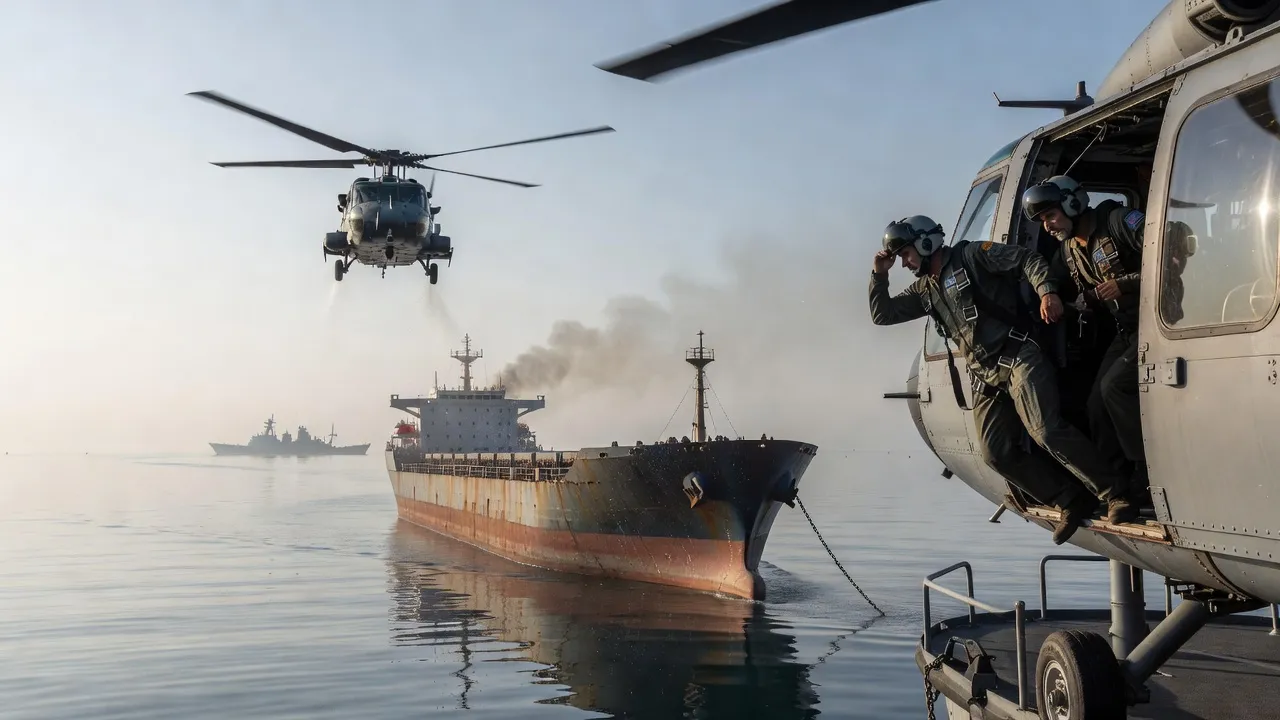
CENTCOM fired two Hellfire missiles from an MH-60 helicopter at the engine room of the Panamanian-flagged cargo ship M/V Vela Nova, which was headed to an Iranian port.
Iran has set preconditions for reopening the strait: an end to the US blockade, unfreezing its foreign assets, and some form of compensation.
Newsrooms are reporting different Brent levels for the same day — ranging from $87.59-$87.84 to a brief peak above $90 — depending on the time of the reading and the source agency cited by each pool.
Coverage that diverges
Pakistan's Defense Minister mentions a 'sort of arrangement' close to being reached between Washington and Tehran, while Iranian officials maintain that conditions have not been met and the US pool does not pursue this diplomatic lead.
Coverage aligned with this reading
Coverage that diverges
Some pools are focusing their coverage on the military aspect of the incident (cargo strike, naval blockade) while others are treating the issue almost exclusively through its impact on oil and stock markets.
This grouping describes the publications analysed, not the position of these countries’ populations or of their governments.
What the coverage of each country leaves aside, while others put it forward.
Belgium
Italy
Colombia
United States
Preview: 3 of 9 media perspectives. Syntheses of the media analysed — not direct quotations. Method & limitations
Tehran is conditioning any reopening of the Strait of Hormuz on the end of the US blockade, the unfreezing of its frozen assets, and the cessation of regional wars, rejecting the compensation demand made by Donald Trump.
5 sources · View sources
The United States government claims total control of the Strait of Hormuz while toughening its stance against Tehran, potentially jeopardizing the prospects of a deal and driving up oil prices.
3 sources · View sources
Cairo is assessing the risks that the US blockade of the Strait of Hormuz poses to global maritime traffic, as the country itself manages the other major artery of international trade, the Suez Canal.
2 sources · View sources
DOMINANT ANGLE
Tehran is conditioning any reopening of the Strait of Hormuz on the end of the US blockade, the unfreezing of its frozen assets, and the cessation of regional wars, rejecting the compensation demand made by Donald Trump.
ANALYSIS
Tehran, August 12, 2026.
DOMINANT ANGLE
The United States government claims total control of the Strait of Hormuz while toughening its stance against Tehran, potentially jeopardizing the prospects of a deal and driving up oil prices.
ANALYSIS
The United States government, from its capital, asserts that the US Navy controls the Strait of Hormuz "100%" as of Monday, with the President stating, "It is open now.
DOMINANT ANGLE
Cairo is assessing the risks that the US blockade of the Strait of Hormuz poses to global maritime traffic, as the country itself manages the other major artery of international trade, the Suez Canal.
ANALYSIS
Cairo, August 12, 2026.
DOMINANT ANGLE
Islamabad is mobilizing its diplomatic efforts to ease the Ormuz crisis, while also absorbing the economic shock of a surge in oil prices that is impacting its stock exchange and imports.
ANALYSIS
Islamabad, August 12, 2026.
DOMINANT ANGLE
Rome is deciphering Donald Trump's claim of total control over the Strait of Hormuz in light of market trends: oil and gold prices are reflecting the ongoing uncertainty more than diplomatic efforts.
ANALYSIS
Rome, August 12, 2026.
DOMINANT ANGLE
Brasília is decoding the Ormuz crisis through the lens of the oil barrel, measuring every fluctuation in Brent and WTI, rather than the military postures of Washington and Tehran.
ANALYSIS
Brasília, August 12, 2026.
DOMINANT ANGLE
Bogotá is feeling the oil shockwave of Ormuz in its own accounts, with Brent at its highest since late July and a new American requirement that is locking down negotiations.
ANALYSIS
Bogotá, August 12, 2026.
DOMINANT ANGLE
Lisbon sees the claim of "total control" of the Strait of Hormuz by Trump as a rhetorical escalation without real breakthrough, and is mainly gauging its immediate impact on oil and stock markets.
ANALYSIS
Lisbon, August 12, 2026.
DOMINANT ANGLE
Brussels echoes the Pentagon's account of the strike on the Vela Nova cargo ship, without endorsing the claim of "total control" of the Strait of Hormuz as stated by Trump.
ANALYSIS
Brussels, August 12, 2026.
Explore every perspective on this subject across 9 countries.
Compare viewpoints and see where they diverge.
published on
countries
sources
articles
gap
President Donald Trump claims from the Oval Office that the US Navy controls the Strait of Hormuz "100%". On Tuesday, August 11, 2026, a US Central Command (CENTCOM) MH-60 helicopter fired two Hellfire missiles at the engine room of the Panamanian-flagged cargo ship M/V Vela Nova in the Gulf of Oman, as it was heading to an Iranian port in violation of the US blockade. Tehran, through Foreign Minister Abbas Araghchi, maintains that the strait will not reopen until its conditions are met.
Measured with the previous method (distance between texts), on a different scale.