Common ground and differences in coverage across the media analysed.
Donald Trump announced at an election rally in Garden City / Nassau County on August 14 that he would 'soon' declare the Strait of Hormuz a territory of the United States once Iran was 'defeated'.
Iranian Deputy Foreign Minister Kazem Gharibabadi rejected this claim on X, stating that the strait 'has been Iranian, is Iranian, and will remain Iranian' and cannot be 'seized either by tweet, by aircraft carrier, or by decree'.
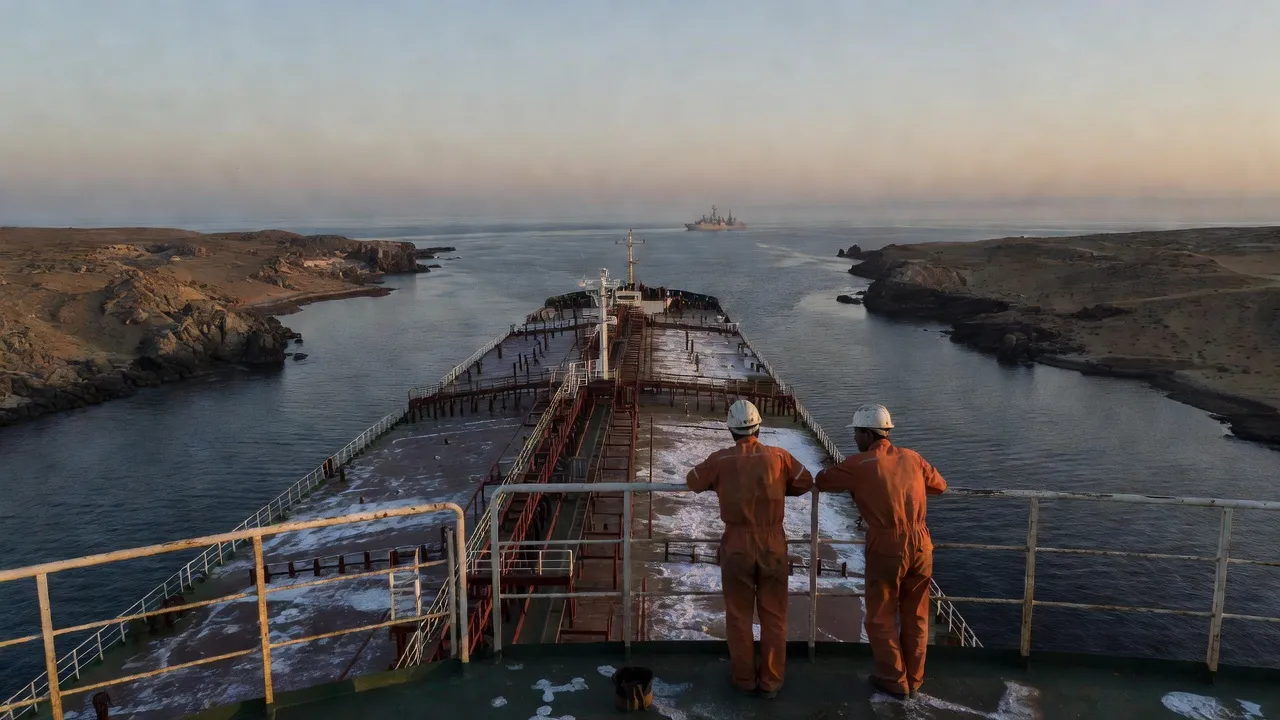
The Strait of Hormuz is presented as a major axis of global hydrocarbon trade, with approximately one-fifth of global oil and gas passing through it before the conflict.
Some media outlets relay the clarification, attributed to an anonymous White House official cited by the Wall Street Journal, that Trump was joking; others relay the statement without this nuance, treating it as an affirmative position.
Coverage aligned with this reading
Coverage that diverges
Some countries analyze the claim through the lens of maritime law and maritime traffic data (UNCLOS, UKMTO, Kpler), while others measure it primarily against its impact on energy prices and import costs.
Coverage aligned with this reading
Coverage that diverges
The American press relays the official formulation of naval blockade as stated by Trump, while Russian state agencies interpret it through the categories of American hegemony and the inconsistency between discourse and actual maritime traffic figures.
Coverage aligned with this reading
Coverage that diverges
This grouping describes the publications analysed, not the position of these countries’ populations or of their governments.
What the coverage of each country leaves aside, while others put it forward.
France
United States
Australia
Preview: 3 of 15 media perspectives. Syntheses of the media analysed — not direct quotations. Method & limitations
Brussels downplays Trump's Hormuz announcement, with Belgian French-language media framing it as a quip delivered with a light tone rather than a constructed legal claim.
2 sources · View sources
Canberra measures first the domestic cost of the Hormuz crisis: unleaded petrol already exceeds two dollars per litre in Australia, and diesel approaches 2.50 dollars, even before any question of international law regarding Trump's territorial claim.
2 sources · View sources
Dhaka weighs the risks posed by the Trump-Tehran standoff over the Strait of Hormuz to its energy bill and import costs, as one-fifth of global oil transits through this strategic chokepoint.
2 sources · View sources
DOMINANT ANGLE
Brussels downplays Trump's Hormuz announcement, with Belgian French-language media framing it as a quip delivered with a light tone rather than a constructed legal claim.
ANALYSIS
Brussels, August 14, 2026.
DOMINANT ANGLE
Canberra measures first the domestic cost of the Hormuz crisis: unleaded petrol already exceeds two dollars per litre in Australia, and diesel approaches 2.50 dollars, even before any question of international law regarding Trump's territorial claim.
ANALYSIS
Canberra, August 15, 2026.
DOMINANT ANGLE
Dhaka weighs the risks posed by the Trump-Tehran standoff over the Strait of Hormuz to its energy bill and import costs, as one-fifth of global oil transits through this strategic chokepoint.
ANALYSIS
Dhaka, August 16, 2026.
DOMINANT ANGLE
Brazil frames Trump's Strait assertion within the guardrails of international maritime law, viewing any unilateral appropriation as structurally incompatible with existing treaty obligations and UN Charter provisions.
ANALYSIS
Brasília, August 14, 2026.
DOMINANT ANGLE
Spain reads Trump's Strait of Hormuz pledge through the lens of personal rhetoric and underscores his concurrent attack on Spanish migration policy during the same New York rally.
ANALYSIS
Madrid, August 16, 2026.
DOMINANT ANGLE
Paris reads Trump's Strait of Hormuz claim as a campaign quip quickly disavowed by the White House itself, while Tehran flatly refuses to treat the assertion as a laughing matter.
ANALYSIS
Paris, August 16, 2026.
DOMINANT ANGLE
Jerusalem gauges Trump's Hormuz pledge as a signal of post-strike U.S. resolve against Iran rather than a territorial claim to be taken literally.
ANALYSIS
Jerusalem, August 15, 2026.
DOMINANT ANGLE
Seoul gauges Trump's Strait of Hormuz declaration through the lens of energy vulnerability, prioritizing oil security over the disputed legal scope of the claim.
ANALYSIS
Seoul, August 16, 2026.
DOMINANT ANGLE
Mexico records Trump's Hormuz claim and Iran's unyielding response, without endorsing the territorial scope of the move.
ANALYSIS
Mexico City, August 16, 2026.
DOMINANT ANGLE
Islamabad first weighs the economic impact of an announcement that the White House itself presents as a joke, when Tehran firmly responds that the strait will remain Iranian.
ANALYSIS
Islamabad, August 16, 2026.
DOMINANT ANGLE
Lisbon reads Trump's Hormuz announcement as campaign rally rhetoric rather than settled policy, while relaying Iran's firm response in full.
ANALYSIS
Lisbon, August 16, 2026.
DOMINANT ANGLE
Moscow relays Iran's rejection of the American claim to the Strait of Hormuz, while underscoring the gap between Trump's rhetoric and actual maritime traffic figures.
ANALYSIS
Moscow, August 15, 2026.
DOMINANT ANGLE
Singapore assesses the precedent risk that a U.S. claim to sovereignty over the Strait of Hormuz would pose to international maritime law and the global system of passage rights.
ANALYSIS
Singapore, August 16, 2026.
DOMINANT ANGLE
London questions the legal validity of Trump's promise on Hormuz, drawing on maritime traffic data collected by its own UKMTO agency.
ANALYSIS
London, August 16, 2026.
DOMINANT ANGLE
Washington displays a presidential claim deemed unworkable by its own experts, while oil markets already price in the geopolitical cost.
ANALYSIS
Washington, August 16, 2026.
Explore every perspective on this subject across 15 countries.
Compare viewpoints and see where they diverge.
published on
countries
sources
articles
gap
US President Donald Trump declared on Friday, August 14, 2026, during a campaign rally in Garden City (Nassau County, New York), that he would proclaim the Strait of Hormuz "US territory" "very soon" once Iran was "defeated". Iranian Deputy Foreign Minister Kazem Gharibabadi rejected this claim on X, stating that the strait "has been Iranian, is Iranian, and will remain Iranian". The announcement comes as maritime traffic in the strait remains severely reduced and fuel prices have risen sharply since the conflict between the United States, Israel, and Iran began on February 28.
The move remains without concrete effect: a White House official called it a joke, and the strait remains under mutual blockade between Washington and Tehran.
According to WSJ journalist Brian Schwartz, an anonymous official claims Trump was joking, having not discussed it with his advisers.
The strait is shared between Iranian and Omani waters; the Montego Bay Convention guarantees international passage.
The former US diplomat notes that no single country controls the Strait of Hormuz alone (The Hill).
Washington blocks Iranian ports in the strait, which Tehran has locked down from its side since February 28.
Measured with the previous method (distance between texts), on a different scale.