Common ground and differences in coverage across the media analysed.
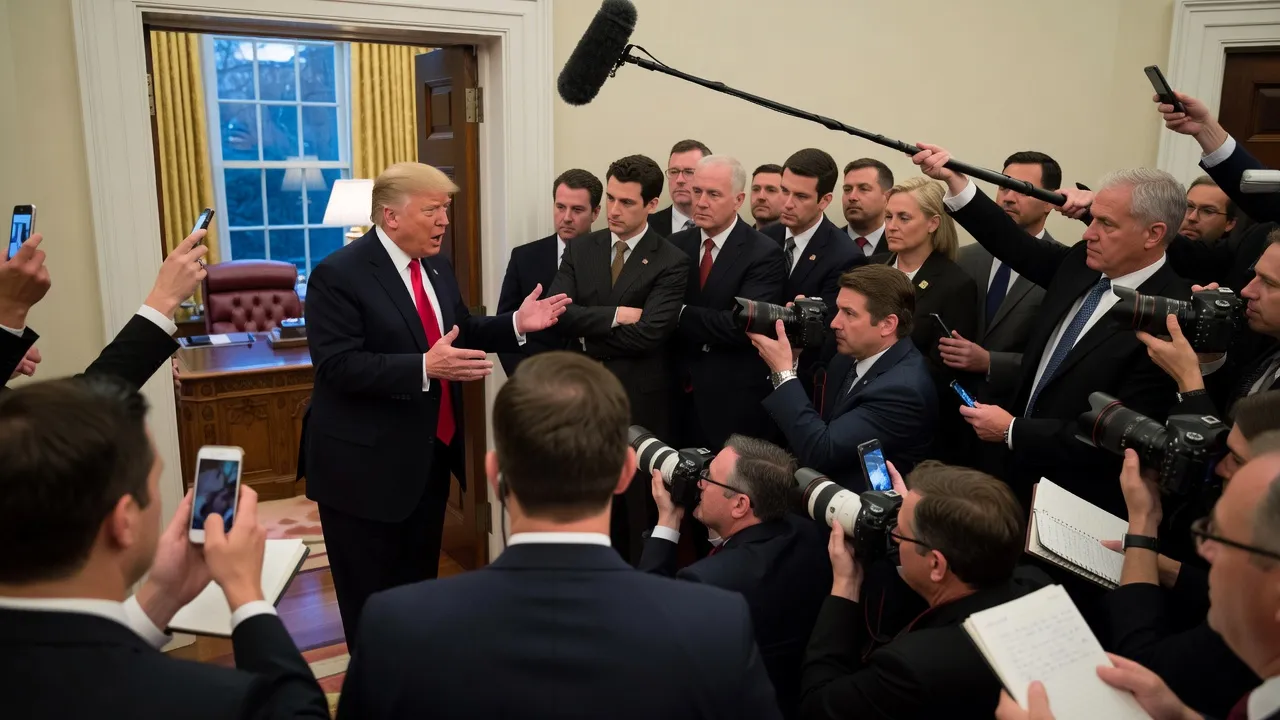
Every perspective reports that Donald Trump calls the discussions with Iran a "last chance", raising the prospect of "decapitation" or a massive strike should they fail, while saying he called off a planned attack to make room for dialogue.
All perspectives relay the denial by Iranian foreign ministry spokesman Esmaeil Baghaei, who says no direct negotiations are under way with Washington, the only acknowledged channel concerning a corridor with Oman.
Every account places the Strait of Hormuz at the heart of the bargaining, between a maritime incident near Oman (a cargo vessel struck by an unidentified projectile) and immediate volatility in oil prices.
Some coverage reports Trump's announcement factually, as a concrete deadline to watch, while other outlets stress the record of reversals and abandoned announcements to qualify its weight.
Russian media relay as established fact the IRGC's claim to have shot down an American MQ-9 drone over Hormuz, while other coverage mentions only the unclaimed incident of the struck cargo vessel, without corroborating the Iranian account.
Coverage aligned with this reading
Coverage that diverges
Some perspectives carry Trump's assertion that Saudi Arabia, the United Arab Emirates and Qatar asked for the strike to be called off, while others stay silent on that version and favour the Omani mediation channel alone, which is independently documented.
This grouping describes the publications analysed, not the position of these countries’ populations or of their governments.
What the coverage of each country leaves aside, while others put it forward.
Israel
Iraq
Oman
Preview: 3 of 21 media perspectives. Syntheses of the media analysed — not direct quotations. Method & limitations
Washington presents an ultimatum to Tehran: the threat of a strike unseen since World War II, set against Tehran's denial of any ongoing talks.
3 sources · View sources
Moscow interprets Trump's rhetoric on blockade and 'total surrender' as verbal escalation contradicted by on-the-ground realities, where the IRGC claims to have destroyed an American drone over the Strait of Hormuz.
3 sources · View sources
Doha finds itself named by Trump as a backer of talks with Tehran, while Iran denies any direct negotiations and recognizes only its mediation with Oman.
2 sources · View sources
DOMINANT ANGLE
Washington presents an ultimatum to Tehran: the threat of a strike unseen since World War II, set against Tehran's denial of any ongoing talks.
ANALYSIS
Washington, August 4, 2026.
DOMINANT ANGLE
Moscow interprets Trump's rhetoric on blockade and 'total surrender' as verbal escalation contradicted by on-the-ground realities, where the IRGC claims to have destroyed an American drone over the Strait of Hormuz.
ANALYSIS
Moscow, August 4, 2026.
DOMINANT ANGLE
Doha finds itself named by Trump as a backer of talks with Tehran, while Iran denies any direct negotiations and recognizes only its mediation with Oman.
ANALYSIS
Doha, August 4, 2026.
DOMINANT ANGLE
Ankara monitors the gap between Trump's ultimatum to Iran and Tehran's denial, an ambiguity with high stakes for the stability of the Strait of Hormuz and the region.
ANALYSIS
Ankara, August 4, 2026.
DOMINANT ANGLE
Beijing weighs the true scope of Iran-U.S. talks amid oil price collapse, skepticism over the existence of direct negotiations, and vigilance over Strait of Hormuz stability.
ANALYSIS
Beijing, August 4, 2026.
DOMINANT ANGLE
London reads Trump's 'last chance' ultimatum with skepticism as Iran denies ongoing talks
ANALYSIS
London, August 4, 2026.
DOMINANT ANGLE
Paris separates Trump's "last chance" rhetoric from the actual dynamics of negotiations: French media note that Tehran negotiates only with Oman, and closely monitor the impact of the Strait of Hormuz on global energy supply.
ANALYSIS
Paris, August 4, 2026.
DOMINANT ANGLE
Islamabad assesses the gap between Donald Trump's statements and Tehran's denials, as Iranian diplomacy maintains an open channel with Pakistan's chief of staff.
ANALYSIS
Islamabad, August 4, 2026.
DOMINANT ANGLE
Tokyo weighs twin risks: Iran's closure of the Strait of Hormuz cuts off a key petroleum supplier, while a Tokyo-based expert doubts Trump's 'last chance' ultimatum will shift the dynamic with Tehran.
ANALYSIS
Tokyo, August 4, 2026.
DOMINANT ANGLE
Seoul watches Washington's reversal on Iran with direct interest: the announced reopening of the Strait of Hormuz conditions South Korea's energy supply as the fourth-largest crude importer in Asia.
ANALYSIS
Seoul, August 4, 2026.
DOMINANT ANGLE
Berlin distinguishes between Trump's repeated announcements and verifiable ground reality, where Tehran denies any negotiations and where oil has held firm through the conflict.
ANALYSIS
Berlin, August 4, 2026.
DOMINANT ANGLE
Canberra decodes a standoff where Washington and Tehran contradict each other publicly over whether direct talks are even occurring, with the Strait of Hormuz as the central stakes.
ANALYSIS
Canberra, August 4, 2026.
DOMINANT ANGLE
Dhaka tracks primarily the energy shockwave from an endless conflict looming, between Washington's displayed ultimatum and Tehran's categorical denial over oil market volatility.
ANALYSIS
Dhaka, August 4, 2026.
DOMINANT ANGLE
Ottawa reads the gap between Trump's ultimatum and Tehran's formal denial as a symptom of uncertainty-driven diplomacy that is already destabilizing Asia's energy-importing economies.
ANALYSIS
Ottawa, August 4, 2026.
DOMINANT ANGLE
Cairo reads a repetitive script: Trump raises the specter of military action, only to retreat, as Tehran flatly denies any discussions over the Strait of Hormuz.
ANALYSIS
Cairo, August 4, 2026.
DOMINANT ANGLE
Madrid weighs the gap between Trump's announcement and Tehran's denial, while also tracking the Gulf's race to build alternative oil pipelines bypassing the Strait of Hormuz.
ANALYSIS
Madrid, August 4, 2026.
DOMINANT ANGLE
Jakarta decrypts a diplomatic muddle: Washington claims negotiations with Iran are underway, Tehran denies it, while the real deal unfolds with Oman over the Strait of Hormuz.
ANALYSIS
Jakarta, August 4, 2026.
DOMINANT ANGLE
Rome tracks a repetitive Trump cycle of ultimatums and diplomatic openings on Iran, with no certainty that the announced negotiations are real.
ANALYSIS
Rome, August 4, 2026.
DOMINANT ANGLE
Abuja weighs the oil consequences of Donald Trump's ultimatum to Iran, between a Strait of Hormuz under strain and persistent uncertainty over whether the talks are real.
ANALYSIS
Abuja, August 4, 2026.
DOMINANT ANGLE
Singapore weighs the risks to Asian maritime trade in the diplomatic deadlock between Washington and Tehran over the Strait of Hormuz.
ANALYSIS
Singapore, August 4, 2026.
DOMINANT ANGLE
Pretoria weighs the oil shockwave from Trump's fresh 'last chance' to Iran, while pointing to the gap between the American announcement and Tehran's denial.
ANALYSIS
Pretoria, August 4, 2026.
Explore every perspective on this subject across 21 countries.
Compare viewpoints and see where they diverge.
published on
countries
sources
articles
gap
On August 3, 2026, Donald Trump announced from the White House that fresh negotiations with Iran would open the following afternoon, calling them a "last chance" before a possible strike and saying he had called off an already planned attack to give a deal a chance. In Tehran, foreign ministry spokesman Esmaeil Baghaei denied any direct negotiations with Washington, acknowledging only discussions with Oman on temporary passage through the Strait of Hormuz. The contradiction comes within a US-Iran war open since February 28 over the closure of the strait, where a cargo vessel was struck the same day by an unidentified projectile near Oman, according to the maritime agency UKMTO.
Measured with the previous method (distance between texts), on a different scale.