Common ground and differences in coverage across the media analysed.
Donald Trump threatened to 'bomb' Oman in an interview with Fox News on August 17, 2026, just as a 60-day memorandum signed on June 17 between Washington and Tehran was expiring.
The memorandum expired without achieving any of its goals - an end to hostilities, the reopening of the Strait of Hormuz, or a resolution to the Iranian nuclear issue - with each side blaming the other for violating it.
Oman is separately negotiating a technical agreement with Tehran on a maritime transit map to reopen the Strait of Hormuz, outside of the US discussion framework.

Pakistani and Qatari perspectives highlight shared mediation — with Tehran and Ankara citing Pakistan and Qatar alongside Oman — whereas French, British, American, and Israeli perspectives focus on Oman as the sole historical diplomatic channel since the 2015 nuclear agreement.
Coverage that diverges
Australian, Canadian, British, French, and Israeli media question the value of ally status after a threat to a Washington regional partner, while US media documents the threat as a acknowledged means of pressure, without challenging the doctrine itself.
Coverage aligned with this reading
Coverage that diverges
Nigerian and Singaporean media directly link the threat to quantifiable impacts — a rise in Brent prices, a collapse in traffic through the strait — whereas Mexican and Pakistani perspectives treat the episode as a strictly diplomatic issue, without assessing its economic cost.
This grouping describes the publications analysed, not the position of these countries’ populations or of their governments.
What the coverage of each country leaves aside, while others put it forward.
Oman
United Arab Emirates
Iran
Preview: 3 of 12 media perspectives. Syntheses of the media analysed — not direct quotations. Method & limitations
Canberra is gauging the threat from Trump against Oman in light of its own alliance with the US: if a long-time Gulf partner can face a bombing threat, what value does the status of American ally hold?
3 sources · View sources
Ottawa is gauging the fallout from a threat made by its closest ally against Oman, one of the few remaining interlocutors still accepted by Tehran in the Strait of Hormuz crisis.
3 sources · View sources
Beijing views the threat to bomb Oman as a symptom of an erratic US diplomatic approach, which treats Gulf allies and East Asian partners based on personal calculations rather than a stable doctrine.
3 sources · View sources
DOMINANT ANGLE
Canberra is gauging the threat from Trump against Oman in light of its own alliance with the US: if a long-time Gulf partner can face a bombing threat, what value does the status of American ally hold?
ANALYSIS
Canberra, August 18, 2026.
DOMINANT ANGLE
Ottawa is gauging the fallout from a threat made by its closest ally against Oman, one of the few remaining interlocutors still accepted by Tehran in the Strait of Hormuz crisis.
ANALYSIS
Ottawa, August 18, 2026.
DOMINANT ANGLE
Beijing views the threat to bomb Oman as a symptom of an erratic US diplomatic approach, which treats Gulf allies and East Asian partners based on personal calculations rather than a stable doctrine.
ANALYSIS
Beijing, August 18, 2026.
DOMINANT ANGLE
France views Donald Trump's exit as a symptom of a Middle Eastern policy running out of steam, whose repercussions are already being felt all the way to the French gas pump.
ANALYSIS
Paris, August 18, 2026.
DOMINANT ANGLE
Jerusalem views the Trump threat against Oman as a signal to any regional alliance in Washington, as Tehran shifts towards an offensive posture.
ANALYSIS
Jerusalem, August 18, 2026.
DOMINANT ANGLE
Mexico City downplays the American threat by framing it within the broader context of the expired memorandum with Iran, without dedicating a separate analysis to it or mentioning Oman's historical role as a mediator.
ANALYSIS
Mexico, August 17, 2026.
DOMINANT ANGLE
Nigeria's capital, Abuja, is gauging the impact of Trump's threat to Oman in terms of the oil barrel: every surge in the Strait of Hormuz directly affects Nigeria's petroleum budget.
ANALYSIS
Abuja, August 18, 2026.
DOMINANT ANGLE
Pakistan is gauging the impact of Trump's threat to Oman in light of its new collective defense pact with Saudi Arabia and Turkey, as Tehran and Ankara are already citing Islamabad as a potential mediator in the Iranian-American crisis.
ANALYSIS
Islamabad, August 18, 2026.
DOMINANT ANGLE
Doha is gauging the fallout from a threat targeting the diplomatic corridor it has helped build, as its own mediators continue to engage in dialogue with Tehran.
ANALYSIS
Doha, August 18, 2026.
DOMINANT ANGLE
Singapore, from its vantage point as a global maritime traffic hub, is gauging the risk that Trump's threat to Oman poses to the Strait of Hormuz and a fifth of the world's oil trade.
ANALYSIS
Singapore, August 18, 2026.
DOMINANT ANGLE
London is gauging the gap between Trump's verbal threats and Oman's effective diplomatic role, which remains at the center of negotiations over the Strait of Hormuz.
ANALYSIS
London, August 18, 2026.
DOMINANT ANGLE
Washington views the threat as a means of pressure, including against a Gulf ally, as Congress expresses concern over the unchecked use of presidential war powers.
ANALYSIS
The United States government is facing a new challenge after President Donald Trump threatened to take drastic action against Oman if the country interferes with a resolution to the dispute over the Strait of Hormuz, as a 60-day memorandum aimed at framing the confrontation between the US and Tehran expired.
Explore every perspective on this subject across 12 countries.
Compare viewpoints and see where they diverge.
published on
countries
sources
articles
gap
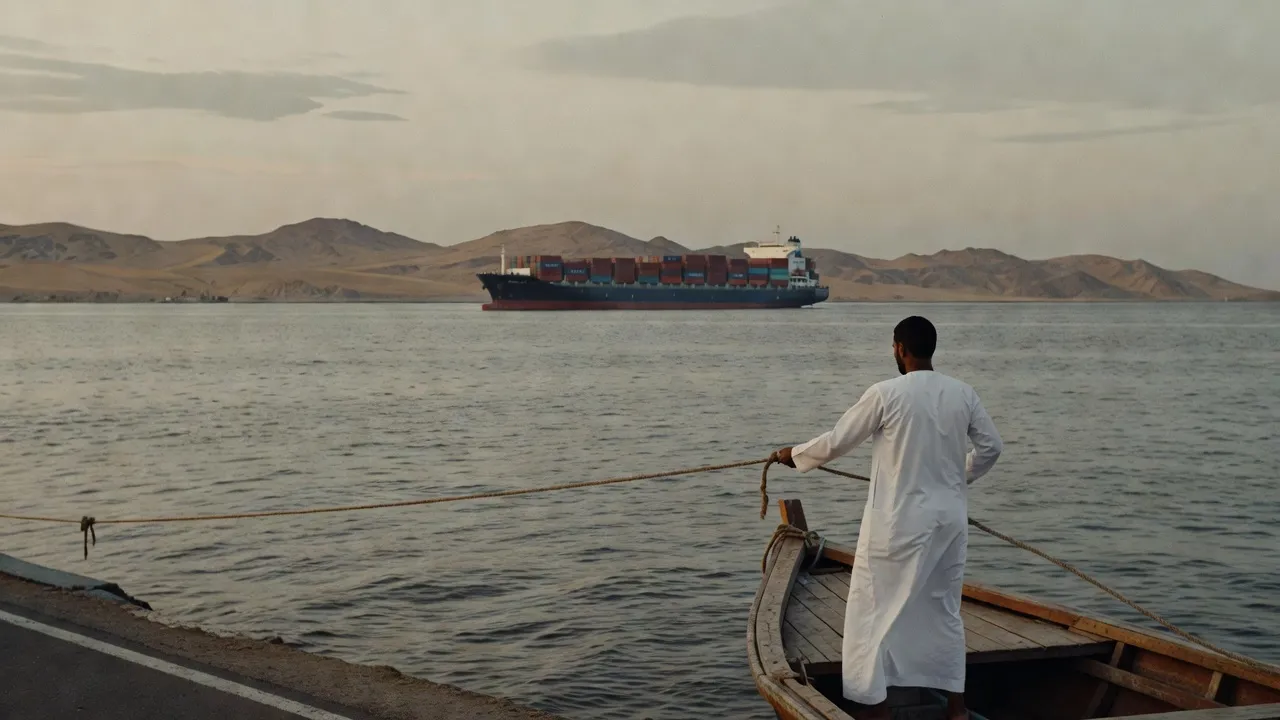
US President Donald Trump threatened on Monday, August 17, 2026, to "bomb" Oman if the country "gets in the way" of his efforts to reopen the Strait of Hormuz, as the 60-day agreement signed in June with Iran expires. Oman is separately negotiating with Tehran to resume commercial traffic in the strait, which has been closed since the US-Israeli attack on February 28. Democratic Senator Tim Kaine announced the introduction of a resolution to prohibit any military action against Oman. On Tuesday, a ship was hit by a projectile while exiting the strait.
No strike has been carried out against Oman; negotiations between Muscat and Tehran on reopening the strait continue, with no formal agreement announced.
A US ally since 1980, Oman hosted the negotiations that led to the 2015 Iranian nuclear deal.
A 14-point agreement signed on June 17 between Trump and Iranian President Pezeshkian, under Pakistani mediation.
Saudi Arabia, Turkey, and Pakistan signed a defense pact on August 7, seen as a diversification beyond the United States.
Tehran says it will shift from a defensive stance to a "totally offensive" one if the talks fail.
Measured with the previous method (distance between texts), on a different scale.