Common ground and differences in coverage across the media analysed.
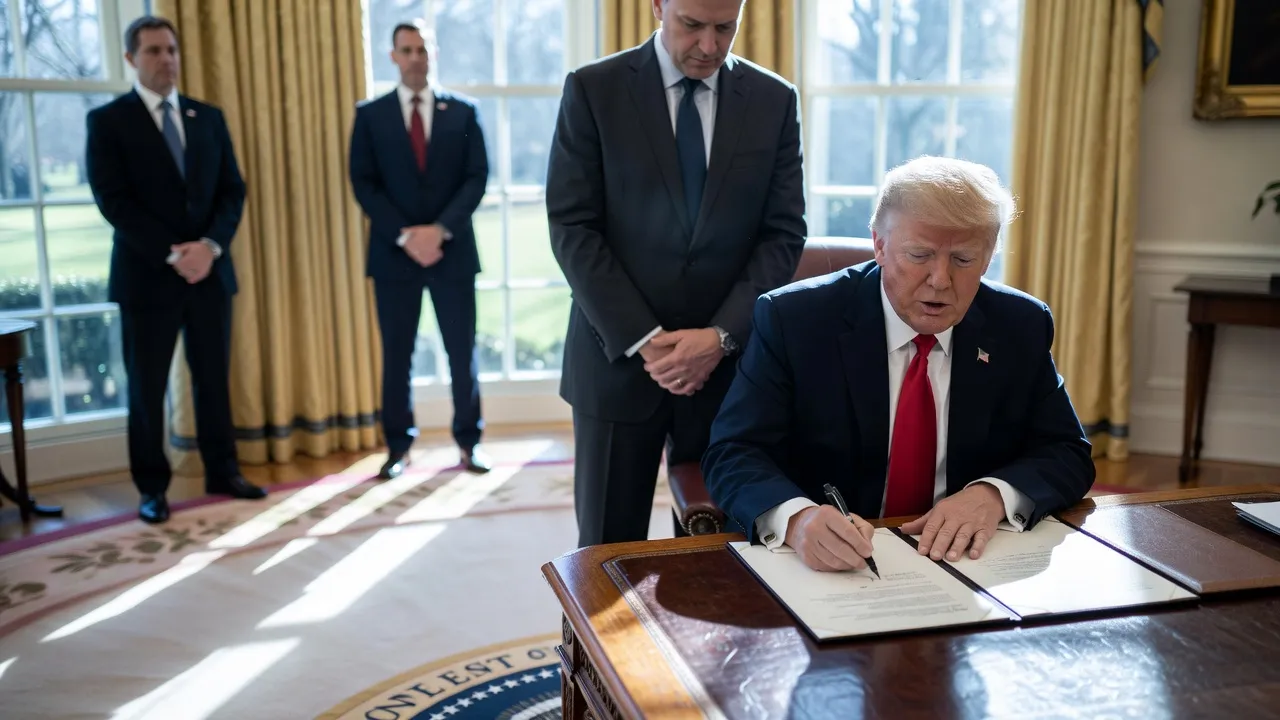
Donald Trump signed two decrees on Thursday, August 6, 2026, five weeks after the Supreme Court rejected his initial decree on automatic citizenship on June 30, the day of his inauguration.
The first decree excludes specific categories of children from automatic citizenship, including children of foreign diplomatic personnel, members of designated terrorist organizations, immigration fraud, and certain territories, while the second prohibits 'birth tourism'.
The 14th Amendment, in effect for 150 years, guarantees citizenship to anyone born on American soil; the June 30 ruling reaffirmed this protection for children of parents present illegally or temporarily.
Some media outlets describe the phenomenon as marginal compared to the more than 250,000 annual births affected by the broadest decree, while others cite without context the figure of 20,000 to 25,000 mothers tracked by an immigration research center.
Coverage aligned with this reading
Canada, Germany, and Brazil emphasize that the decrees establish a policy without the force of law and point to uncertainties in their application, while US coverage relays the administration's argument that the June 30 ruling leaves room for legal exceptions.
Coverage aligned with this reading
The United Kingdom notes a paradoxical similarity between the US reform and its own nationality law, which was reformed in 1983, while Brazil highlights the persistent difference with its unconditional jus soli, which has remained unchanged since its 1988 Constitution.
Coverage aligned with this reading
Coverage that diverges
This grouping describes the publications analysed, not the position of these countries’ populations or of their governments.
What the coverage of each country leaves aside, while others put it forward.
India
Turkey
Russia
Italy
Preview: 3 of 14 media perspectives. Syntheses of the media analysed — not direct quotations. Method & limitations
Buenos Aires is deciphering the legal counteroffensive of Trump following his setback before the Supreme Court, detailing category by category who loses access to automatic citizenship.
2 sources · View sources
Brussels views the Trump administration's push on birthright citizenship as a new episode in a showdown between the executive branch and the Supreme Court, rather than a direct migration issue for Belgium.
2 sources · View sources
Brasília is closely watching the US withdrawal on territorial jurisdiction, a principle that Brazil itself has been applying unrestrictedly since its 1988 Constitution.
3 sources · View sources
DOMINANT ANGLE
Buenos Aires is deciphering the legal counteroffensive of Trump following his setback before the Supreme Court, detailing category by category who loses access to automatic citizenship.
ANALYSIS
Buenos Aires, August 7, 2026.
DOMINANT ANGLE
Brussels views the Trump administration's push on birthright citizenship as a new episode in a showdown between the executive branch and the Supreme Court, rather than a direct migration issue for Belgium.
ANALYSIS
Brussels, August 7, 2026.
DOMINANT ANGLE
Brasília is closely watching the US withdrawal on territorial jurisdiction, a principle that Brazil itself has been applying unrestrictedly since its 1988 Constitution.
ANALYSIS
Brasília, August 7, 2026.
DOMINANT ANGLE
Ottawa is examining the legal fragility of the two decrees, noting that they establish a policy without the force of law and come just five weeks after being rebuffed by the Supreme Court.
ANALYSIS
Ottawa, August 7, 2026.
DOMINANT ANGLE
Bern observes the new offensive by Donald Trump against birthright citizenship as a legal showdown with an uncertain outcome, five weeks after the setback suffered before the Supreme Court.
ANALYSIS
Bern, August 7, 2026.
DOMINANT ANGLE
Beijing views the two decrees by Donald Trump as an acknowledgment of a constitutional system already thwarted by its own Supreme Court, an implicit contrast to Chinese bloodright law.
ANALYSIS
Beijing, August 7, 2026.
DOMINANT ANGLE
Germany is deciphering the legal maneuver of Donald Trump following his defeat before the Supreme Court, highlighting the practical gray areas of two new decrees on birthright law.
ANALYSIS
Berlin, August 7, 2026.
DOMINANT ANGLE
France views the new Trump offensive against birthright citizenship as a file that has been deliberately refocused on a marginal phenomenon, and links this decree to the parallel crackdown on foreign journalists.
ANALYSIS
Paris, August 7, 2026.
DOMINANT ANGLE
Seoul is gauging the impact of these two decrees in light of its own system, where nationality is passed down through lineage rather than birth on national soil.
ANALYSIS
Seoul, August 7, 2026.
DOMINANT ANGLE
Mexico City views the anti-maternity tourism decree as a legal mechanism to be explained, rather than a US constitutional dispute.
ANALYSIS
Mexico, August 7, 2026.
DOMINANT ANGLE
Nigeria's capital, Abuja, is feeling the direct consequences of Donald Trump's two migration decrees, including birth tourism, which Nigerian nationals also use.
ANALYSIS
Abuja, August 7, 2026.
DOMINANT ANGLE
Lima is assessing the legal implications of the new US decree, which it views as a showdown between the White House and the Supreme Court rather than a national migration issue.
ANALYSIS
Lima, August 7, 2026.
DOMINANT ANGLE
London retains the judicial mechanics of the case — a president who invokes the very ruling that rebuked him — and treats the file as a US constitutional battle, without bringing back its effects on its own citizens.
ANALYSIS
London, August 7, 2026.
DOMINANT ANGLE
The United States government is responding to its setback in the Supreme Court with two targeted executive orders, relying on narrow legal exceptions rather than a direct challenge to birthright citizenship.
ANALYSIS
The United States government, still reeling from a Supreme Court decision on June 30, has taken a new approach to restricting birthright citizenship and cracking down on "birth tourism.
Explore every perspective on this subject across 14 countries.
Compare viewpoints and see where they diverge.
published on
countries
sources
articles
gap
On Thursday, August 6, 2026, Donald Trump signed two decrees in the Oval Office that restrict birthright citizenship in the United States, with the first decree denying automatic citizenship to children born to parents in four categories, including foreign diplomatic personnel and members of designated terrorist organizations.
Measured with the previous method (distance between texts), on a different scale.