Common ground and differences in coverage across the media analysed.
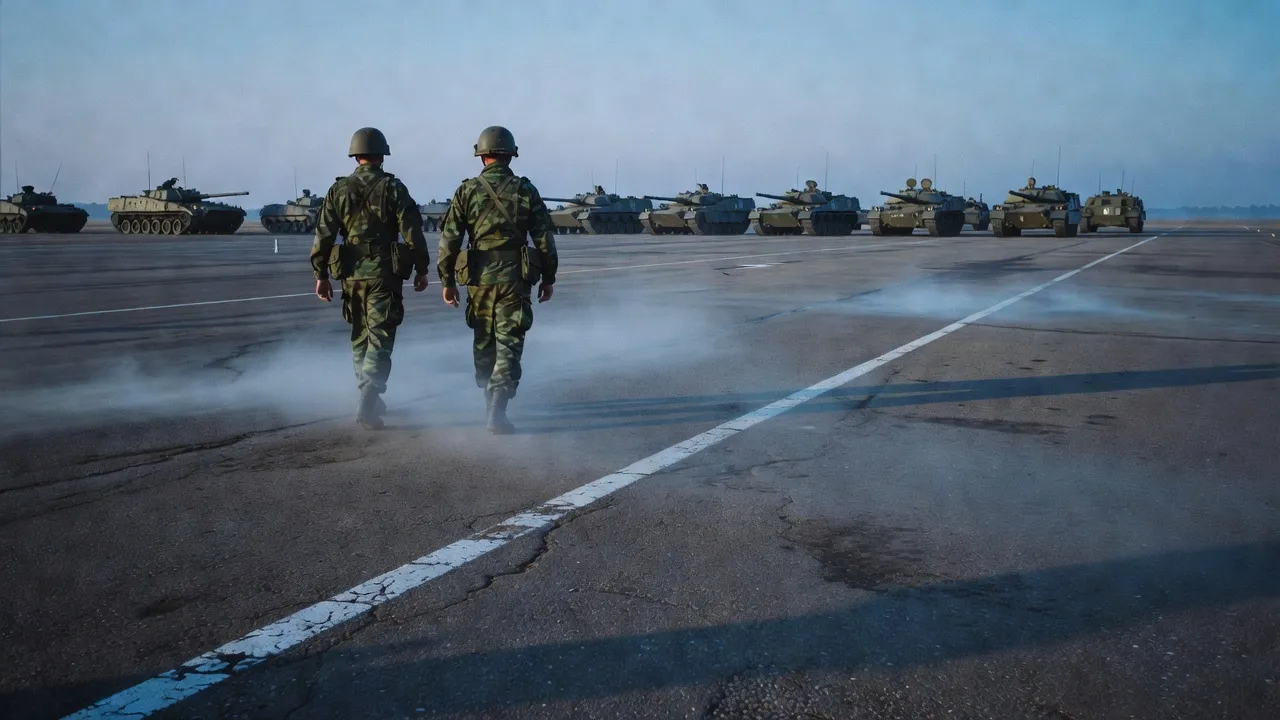
Donald Trump has ordered Pete Hegseth to substantially reduce joint military exercises with South Korea, citing his relationship with Kim Jong-un and describing these drills as 'costly' and 'hostile' towards Pyongyang.
Trump ties his decision to South Korea's refusal to join the US in denuclearization efforts against Iran, a refusal summed up by a 'No thanks!' attributed to Seoul.
The Ulchi Freedom Shield exercises will mobilize around 18,000 South Korean troops from August 17 to 27, 2026.
Trump's announcement mentions a substantial reduction in exercises, but several outlets report the South Korean Defense Ministry's response - that the maneuvers continue with no notable change - while others repeat the announcement without this counterpoint.
Coverage aligned with this reading
Coverage that diverges
Some media outlets view the reduction as a personal gesture of goodwill from Trump towards Kim Jong-un, while others see it primarily as a risk to the security guarantee offered to regional allies, without expecting reciprocity from North Korea.
Coverage aligned with this reading
Coverage that diverges
This grouping describes the publications analysed, not the position of these countries’ populations or of their governments.
What the coverage of each country leaves aside, while others put it forward.
Japan
Switzerland
United States
Preview: 3 of 9 media perspectives. Syntheses of the media analysed — not direct quotations. Method & limitations
Canberra is assessing the impact of a decision that, by tightening the security guarantee offered to Seoul, raises questions about the solidity of US commitments that Australia itself relies on through the AUKUS pact.
2 sources · View sources
Swiss French-speaking and German-speaking newsrooms read the same announcement two ways: the former sees another snub to Washington's historic allies, the latter a manoeuvre that goes ahead on the ground regardless.
2 sources · View sources
France is gauging the snub dealt to a historic US ally, as Washington caters to Kim Jong-un at Seoul's expense.
4 sources · View sources
DOMINANT ANGLE
Canberra is assessing the impact of a decision that, by tightening the security guarantee offered to Seoul, raises questions about the solidity of US commitments that Australia itself relies on through the AUKUS pact.
ANALYSIS
Canberra, August 17, 2026.
DOMINANT ANGLE
Swiss French-speaking and German-speaking newsrooms read the same announcement two ways: the former sees another snub to Washington's historic allies, the latter a manoeuvre that goes ahead on the ground regardless.
ANALYSIS
Bern, August 17, 2026.
DOMINANT ANGLE
France is gauging the snub dealt to a historic US ally, as Washington caters to Kim Jong-un at Seoul's expense.
ANALYSIS
Paris, August 17, 2026.
DOMINANT ANGLE
Tokyo was not consulted on a decision that directly affects its own deterrent architecture against North Korea, and its defense planning is equally dependent on it as Seoul's.
ANALYSIS
Tokyo, August 17, 2026.
DOMINANT ANGLE
Seoul is gauging the cost of a decision announced without consultation in Washington, amid opposition protests, a field exercise proceeding as planned, and renewed debate over autonomous nuclear deterrence.
ANALYSIS
Seoul, August 17, 2026.
DOMINANT ANGLE
Pakistan's capital, Islamabad, links the reduction in US-South Korean military drills to Seoul's refusal to join a war against Iran, rather than just the publicly displayed rapport between Trump and Kim Jong-un.
ANALYSIS
Islamabad, August 17, 2026.
DOMINANT ANGLE
Moscow is separating the presidential announcement from its implementation: its own agencies are reporting both the promised reduction in exercises with Seoul and their progression "as planned" in the field, while presenting the situation as a rebuff to its South Korean ally.
ANALYSIS
Moscow, August 17, 2026.
DOMINANT ANGLE
London views Trump's announcement as a move driven more by political personality than strategic revision, with the British press split between fascination with the Trump-Kim relationship and skepticism about its consequences for regional deterrence.
ANALYSIS
London, August 17, 2026.
DOMINANT ANGLE
Washington leans towards a rapprochement with Pyongyang, even if it means straining the alliance with Seoul and irritating Tokyo, following a deadlock in Iran.
ANALYSIS
The United States government announced on Sunday that it has ordered a substantial reduction in joint military exercises with South Korea, just hours before they were set to begin on Monday.
Explore every perspective on this subject across 9 countries.
Compare viewpoints and see where they diverge.
published on
countries
sources
articles
gap
President Donald Trump announced on Sunday, August 16, 2026, that he has instructed Defense Secretary Pete Hegseth to "substantially reduce" joint military exercises between the United States and South Korea, citing his "very good relationship" with North Korean leader Kim Jong-un.
No concrete reduction has been confirmed: the South Korean military says the Ulchi Freedom Shield exercise is proceeding as planned, with no official notification from Washington
Trump criticizes Seoul for declining his request to join the effort to denuclearize Iran.
Annual exercise between allies, including this year cybersecurity and anti-drone components.
In 2018-2019, Trump had already suspended or reduced these exercises, framing them as "provocative"
Measured with the previous method (distance between texts), on a different scale.