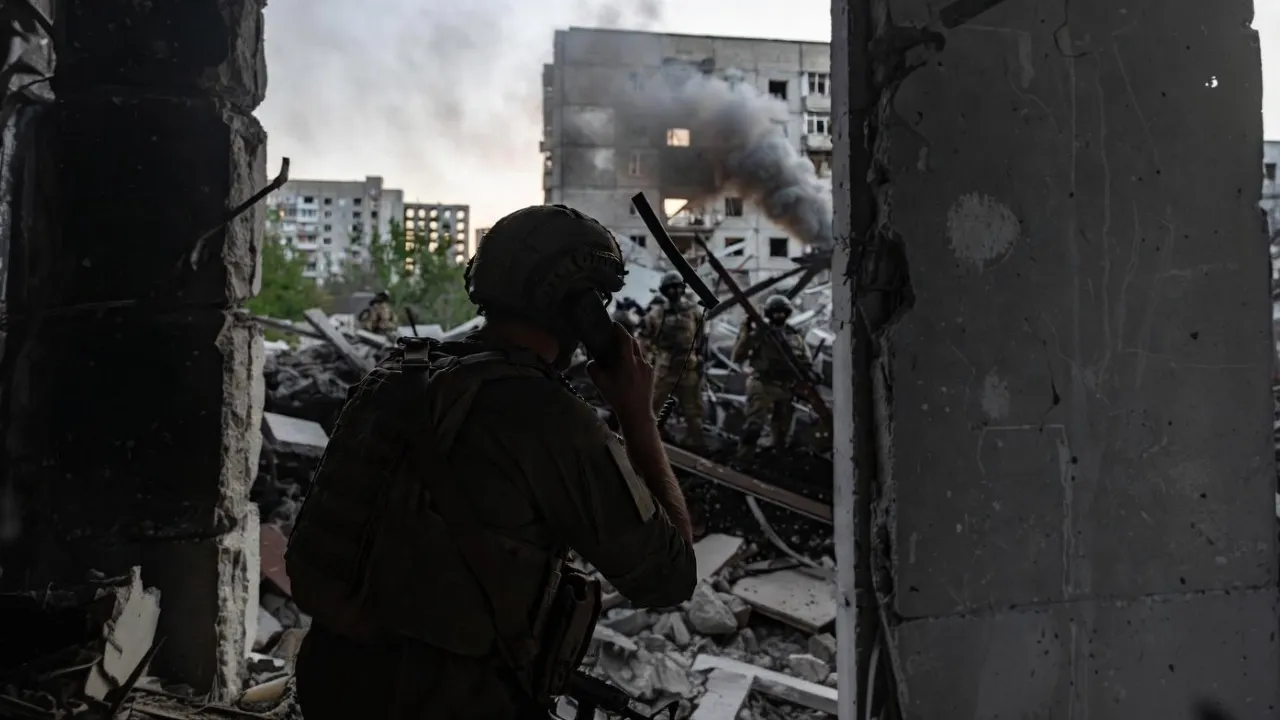
In late April 2026, a 90-minute phone call brought together the American and Russian presidents. The conversation covered two files at once, Ukraine and Iran. During the exchange, the Russian president proposed a temporary 24-hour truce for 9 May, Victory Day. Ukraine, the country most directly affected by the fighting, was not party to the call — a point acknowledged across all coverage.
This sequence touches a central balance of European security. For the first time since the war began, an American president directly asked his Russian counterpart for a pause in the fighting, and the latter responded with this truce offer. Seeing a negotiation open between Washington and Moscow without European capitals or Kyiv being involved gives concrete form to a strategic fear long voiced across the continent.
The main point in dispute is how to read the Russian offer. Some actors see it as a communication move tied to a symbolic date, while others view it as a sign of de-escalation that should not be dismissed. A second disagreement bears on the method itself: several governments hold that Ukraine's absence from the table is a substantive problem, whereas the two directly engaged powers present the call as diplomatic progress.
The pairing of the Ukrainian and Iranian files within a single exchange is likewise read in conflicting ways: a deliberate lever for some, a mere diplomatic fact for others. At this stage, neither the precise terms of the truce nor its verification mechanisms have been established, and whether it will materialize on 9 May remains uncertain.