Common ground and differences in coverage across the media analysed.
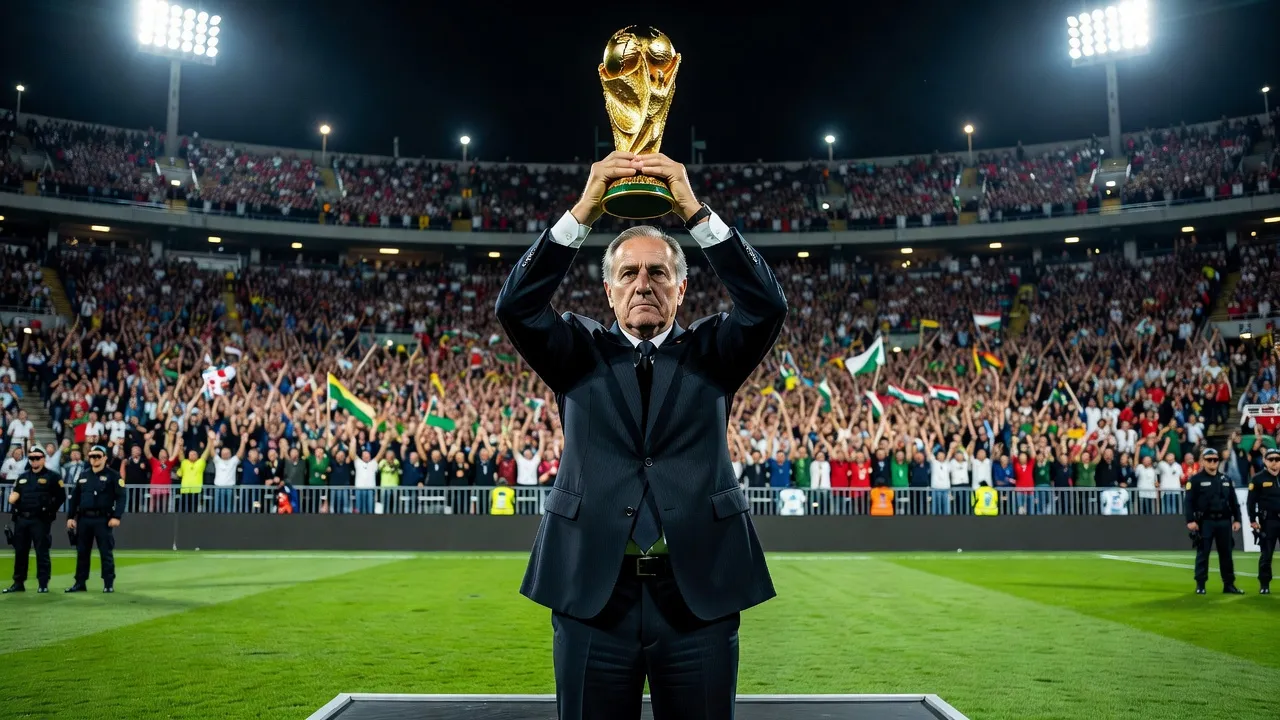
Gianni Infantino confirmed on Fox & Friends that Donald Trump will present the trophy to the winners at the final on July 19, 2026 at MetLife Stadium in East Rutherford (New Jersey), alongside the FIFA president.
Trump had already presented the trophy at the 2025 Club World Cup final (Chelsea vs PSG) at the same stadium, lingering on the podium to the point of causing confusion for players such as Cole Palmer.
Infantino had presented Trump with an unprecedented 'FIFA Peace Prize' at the World Cup draw in Washington in December 2025, establishing a close institutional relationship between FIFA and the American presidency.
Italy and Romania emphasize the breach of the protocol established since 2018 (Russia, Qatar) where only Infantino presented the trophy. Latin American and African countries downplay it by citing the precedent of the Emir of Qatar in 2022.
Brazil, Qatar and the United Kingdom frame the event as a deliberate extension of the American political agenda through sport. The United States, Mexico and Portugal adopt a more factual or procedural reading.
Coverage aligned with this reading
Coverage that diverges
Qatar and Portugal place the restrictions imposed on the Iranian delegation at the heart of their analysis of the tournament's politicization. Latin American and African perspectives mention the Iran issue as a secondary point.
This grouping describes the publications analysed, not the position of these countries’ populations or of their governments.
What the coverage of each country leaves aside, while others put it forward.
Nigeria
Mexico
United States
Preview: 3 of 11 media perspectives. Syntheses of the media analysed — not direct quotations. Method & limitations
Washington approaches the 2026 World Cup as dual spectacle: an unprecedented soft power showcase and a flashpoint for diplomatic tensions, with Trump positioning himself as the orchestrator of the final ceremony.
4 sources · View sources
Lagos reads the situation plainly: Trump's presence at the 2026 World Cup final muddies the line between sport and politics, and the Nigerian press views it primarily as a carefully choreographed display of American diplomatic communication through the channel of global football.
3 sources · View sources
Mexico City observes the tension between national pride and political discomfort: as a co-host of the largest World Cup in history, Mexico embraces a tournament whose final will be presided over by Trump, a figure long critical of Mexican migration and trade.
3 sources · View sources
DOMINANT ANGLE
Washington approaches the 2026 World Cup as dual spectacle: an unprecedented soft power showcase and a flashpoint for diplomatic tensions, with Trump positioning himself as the orchestrator of the final ceremony.
ANALYSIS
Washington, June 24, 2026.
DOMINANT ANGLE
Lagos reads the situation plainly: Trump's presence at the 2026 World Cup final muddies the line between sport and politics, and the Nigerian press views it primarily as a carefully choreographed display of American diplomatic communication through the channel of global football.
ANALYSIS
Lagos, June 25, 2026.
DOMINANT ANGLE
Mexico City observes the tension between national pride and political discomfort: as a co-host of the largest World Cup in history, Mexico embraces a tournament whose final will be presided over by Trump, a figure long critical of Mexican migration and trade.
ANALYSIS
Mexico City, June 24, 2026.
DOMINANT ANGLE
Doha reads Trump's presence at the July 19 World Cup final as a signal that global football's stage has become a platform for American diplomatic messaging, raising questions about whether sports venues can remain separate from geopolitical theater.
ANALYSIS
Doha, June 24, 2026.
DOMINANT ANGLE
Lima evaluates with pragmatism the political implications of FIFA's announcement: Donald Trump will present the World Cup trophy on July 19 at MetLife Stadium, and Peru weighs what this convergence of American executive power and global sport signals about tournament neutrality.
ANALYSIS
Lima, June 25, 2026.
DOMINANT ANGLE
Lisbon assesses the encroachment of politics into world sport: the announced presence of Trump at the 2026 World Cup final to present the trophy concentrates scrutiny on the separation between athletic competition and political agenda.
ANALYSIS
Lisbon, June 25, 2026.
DOMINANT ANGLE
Brazil reads Infantino's World Cup announcement as evidence of the blurred boundary between global sport and American political interests, as Brazilian media questions whether football governance remains insulated from external power dynamics.
ANALYSIS
Brasília, June 24, 2026.
DOMINANT ANGLE
Rome views Infantino's announcement as an established protocol shift: by entrusting the trophy presentation to Trump, FIFA crosses a boundary that its own previous standards had maintained.
ANALYSIS
Rome, June 25, 2026.
DOMINANT ANGLE
Bucharest weighs carefully the symbolic reach of Trump's presence at the 2026 World Cup final: behind the sporting gesture, Romanian media decode an American president bent on stamping his mark across every international platform.
ANALYSIS
Bucharest, June 24, 2026.
DOMINANT ANGLE
Warsaw weighs the contradiction: Trump set to present the World Cup trophy on July 19, even as Polish confidence in him hits a historic low of 29 percent, down from 75 percent under Biden.
ANALYSIS
Warsaw, June 25, 2026.
DOMINANT ANGLE
London examines the boundary between sport and politics: Trump's announced presence to present the World Cup trophy raises questions in the UK about the autonomy of global sports bodies when facing national executives.
ANALYSIS
London, June 25, 2026.
Explore every perspective on this subject across 11 countries.
Compare viewpoints and see where they diverge.
published on
countries
sources
articles
gap
FIFA president Gianni Infantino has confirmed that Donald Trump will hand the trophy to the winners at the World Cup final, scheduled for 19 July 2026 at MetLife Stadium in East Rutherford, New Jersey, alongside the head of the organisation. The gesture is not unprecedented: Trump had already presented the trophy at the 2025 Club World Cup final, in that same stadium, lingering on the podium to the point of surprising some players.
The sequence reflects a tightening institutional relationship between FIFA and the American presidency. In December 2025, during the draw in Washington, Infantino handed Trump an unprecedented "FIFA Peace Prize," and a dedicated task force for the tournament was set up at the White House. The 2026 World Cup, co-hosted by the United States, Mexico and Canada, brings together 48 teams, the largest format in the competition's history.
A second issue feeds the debate: the American administration has imposed travel restrictions on the Iranian delegation, based in Tijuana and required to leave the territory after each match. The Iranian federation has filed a complaint with FIFA, raising the question of the guarantees the body can offer teams when the host country's foreign policy interferes with the conditions of participation.
Readings of the event diverge. Some actors see a break with the protocol established since 2018, under which only the FIFA president handed over the trophy, and question the body's independence from executive power. Others play this down by recalling the precedent of the Qatari emir in 2022, or emphasise the sporting angle. At the time of the announcement, Trump had attended no match since the tournament opened on 11 June.
Measured with the previous method (distance between texts), on a different scale.