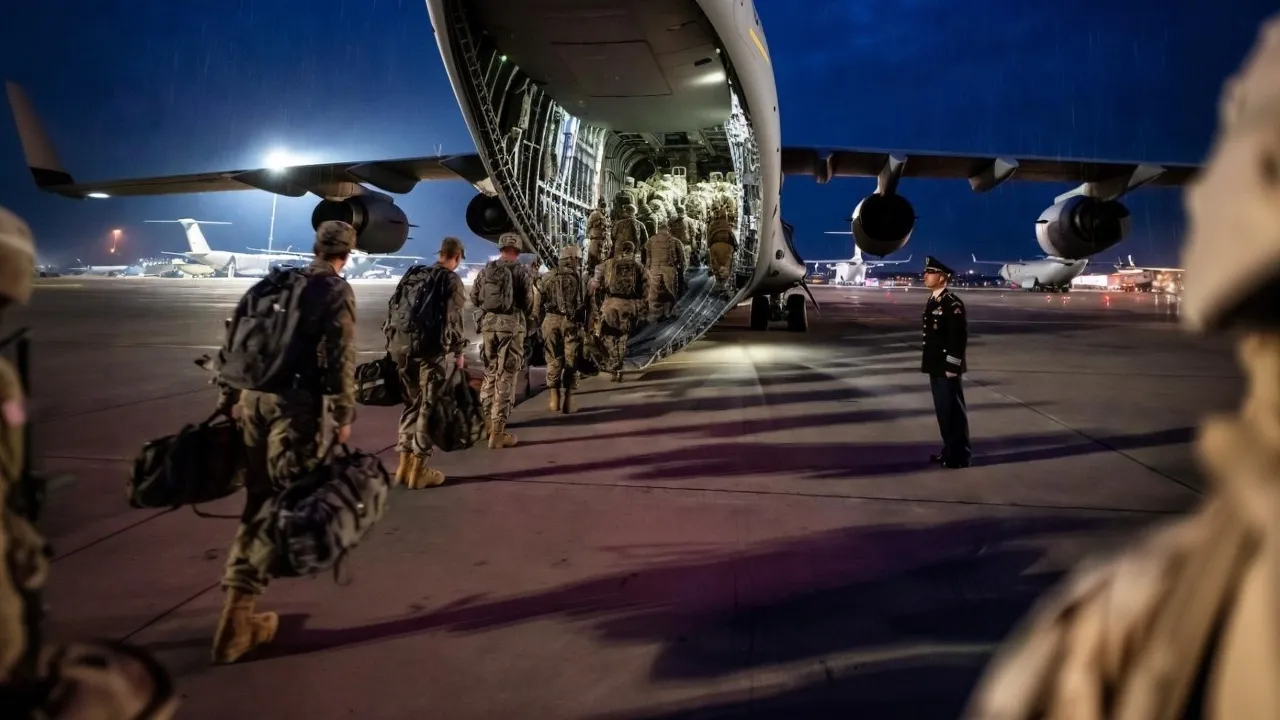
The Pentagon has officially announced the withdrawal of roughly 5,000 U.S. troops stationed in Germany, an operation set to take place over the next six to twelve months. Speaking in Florida on Saturday, May 2, Donald Trump said he intended to go "much further" than that figure. Shortly afterward, the deployment of long-range Tomahawk missiles on German soil, promised by Joe Biden in 2024, was also cancelled.
The sequence began after German Chancellor Friedrich Merz argued that Iran was "humiliating" Washington at the negotiating table and that the United States "visibly had no strategy." Trump responded by calling Merz's performance "deplorable." A sharp controversy followed over the goals being pursued on the Iran file.
The context goes well beyond this single quarrel. The withdrawal represents about 14% of the 36,000 U.S. personnel based in Germany and comes amid converging tensions over Iran, 25% tariffs on European automobiles, and disagreements over what support to provide for certain operations. The Tomahawk cancellation concretely reduces deterrence facing Russia, a concern shared even by Republican members of the armed services committees.
Several points remain contested. Merz maintains there is "no link" between his criticism and the withdrawal decision, while a Pentagon official describes the German remarks as "inappropriate and counterproductive." Actors also differ on the strategic significance: some see a political sanction, others a long-term realignment calling on Europeans to take on more of their own defense, even as no capability can quickly fill the resulting gap.