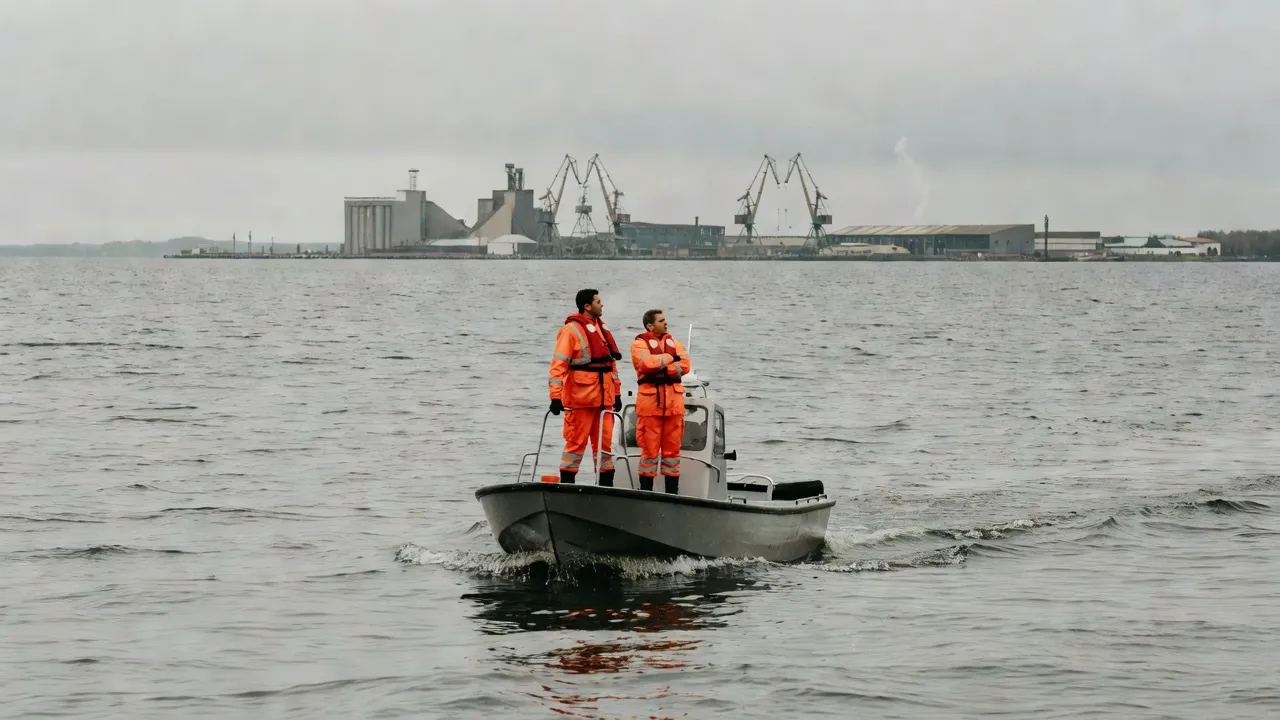
Trump renames Lake Ontario "Lake America" by executive order
published on
countries
sources
articles
More divergent than 47% of recent comparable stories (reference: 91 recent stories measured with the same method).
On August 27, 2026, Donald Trump signed a decree renaming Lake Ontario "Lake America" in the US federal nomenclature, a move that comes after the lake's name originated from an Iroquoian word, with the lake being a shared border water body between New York State and the Canadian province of Ontario.
The decree only applies to US federal nomenclature, and does not bind Canada or international organizations.
The Gulf of Mexico was renamed the "American Gulf" in 2025, never recognized by Mexico.
New York Governor Kathy Hochul refuses to use the lake's new name.
Trump claims the United States loses $60 billion a year "because of Canada" for the past fifteen years.
Key figures
What the comparison reveals
Common ground and differences in coverage across the media analysed.
What the media report in common
Donald Trump signed a decree renaming Lake Ontario to 'Lake America' in the US federal geographic nomenclature, without international scope or obligation for Canada.
The move comes after the breakdown of trade negotiations between Washington and Ottawa and the imposition of 50% US tariffs on Canadian products, followed by Canadian retaliatory measures.
It is in line with the renaming of the Gulf of Mexico to 'Gulf of America' decided at the start of Trump's second term.
Where media coverage diverges
Main reason for the decree
Most of the press links the decree to the tariff pressure strategy on Canada, while Brazilian and American media highlight a domestic policy motivation related to Trump's unpopularity before the midterm elections.
Severity of the gesture
Germany views the renaming as a systematic expression of a presidential doctrine of naming power, while American and British media also treat it with ridicule, between governors' mockery and the White House's cartographic error.
Coverage that diverges
This grouping describes the publications analysed, not the position of these countries’ populations or of their governments.
Blind spots
What the coverage of each country leaves aside, while others put it forward.
 Germany
- Precise calculation of customs duties and the value of the trade exchanges involved
 United States
- Canadian argument on the origin and age of the Huron-Wendat name of the lake
 Venezuela
- Official reaction and argumentation from Canada, including the quote from Mark Carney
Understand the context
- AUG 21, 2026Failure of trade negotiations between Washington and Ottawa
- AUG 27, 2026Trump signs decree renaming Lake Ontario "Lake America"
How each country reads it
Preview: 3 of 12 media perspectives. Syntheses of the media analysed — not direct quotations. Method & limitations
- Germany
Berlin views the decree not merely as a commercial pressure tactic, but as a reiteration of a doctrine that Trump has been methodically applying since the start of his second term.
3 sources · View sources
 Australia
 views the move as another piece in the escalating US-Canada trade dispute, rather than an isolated toponymic provocation.
5 sources · View sources
 Brazil
 views the renaming of Lake Ontario as linked to the breakdown of trade talks with Canada, seeing the symbolic move as an extension of the tariff war rather than an isolated territorial dispute.
2 sources · View sources
The full text, country by country
Germany
DOMINANT ANGLE
Berlin views the decree not merely as a commercial pressure tactic, but as a reiteration of a doctrine that Trump has been methodically applying since the start of his second term.
ANALYSIS
Berlin, August 28, 2026.
Australia
DOMINANT ANGLE
Australia views the move as another piece in the escalating US-Canada trade dispute, rather than an isolated toponymic provocation.
ANALYSIS
Sydney, August 28, 2026.
Brazil
DOMINANT ANGLE
Brazil views the renaming of Lake Ontario as linked to the breakdown of trade talks with Canada, seeing the symbolic move as an extension of the tariff war rather than an isolated territorial dispute.
ANALYSIS
Brasília, August 28, 2026.
 Canada
DOMINANT ANGLE
Ottawa is pushing back against the US decree, citing four centuries of Wendat toponymy, and frames it as a gesture lacking legal significance, even as the trade rift with the US capital deepens.
ANALYSIS
Ottawa, August 27, 2026.
 France
DOMINANT ANGLE
France views the decree renaming Lake Ontario as a symbolic provocation closely tied to the ongoing trade standoff with Ottawa, rather than a simple cartographic gesture.
ANALYSIS
Paris, August 28, 2026.
 Nigeria
DOMINANT ANGLE
Nigeria's capital, Abuja, views the "Lake of the Americas" decree in the context of the trade war between the US and Canada, where billions of dollars at stake carry more weight than the name of a lake.
ANALYSIS
Abuja, August 28, 2026.
 Pakistan
DOMINANT ANGLE
Islamabad takes away from this decree a figure more than a symbol: 50% customs duties on $20 billion worth of Canadian goods and a retaliatory measure on over 700 American products, a sign of a very real trade rupture beneath the toponymic labeling.
ANALYSIS
Islamabad, August 28, 2026.
 Russia
DOMINANT ANGLE
Moscow views the renaming of Lake Ontario to "Lake of America" as a new symbolic episode in the trade war pitting the US against Canada, following the failure of trade negotiations.
ANALYSIS
Moscow, August 28, 2026.
 Turkey
DOMINANT ANGLE
Turkey views the Trump decree on Lake Ontario as a new tool in the trade war against Canada, rather than an isolated toponymic gesture.
ANALYSIS
Ankara, August 28, 2026.
 United Kingdom
DOMINANT ANGLE
London links the renaming of Lake Ontario to the breakdown of trade talks between Washington and Ottawa, seeing it as a new episode in the tariff war rather than a simple toponymic gesture.
ANALYSIS
London, August 28, 2026.
United States
DOMINANT ANGLE
The United States government is facing division within its own political camp over this decree: governors from all sides are ridiculing it, and Democratic lawmakers are promising legislation to counter it, while the White House is framing it as an economic move.
ANALYSIS
The United States government is facing backlash after a decree signed by President Donald Trump on Thursday renamed Lake Ontario the "Lake of America", which has first stirred up domestic politics before weighing on diplomacy with Canada.
Venezuela
DOMINANT ANGLE
Caracas views the decree as an additional shot in the trade war that the US government is waging against Canada, with the toponymy issue serving as a pretext for tariff pressure rather than being the subject itself.
ANALYSIS
Caracas, August 28, 2026.
Explore every perspective on this subject across 12 countries.
Compare viewpoints and see where they diverge.