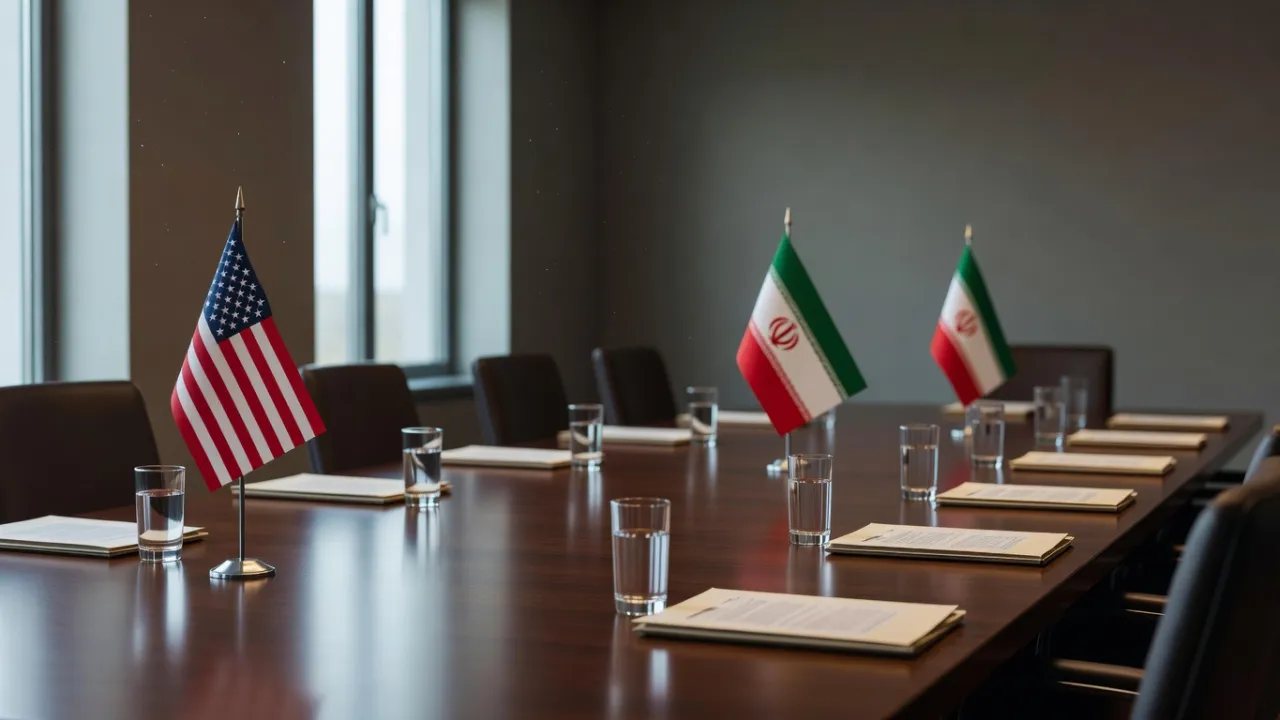
Common ground and differences in coverage across the media analysed.
On May 24, Trump posted on Truth Social a message ordering his negotiators to 'not rush' into an agreement, asserting that 'time is on our side'.
A ceasefire between the United States and Iran has been in effect since April 8, 2026, but Washington maintains a blockade of Iranian ports and Iran maintains controls over navigation in the Gulf.
The reopening of the Strait of Hormuz is the central point of ongoing negotiations, with the Iranian nuclear question deferred to a later phase.
Singapore and the United Kingdom cover in detail US airstrikes on Iranian missile sites in the southern part of the country on May 25, which occurred during the ceasefire. This information is absent from Canadian, German, and French perspectives.
Preview: 3 of 5 media perspectives. Syntheses of the media analysed — not direct quotations.
Berlin reads Trump's Iran reversal as a signal of strategic patience: after nurturing hopes for a swift agreement, Washington has stepped back and frames time as a tactical advantage.
1 source ·
Paris scrutinizes Trump's Iran U-turn: after signals of progress, Washington declares that 'time is on our side' and instructs its negotiators not to rush the deal.
1 source ·
Doha closely tracks Washington's whiplash on Iran negotiations: a deal announced as "largely negotiated" one day, then tempered by Trump himself the next, places Qatar—a directly consulted mediator—at the center of diplomatic volatility.
1 source ·
Coverage aligned with this reading
The Qatari perspective places Prime Minister Al Thani at the center of the mediation apparatus, directly consulted by Trump. The United Kingdom mentions it marginally; other countries ignore it.
British media extensively details the internal fracture in the US Senate (Cruz, Wicker against the agreement), an angle completely absent from the five other perspectives.
This grouping describes the publications analysed, not the position of these countries’ populations or of their governments.
What the coverage of each country leaves aside, while others put it forward.
France
Germany
Canada
published on
countries
sources
articles
gap
On 24 May 2026, in a post on Truth Social, Donald Trump ordered his negotiators "not to rush" toward a deal with Iran, stating that "time is on our side." The message came hours after Marco Rubio, speaking from New Delhi, had announced imminent "good news." No agreement was signed that Sunday, with both sides still negotiating the precise wording of several points in the framework deal.
This sequence unfolds within a ceasefire in effect since 8 April 2026, which followed an open conflict that began on 28 February. The truce remains partial: Washington maintains a blockade of Iranian ports while Tehran keeps controls on Gulf shipping. The reopening of the Strait of Hormuz, through which roughly 20% of global oil trade normally passes, is the core of the talks, with the nuclear question deferred to a later phase.
Keeping the naval blockade in place while slowing negotiations reflects a wait-and-see calculation: Iran's sanctioned economy bears the cost of the blockade more acutely than Western markets. U.S. strikes on Iranian missile sites on 25 May coexisted with the talks, illustrating the juxtaposition of military pressure and a negotiated track.
Several points remain disputed among actors. The release of frozen Iranian assets is presented by some as a central obstacle and ignored by others. Qatar's mediating role and internal divisions within the U.S. Senate are likewise reported unevenly. The exact shape of any eventual agreement remains uncertain.
DOMINANT ANGLE
Berlin reads Trump's Iran reversal as a signal of strategic patience: after nurturing hopes for a swift agreement, Washington has stepped back and frames time as a tactical advantage.
ANALYSIS
Berlin, May 24, 2026.
DOMINANT ANGLE
Paris scrutinizes Trump's Iran U-turn: after signals of progress, Washington declares that 'time is on our side' and instructs its negotiators not to rush the deal.
ANALYSIS
Paris, May 24, 2026.
DOMINANT ANGLE
Doha closely tracks Washington's whiplash on Iran negotiations: a deal announced as "largely negotiated" one day, then tempered by Trump himself the next, places Qatar—a directly consulted mediator—at the center of diplomatic volatility.
ANALYSIS
Doha, May 24, 2026.
DOMINANT ANGLE
Singapore tracks with precision the economic risks of a conflict that paralyzes the Strait of Hormuz, scrutinizing every diplomatic signal between Washington and Tehran.
ANALYSIS
Singapore, May 27, 2026.
DOMINANT ANGLE
London examines the contradictions of a Trump who speaks of an imminent deal Saturday and orders patience Sunday, while authorizing new strikes on Iran Monday.
ANALYSIS
London, May 27, 2026.
Explore every perspective on this subject across 5 countries.
Compare viewpoints and see where they diverge.
Measured with the previous method (distance between texts), on a different scale.