
Common ground and differences in coverage across the media analysed.
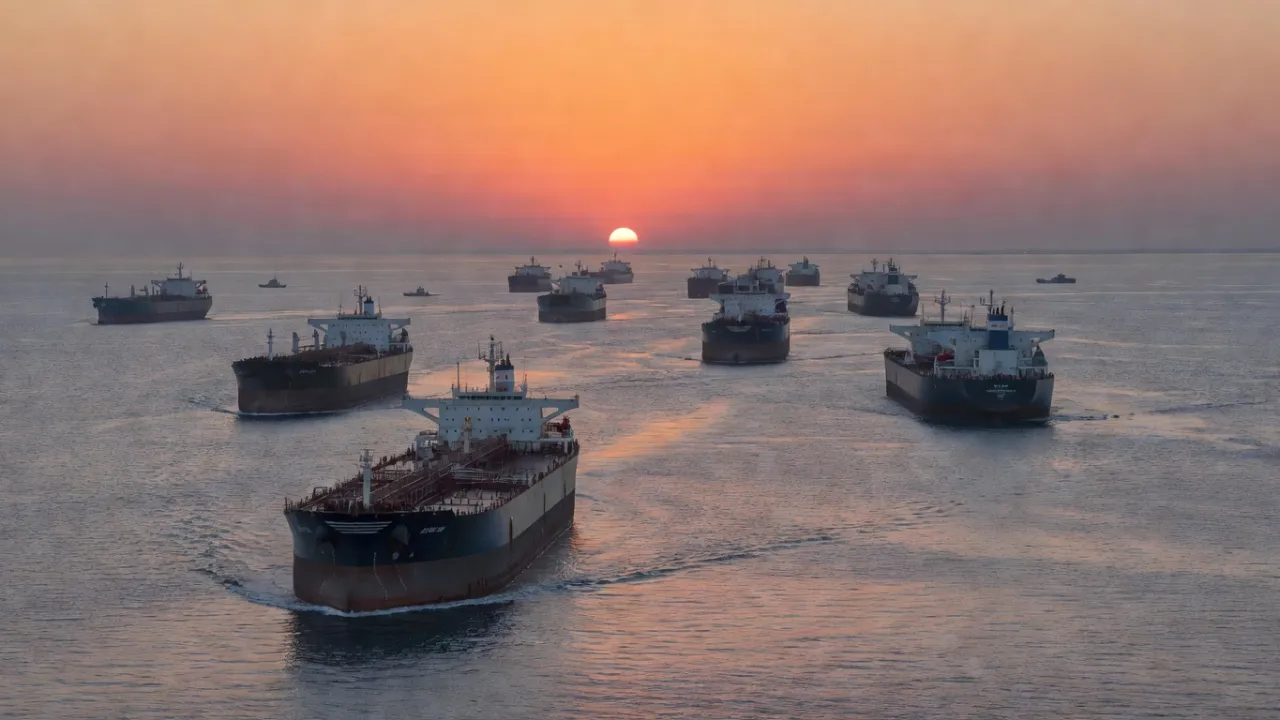
The Strait of Hormuz has been closed or subject to severe restrictions since the US-Israeli strikes of February 28, a corridor that normally ensures approximately 20 percent of global oil flows.
Trump claims that Xi Jinping agreed with him on the necessity for Iran to reopen the Strait of Hormuz, but no official confirmation or binding mechanism has been announced from the Chinese side.
Negotiations between Washington and Tehran are at a standstill: Iranian media and numerous regional sources agree that the American response contains no tangible concessions.
Washington-allied perspectives present the agreement as significant diplomatic progress, while non-aligned Asian perspectives and Beijing-friendly press characterize it as a symbolic exercise 'long on symbols, short on substance', with no concrete delivery.
Global South perspectives (IN, NG, PK, QA) and Europe (DE) document Washington's five conditions without validating them, emphasizing that Tehran considers them unacceptable; Ukrainian and Israeli perspectives present them as necessary pressure.
Islamabad presents itself as an indispensable diplomatic pivot and valorizes its mediation as a 'landmark moment' in its history; other perspectives mention this role marginally or without attributing concrete results to it.
This grouping describes the publications analysed, not the position of these countries’ populations or of their governments.
What the coverage of each country leaves aside, while others put it forward.
China
Ukraine
Israel
Preview: 3 of 15 media perspectives. Syntheses of the media analysed — not direct quotations. Method & limitations
Canberra watches with caution Trump's claims about a Xi-Iran deal on the Strait of Hormuz, noting the absence of official Chinese confirmation and the significant stakes for regional shipping lanes.
1 source · View sources
Beijing frames the Xi-Trump summit as the foundation of a "constructive strategic stability" framework, a regime of regulated coexistence that manages rivalry without denying it, and perceives favorable signals in international opinion.
1 source · View sources
Berlin monitors with concern the diplomatic stalemate over Iran, where American threats of destruction coexist with a fragile truce, while Trump's visit to Beijing has not yet produced visible breakthroughs.
1 source · View sources
DOMINANT ANGLE
Canberra watches with caution Trump's claims about a Xi-Iran deal on the Strait of Hormuz, noting the absence of official Chinese confirmation and the significant stakes for regional shipping lanes.
ANALYSIS
Canberra, May 18, 2026.
DOMINANT ANGLE
Beijing frames the Xi-Trump summit as the foundation of a "constructive strategic stability" framework, a regime of regulated coexistence that manages rivalry without denying it, and perceives favorable signals in international opinion.
ANALYSIS
Beijing, May 18, 2026.
DOMINANT ANGLE
Berlin monitors with concern the diplomatic stalemate over Iran, where American threats of destruction coexist with a fragile truce, while Trump's visit to Beijing has not yet produced visible breakthroughs.
ANALYSIS
Berlin, May 18, 2026.
DOMINANT ANGLE
Cairo closely monitors escalating tensions around the Strait of Hormuz, scrutinizing Washington's military signals and Tehran's measures for controlling maritime traffic that directly threaten global energy routes.
ANALYSIS
Cairo, May 17, 2026.
DOMINANT ANGLE
Jerusalem monitors Trump-Xi talks on Iran closely, navigating between hopes for increased international pressure on Tehran and concerns that Sino-American diplomacy could sideline Israeli interests.
ANALYSIS
Jerusalem, May 18, 2026.
DOMINANT ANGLE
New Delhi follows Iran-US negotiations closely, aware that the outcome of the Iranian nuclear dossier and control of the Strait of Hormuz directly condition its energy supplies and economic stability.
ANALYSIS
New Delhi, May 17, 2026.
DOMINANT ANGLE
Tokyo views the Trump-Xi summit as a symbolic exercise lacking substance, and remains concerned about the Iranian blockade of the Strait of Hormuz, which directly threatens Japan's vital energy supplies.
ANALYSIS
Tokyo, May 18, 2026.
DOMINANT ANGLE
Seoul reads the Trump-Xi summit with particular attention driven by its energy vulnerabilities: the Strait of Hormuz carries approximately 70 percent of South Korea's crude oil imports, and Washington is pressing Seoul to commit militarily to restoring freedom of navigation in the waterway.
ANALYSIS
Seoul, May 17, 2026.
DOMINANT ANGLE
Lagos monitors Trump's escalating rhetoric against Tehran with focus on the direct impact of the Strait of Hormuz blockade on global energy prices — a critical variable for an economy heavily exposed to oil market fluctuations.
ANALYSIS
Lagos, May 17, 2026.
DOMINANT ANGLE
Manila watches with concern as the Strait of Hormuz crisis threatens the archipelago's economy through rising energy import costs and disrupted maritime commerce that feeds the nation's shipping-dependent growth.
ANALYSIS
Manila, May 17, 2026.
DOMINANT ANGLE
Islamabad frames itself as the indispensable diplomatic pivot in the Iran-US crisis, emphasizing its mediation role as a historic rebranding opportunity while acknowledging fragility in the process.
ANALYSIS
Islamabad, May 17, 2026.
DOMINANT ANGLE
Doha positions itself at the heart of regional diplomacy by actively supporting Pakistan's mediation between Washington and Tehran, even as negotiations stall amid American threats and Iran's plans for Strait of Hormuz tolls.
ANALYSIS
Doha, May 17, 2026.
DOMINANT ANGLE
Moscow closely monitors escalation between Washington and Tehran, reporting American ultimatums and military coordination with Israel as signals of possible resumption of strikes against Iran.
ANALYSIS
Moscow, May 17, 2026.
DOMINANT ANGLE
Singapore tracks the Strait of Hormuz blockade with careful attention, as this maritime passage underpins Southeast Asia's direct energy supplies, while observing a deadlocked US-Iran dialogue despite Chinese mediation efforts.
ANALYSIS
Singapore, May 17, 2026.
DOMINANT ANGLE
Kyiv reads the Strait of Hormuz crisis through the lens of its own military survival: each dollar extracted from Russian or Iranian oil converts into drones and missiles striking Ukrainian cities.
ANALYSIS
Kyiv, May 17, 2026.
Explore every perspective on this subject across 15 countries.
Compare viewpoints and see where they diverge.
published on
countries
sources
articles
gap
The Strait of Hormuz, which normally carries about 20% of global oil flows, has been closed or under severe restrictions since the U.S.-Israeli strikes on Iran of 28 February 2026. Its closure has accompanied a roughly 50% rise in Brent crude prices since the conflict began, hitting energy-importing economies in Asia and Africa directly.
On 17 May, Donald Trump claimed that Xi Jinping had agreed with him on the need for Iran to reopen the strait. No official confirmation or binding mechanism, however, has been announced on the Chinese side. The same day, the U.S. president issued repeated warnings to Tehran on Truth Social, suggesting that "nothing would be left" of the Iranian capital without a swift deal.
Negotiations between Washington and Tehran remain at a standstill. Washington demands a near-total dismantling of Iran's nuclear program and the transfer of enriched uranium stocks, conditions Tehran deems unacceptable so long as the naval blockade is not lifted and no concrete economic guarantees are provided. Pakistani mediation is cited among the channels of dialogue.
Several uncertainties persist. As the largest buyer of Iranian oil, China maintains an equidistant stance: it reportedly says privately that it does not wish to obstruct U.S. operations, while publicly refraining from any commitment to pressure Iran directly. The real scope of the Xi-Trump understanding is disputed among the actors, some viewing it as a diplomatic step forward, others as a largely symbolic gesture with no concrete follow-through.
Measured with the previous method (distance between texts), on a different scale.