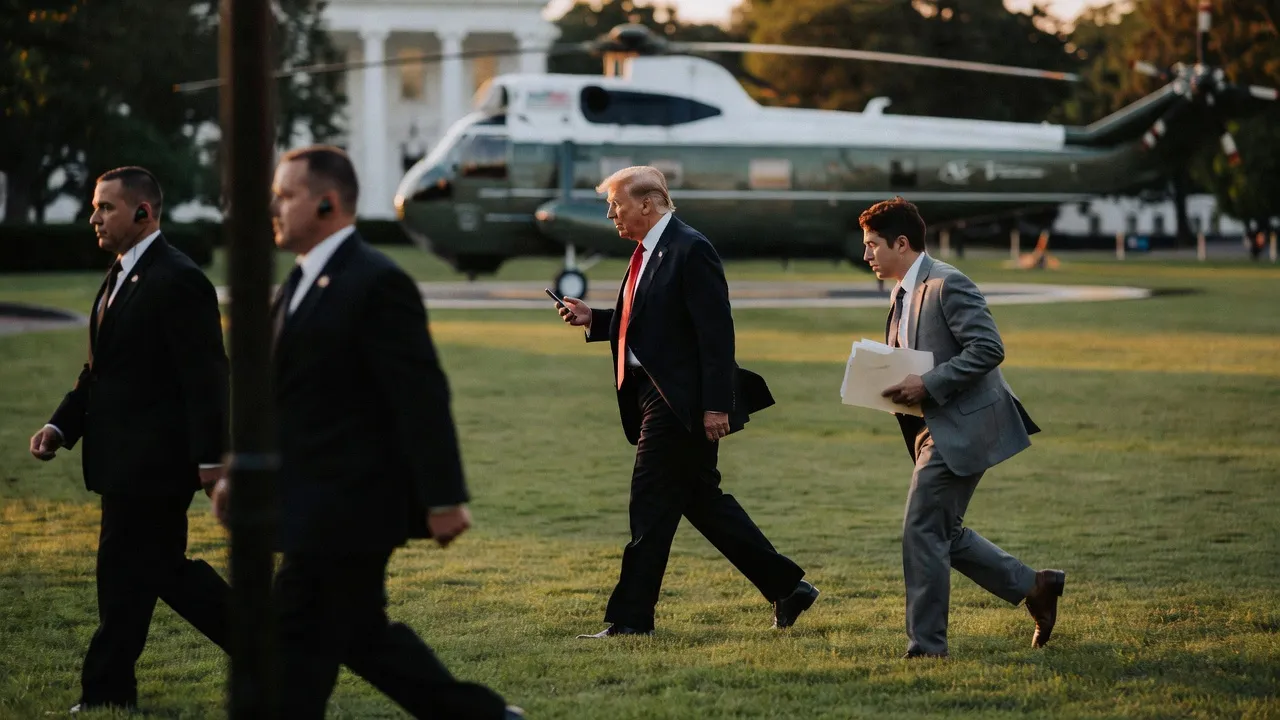
Trump suspends US strikes on Iran
published on
countries
sources
articles
Measured with the previous method (distance between texts), on a different scale.
On Saturday 1 August, Donald Trump announced on Truth Social that he and Israel had agreed to suspend a large-scale American strike on Iran planned for that weekend, at the request of Tehran and other Middle Eastern countries, on condition that a deal be reached quickly. That deal would provide for the "immediate, complete and total" reopening of the Strait of Hormuz and an end to the Iranian nuclear threat. The day before, at Camp David, Trump had threatened Tehran with strikes "unseen since the Second World War". The US State Department issued an unprecedented alert urging American nationals in ten Middle Eastern countries to prepare to leave. The conflict, which began on 28 February 2026, has already seen one ceasefire collapse in mid-June.
Key figures
- 10 countriesMiddle Eastern countries covered by the State Department's unprecedented alert to American nationals1 source · The Age World
- 18 vesselsCommercial vessels rerouted in the Strait of Hormuz by the naval blockade claimed by CENTCOM1 source · CGTN
- 18 service membersAmerican service members killed since the start of the conflict, according to a Pentagon count1 source · The Independent
- 880,000 barrelsBarrels of Argentine crude imported on a trial basis by South Korea in response to risks around Hormuz1 source · Korea Herald
What the comparison reveals
Common ground and differences in coverage across the media analysed.
What the media report in common
Donald Trump announced on Truth Social that he had called off a major strike on Iran planned for this weekend, subject to reaching a deal quickly.
The deal referred to by Trump is said to include the "immediate, complete and total" reopening of the Strait of Hormuz and an end to the "Iranian nuclear threat".
The precise terms of that deal are documented by none of the sources consulted: the pause remains conditional and is not formalised by any ceasefire.
Where media coverage diverges
How solid the pause really is on the Israeli side
Trump presents the suspension as a concerted decision to which Israel explicitly signs up, while anonymous Israeli military sources point instead to a heightened alert in anticipation of a possible resumption of strikes on a larger scale.
Coverage aligned with this reading
Coverage that diverges
Legitimacy of the framework around Hormuz
Washington and several relays present the reopening of the Strait of Hormuz as a legitimate condition of the deal, whereas Tehran rejects that negotiating framework and asserts its sovereignty over waters it shares with Oman.
Coverage aligned with this reading
Coverage that diverges
Nature of the American climbdown
The American account presents the pause as a strategic choice based on "deal parameters" obtained through regional allies, while the Russian press reads it as a last-minute retreat in the face of a plan to bomb Iran's energy infrastructure that was revealed by American outlets themselves.
Coverage aligned with this reading
Coverage that diverges
This grouping describes the publications analysed, not the position of these countries’ populations or of their governments.
Blind spots
What the coverage of each country leaves aside, while others put it forward.
 United States
- Iran's official reaction to the announcement
- the role of regional mediators other than Saudi Arabia
 Israel
- the detailed content of the deal parameters
- Iran's official position on the negotiation
 South Korea
- the military posture and regional alert level
- the role of the Saudi intervention in securing the pause
How each country reads it
Preview: 3 of 11 media perspectives. Syntheses of the media analysed — not direct quotations. Method & limitations
- United States
Washington opts for a pause, betting on unclear accord terms rather than the escalation threatened the previous day
2 sources · View sources
 Iran
Tehran dismisses US pressure as doomed to fail and asserts sovereignty over the Strait of Hormuz, characterizing Trump's strike suspension as merely a tactical pause rather than de-escalation.
2 sources · View sources
- Israel
Jerusalem assesses the reach of a suspension it says it accepted in concert with Washington, while keeping its military at maximum alert ahead of any potential resumption of strikes.
2 sources · View sources
The full text, country by country
United States
DOMINANT ANGLE
Washington opts for a pause, betting on unclear accord terms rather than the escalation threatened the previous day
ANALYSIS
Washington, August 2, 2026.
Iran
DOMINANT ANGLE
Tehran dismisses US pressure as doomed to fail and asserts sovereignty over the Strait of Hormuz, characterizing Trump's strike suspension as merely a tactical pause rather than de-escalation.
ANALYSIS
Tehran, 2 August 2026.
Israel
DOMINANT ANGLE
Jerusalem assesses the reach of a suspension it says it accepted in concert with Washington, while keeping its military at maximum alert ahead of any potential resumption of strikes.
ANALYSIS
Jerusalem, 2 August 2026.
 Qatar
DOMINANT ANGLE
Doha tempers the strike suspension as a fragile respite for Gulf security, where the reopening of the Strait of Hormuz weighs as heavily as Iran's fate.
ANALYSIS
Doha, 2 August 2026.
 Russia
DOMINANT ANGLE
Moscow reads Trump's suspension of the strike as a last-minute retreat from a plan to bomb Iranian energy infrastructure that was already halted, according to reporting by American press outlets themselves.
ANALYSIS
Moscow, August 2, 2026.
 China
DOMINANT ANGLE
Beijing assesses the fragility of a conditional truce in the Strait of Hormuz, where the U.S. naval blockade directly affects global energy interests, while noting that Washington maintains its threat of strikes.
ANALYSIS
Beijing, 2 August 2026.
 United Kingdom
DOMINANT ANGLE
London weighs a risky gamble, torn between Saudi pressure and mounting doubts about the conflict's outcome.
ANALYSIS
London, 2 August 2026.
 France
DOMINANT ANGLE
Paris reads Trump's announced suspension as a conditional pause, more tactical than diplomatic, in the escalation with Iran.
ANALYSIS
Paris, 2 August 2026.
 Pakistan
DOMINANT ANGLE
Islamabad assesses its role as a direct military interlocutor in the crisis, highlighted by the Iranian Foreign Minister's call to Pakistan's military chief hours before Trump announced a suspension of further strikes.
ANALYSIS
Islamabad, 2 August 2026.
South Korea
DOMINANT ANGLE
Seoul weighs the suspension of U.S. strikes against Iran in light of its energy security, already pursuing diversification toward Argentine crude oil amid risks to the Strait of Hormuz.
ANALYSIS
Seoul, 2 August 2026.
 Australia
DOMINANT ANGLE
Canberra weighs cautiously Trump's reversal, caught between his bellicose rhetoric at Camp David and the unprecedented alert issued to American citizens in the Middle East.
ANALYSIS
Canberra, 2 August 2026.
Explore every perspective on this subject across 11 countries.
Compare viewpoints and see where they diverge.