Common ground and differences in coverage across the media analysed.
Trump posted warnings on Truth Social threatening Iran with massive destruction if Tehran fails to reach an agreement quickly, summarized by the phrase 'The Clock is Ticking'.
Trump suspended a planned military strike against Iran at the explicit request of leaders from Qatar, Saudi Arabia, and the UAE, while keeping forces at maximum alert status.
A fragile ceasefire has been in place since early April, following the joint US-Israeli strikes of February 28; negotiations have stalled over nuclear and financial issues.
Some perspectives attribute the tension to American coercion strategy, while others view it as a response to Iranian refusals to negotiate seriously.
Washington demands that Iran retain only a single nuclear site and transfer its enriched uranium to the United States; Tehran refuses any linkage between conflict resolution and nuclear concessions.
Coverage aligned with this reading
Some countries view Gulf mediation as a decisive diplomatic breakthrough, while others see structural dependence of Washington on its regional allies or a simple pressure tactic.
This grouping describes the publications analysed, not the position of these countries’ populations or of their governments.
What the coverage of each country leaves aside, while others put it forward.
United States
Germany
South Africa
Preview: 3 of 20 media perspectives. Syntheses of the media analysed — not direct quotations. Method & limitations
Canberra closely watches the resurgence of US-Iran tensions, between threats of strikes and Tehran's diplomatic overtures, in a region crucial for global energy flows.
1 source · View sources
Ottawa is watching with concern as Trump's threat to Iran takes center stage, with Canadian media focusing on the global economic fallout of a conflict that's driving up oil prices, inflation, and mortgage rates.
2 sources · View sources
Beijing watches closely the volatility of US strategy towards Iran, seeing it as an illustration of the internal contradictions of a foreign policy oscillating between military threat and negotiation, to the detriment of regional stability.
1 source · View sources
DOMINANT ANGLE
Canberra closely watches the resurgence of US-Iran tensions, between threats of strikes and Tehran's diplomatic overtures, in a region crucial for global energy flows.
ANALYSIS
Sydney, May 21, 2026.
DOMINANT ANGLE
Ottawa is watching with concern as Trump's threat to Iran takes center stage, with Canadian media focusing on the global economic fallout of a conflict that's driving up oil prices, inflation, and mortgage rates.
ANALYSIS
Ottawa, May 18, 2026.
DOMINANT ANGLE
Beijing watches closely the volatility of US strategy towards Iran, seeing it as an illustration of the internal contradictions of a foreign policy oscillating between military threat and negotiation, to the detriment of regional stability.
ANALYSIS
Beijing, May 19, 2026.
DOMINANT ANGLE
Berlin views the US-Iran crisis through an economic lens: the blockade of the Strait of Hormuz and the threat of renewed airstrikes pose a serious threat to the global economy, according to German Finance Minister Lars Klingbeil.
ANALYSIS
Berlin, May 18, 2026.
DOMINANT ANGLE
Paris follows with concern the escalation sequence between Washington and Tehran, highlighting Trump's dual register: simultaneous threats of total destruction and negotiated openings, in a fragile ceasefire context that threatens regional stability and global energy markets.
ANALYSIS
Paris, May 18, 2026.
DOMINANT ANGLE
Athens is closely following with marked concern the escalating US rhetoric against Iran, in a context where regional energy stability is directly threatened by a conflict that has lasted nearly three months.
ANALYSIS
Athens, May 18, 2026.
DOMINANT ANGLE
Tel Aviv views the situation as a confirmation that Iran maintains its regional destabilization capacity through proxies, even under ceasefire, and that Trump's nuclear condition aligns with Israel's red line.
ANALYSIS
Tel Aviv, May 18, 2026.
DOMINANT ANGLE
New Delhi takes a keen interest in the escalating tensions between Washington and Tehran, particularly sensitive to the fate of the Strait of Hormuz, through which a significant portion of India's energy imports pass.
ANALYSIS
New Delhi, May 18, 2026.
DOMINANT ANGLE
Baghdad faces a permanent external pressure from the US-Iran war while dealing with an internal diplomatic crisis: drones intercepted after crossing Iraqi airspace towards Saudi Arabia, putting the new government in an immediate vulnerable position.
ANALYSIS
Baghdad, May 18, 2026.
DOMINANT ANGLE
Tehran finds itself at a crossroads: negotiating under the pressure of an imminent strike or resisting US conditions deemed unacceptable, as President Pezeshkian publicly acknowledges the extent of economic and infrastructure damage.
ANALYSIS
Tehran, May 18, 2026.
DOMINANT ANGLE
Seoul closely monitors the volatility of the Iran-US dossier, aware that the stability of the Strait of Hormuz directly conditions its energy supplies — and that Washington now awaits a Korean contribution to its naval initiative in the region.
ANALYSIS
Seoul, May 18, 2026.
DOMINANT ANGLE
Abuja focuses on US-Iran tensions, aware that any military escalation around the Strait of Hormuz directly impacts its oil revenues and economic stability.
ANALYSIS
Abuja, May 18, 2026.
DOMINANT ANGLE
Islamabad positions itself as a central mediator between Washington and Tehran, while strongly condemning drone strikes on Gulf installations, revealing a complex diplomatic balance between Arab allies and Iranian neighbors.
ANALYSIS
Islamabad, May 18, 2026.
DOMINANT ANGLE
Doha presents itself as a key player capable of delaying a US military strike against Iran, illustrating the Qatari doctrine of strategic autonomy and all-around mediation.
ANALYSIS
Doha, May 18, 2026.
DOMINANT ANGLE
Moscow views the Iran-US crisis as an escalation entirely driven by Washington, documenting each of Trump's military threats and each Iranian response by placing Tehran in a reactive position in the face of maximum coercion strategy.
ANALYSIS
Moscow, May 18, 2026.
DOMINANT ANGLE
Singapore follows the US-Iran crisis primarily through the lens of the Strait of Hormuz and its immediate repercussions on global energy markets and maritime trade.
ANALYSIS
Singapore, May 18, 2026.
DOMINANT ANGLE
Istanbul emphasizes the mechanics of de-escalation in the Middle East, where Gulf monarchies have played a decisive role in suspending an imminent US strike against Iran, revealing the new regional power geography.
ANALYSIS
Istanbul, May 18, 2026.
DOMINANT ANGLE
London watches with concern as the US-Iran conflict hangs in the balance, with Trump's unpredictable flip-flops putting pressure on global energy markets.
ANALYSIS
London, May 18, 2026.
DOMINANT ANGLE
Washington oscillates between military threat and diplomatic pressure on Iran, seeking a way out of war that eludes it, as the fragile six-week truce wavers under a new escalation.
ANALYSIS
Washington, May 18, 2026.
DOMINANT ANGLE
Pretoria views the Iran-US crisis primarily as a global economic shock: rising oil prices threaten the continent's economic recovery, while the BRICS fracture around Iran complicates diplomatic ambitions.
ANALYSIS
Pretoria, May 18, 2026.
Explore every perspective on this subject across 20 countries.
Compare viewpoints and see where they diverge.
published on
countries
sources
articles
gap
On 18 May 2026, Donald Trump posted a series of warnings on Truth Social threatening Iran with massive destruction unless a deal was reached quickly, summed up by the phrase "The Clock is Ticking." Shortly before, he had suspended an already planned military strike against Iran at the express request of the leaders of Qatar, Saudi Arabia and the United Arab Emirates, while keeping his forces on maximum alert.
The episode is part of a conflict open since the joint US-Israeli strikes of 28 February. A fragile ceasefire has been in place since early April, but the two sides have held only a single formal round of talks, in Islamabad, which ended in failure. Negotiations are stalling over the nuclear file and over financial terms.
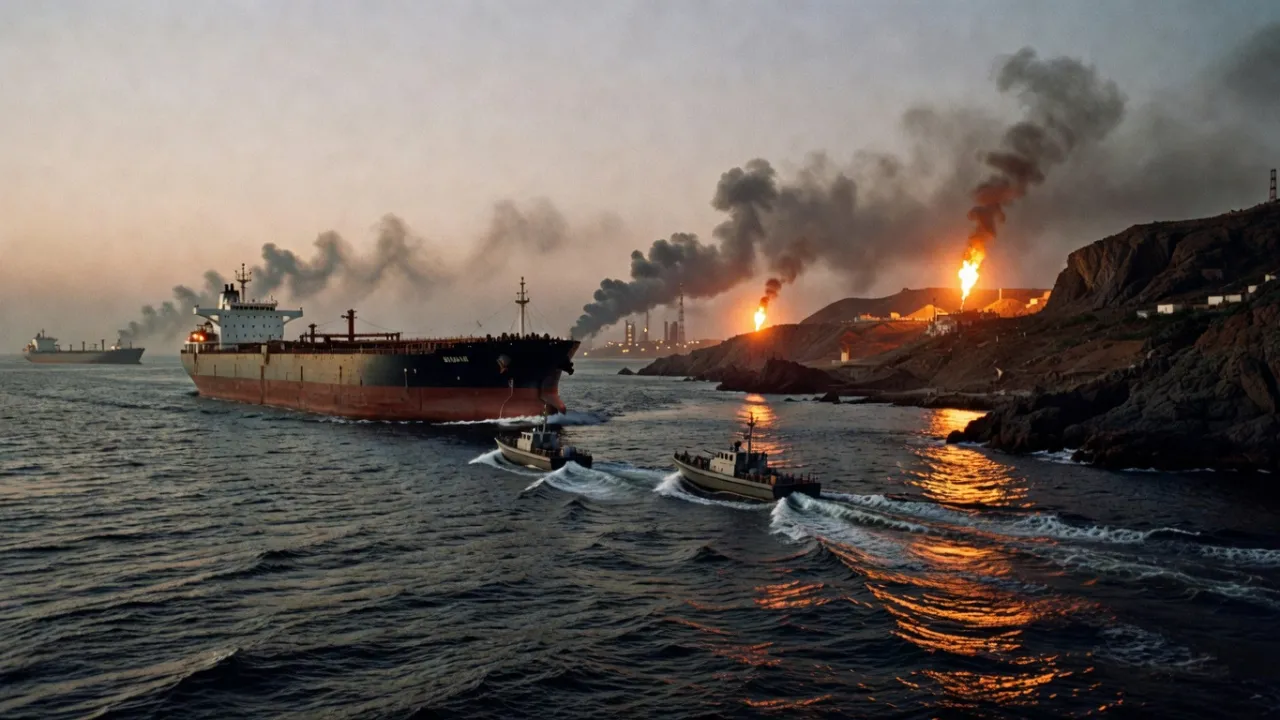
The stakes extend beyond the military standoff. Drone strikes hit the Barakah nuclear plant in the Emirates and Saudi airspace, causing no casualties and no radioactive emissions, but raising the risk of regional escalation. The Strait of Hormuz, through which 20 to 25 percent of global oil trade passes, has been disrupted: Brent crude rose above 111 dollars a barrel, feeding a global energy crisis.
The mediation secured by the Gulf monarchies marks a regional shift: these states now position themselves as arbiters between Washington and Tehran. The meaning of these facts, however, remains disputed. Washington makes any deal conditional on a near-total dismantling of Iran's nuclear program and the transfer of its enriched uranium; Tehran demands the lifting of sanctions, the release of its frozen assets and guarantees over Hormuz, and refuses to link an end to the conflict with nuclear concessions. Actors also diverge over who is responsible for the escalation and over how serious an Iranian fourteen-point counter-proposal is, which Washington deemed insufficient.
Measured with the previous method (distance between texts), on a different scale.