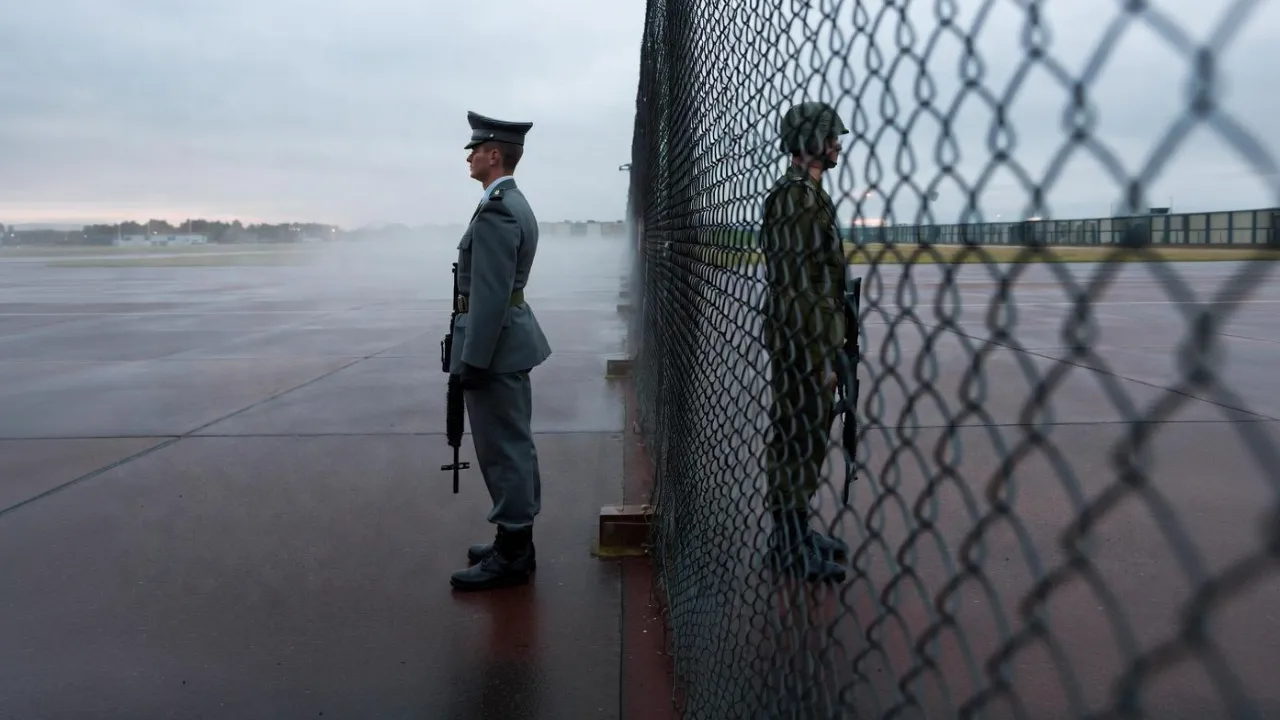
On April 30, Donald Trump posted on Truth Social that the United States was "studying the possible reduction of its troops in Germany," adding that a decision would come "in the near term." The statement followed directly from remarks by Chancellor Friedrich Merz, who had said that Iran was "humiliating" the United States at the negotiating table. Trump dismissed that assessment, replying that Merz "did not know what he was talking about." Berlin responded that it was "prepared" for any reduction while reaffirming the importance of the transatlantic partnership.
The stakes are substantial: roughly 36,000 American soldiers are stationed in Germany, the largest U.S. military presence in Europe. It includes Ramstein Air Base, a central logistics hub for American operations in Europe and the Middle East. The next day, Trump extended the same threat to Italy and Spain, whose leaders had also criticized the U.S. approach toward Iran.
The significance of this escalation remains disputed. For some actors, it weakens the collective defense architecture and sets a precedent by tying allies' foreign-policy positions to the continued presence of pre-positioned forces. Others downplay the move, situating it within a long-standing and recurring debate over burden-sharing within the Alliance.
The repercussions beyond Europe also draw differing readings. In Asia, attention turns to the 28,500 U.S. personnel stationed in South Korea: some observers see a potential warning, while others argue that the Indo-Pacific strategic context sets that region clearly apart from the European case.