EXPLORE THIS STORY
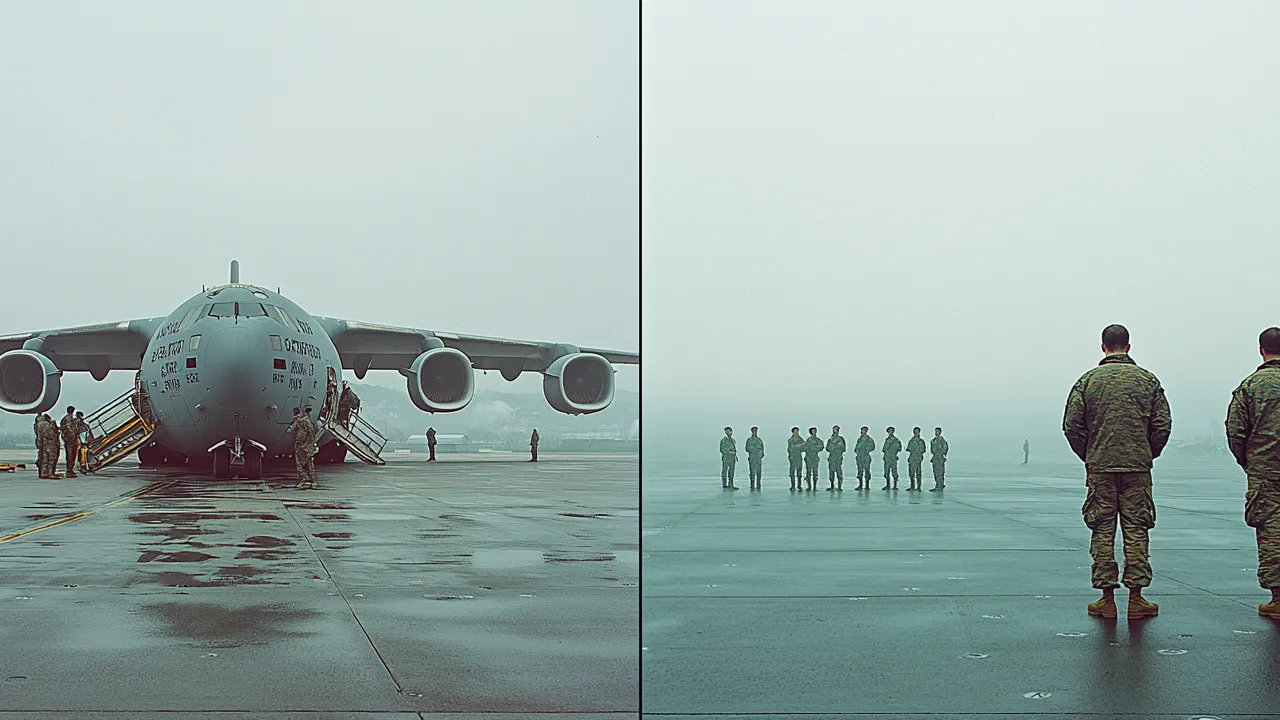
Trump says pulling the US out of NATO is 'beyond reconsideration,' while Europe splits between those trying to revive the EU's mutual defense clause and those refusing to face reality.
AI-generated content — Analyses are produced by artificial intelligence from press articles. They may contain errors or biases. Learn more
DIVERGENCE SCORE
76/100Perspectives diverge strongly
Here are the main points of divergence identified between media coverages.
DOMINANT ANGLE
NATO as a rhetorical lever for a president cornered at home
KEY POINTS
BIASES
DOMINANT ANGLE
The UK caught between Trump's insult and a pivot toward Europe
KEY POINTS
BIASES
DOMINANT ANGLE
France provides the legal argument for European refusal while building Asian alternatives
KEY POINTS
BIASES
DOMINANT ANGLE
Germany torn between Trump fatigue and panic over European unpreparedness
KEY POINTS
BIASES
DOMINANT ANGLE
Italy quietly refuses Sigonella base but doesn't want to be seen defying Trump
KEY POINTS
BIASES
DOMINANT ANGLE
Ukraine reads the NATO crisis as an abandonment signal: if Iran exhausts America in a month, what's left for Kyiv?
KEY POINTS
BIASES
DOMINANT ANGLE
If NATO won't follow the US in Iran, it will never follow in a Taiwan crisis
KEY POINTS
BIASES
DOMINANT ANGLE
India watches the NATO crisis through the Hormuz and Quad prisms
KEY POINTS
BIASES
DOMINANT ANGLE
Turkey watches the NATO crisis with cold calculation: an American precedent could serve Ankara
KEY POINTS
BIASES
DOMINANT ANGLE
Canada treats the crisis with clinical sobriety masking existential vulnerability
KEY POINTS
BIASES
DOMINANT ANGLE
RT savors NATO's disintegration as validation of Putin's worldview
KEY POINTS
BIASES
DOMINANT ANGLE
Seoul doesn't see an alliance crisis but an oil crisis: who protects the routes if NATO tears apart?
KEY POINTS
BIASES
DOMINANT ANGLE
Australia sees Britain's European pivot as a threat to AUKUS
KEY POINTS
BIASES
DOMINANT ANGLE
For Israel, NATO's weakening strengthens the bilateral US-Israel axis
KEY POINTS
BIASES
DOMINANT ANGLE
Qatar watches Westerners quarrel without mentioning its own glaring vulnerability
KEY POINTS
BIASES
DOMINANT ANGLE
NATO as a rhetorical lever for a president cornered at home
KEY POINTS
BIASES
DOMINANT ANGLE
The UK caught between Trump's insult and a pivot toward Europe
KEY POINTS
BIASES
DOMINANT ANGLE
France provides the legal argument for European refusal while building Asian alternatives
KEY POINTS
BIASES
DOMINANT ANGLE
Germany torn between Trump fatigue and panic over European unpreparedness
KEY POINTS
BIASES
DOMINANT ANGLE
Italy quietly refuses Sigonella base but doesn't want to be seen defying Trump
KEY POINTS
BIASES
DOMINANT ANGLE
Ukraine reads the NATO crisis as an abandonment signal: if Iran exhausts America in a month, what's left for Kyiv?
KEY POINTS
BIASES
DOMINANT ANGLE
If NATO won't follow the US in Iran, it will never follow in a Taiwan crisis
KEY POINTS
BIASES
DOMINANT ANGLE
India watches the NATO crisis through the Hormuz and Quad prisms
KEY POINTS
BIASES
DOMINANT ANGLE
Turkey watches the NATO crisis with cold calculation: an American precedent could serve Ankara
KEY POINTS
BIASES
DOMINANT ANGLE
Canada treats the crisis with clinical sobriety masking existential vulnerability
KEY POINTS
BIASES
DOMINANT ANGLE
RT savors NATO's disintegration as validation of Putin's worldview
KEY POINTS
BIASES
DOMINANT ANGLE
Seoul doesn't see an alliance crisis but an oil crisis: who protects the routes if NATO tears apart?
KEY POINTS
BIASES
DOMINANT ANGLE
Australia sees Britain's European pivot as a threat to AUKUS
KEY POINTS
BIASES
DOMINANT ANGLE
For Israel, NATO's weakening strengthens the bilateral US-Israel axis
KEY POINTS
BIASES
DOMINANT ANGLE
Qatar watches Westerners quarrel without mentioning its own glaring vulnerability
KEY POINTS
BIASES
AI-powered meta-analysis
Severity of the threat
European media oscillate between downplaying (a recurring phenomenon) and alarm (Article 42.7 protocols), while Russia and China see validation of their long-standing analyses.
Support
Oppose
The legitimacy of the American demand
The U.S. considers allied support 'automatic.' Europe invokes the offensive/defensive war distinction. Turkey and India observe while calculating.
Support
Oppose
Implications for the Indo-Pacific
China sees confirmation that NATO would not follow the U.S. on Taiwan. Australia fears AUKUS collapse. South Korea focuses solely on oil.
Support
Oppose
European refusers
Shared narrative
Refusal to participate in an offensive war while reaffirming NATO commitment — legally solid but geopolitically risky
Strategic observers
Shared narrative
The NATO crisis validates their view of Western alliances as fragile and conditional
Silent dependents
Shared narrative
Dependent on the American security umbrella but unable to criticize Trump without jeopardizing their own security
Anglo-Saxons recalibrating
Shared narrative
Pivoting from the special relationship with Washington toward European or regional alternatives
Omitted topics
Highlighted by
Omitted topics
Highlighted by
Omitted topics
Highlighted by
Omitted topics
Highlighted by
Trump's threat against NATO comes on day 33 of the Iran war, as the closure of the Strait of Hormuz triggers a global energy crisis and European allies have systematically refused to open their bases or airspace to American operations. NATO's Article 5 — the collective defense clause — was never designed for offensive wars, giving Europeans solid legal ground for their refusal. The coincidence with Europe's attempt to revive Article 42.7 of the EU Treaty suggests that Europe is preparing, at least behind the scenes, for a post-American world.
AI-powered analysis
Show your friends how the world sees the same news differently.