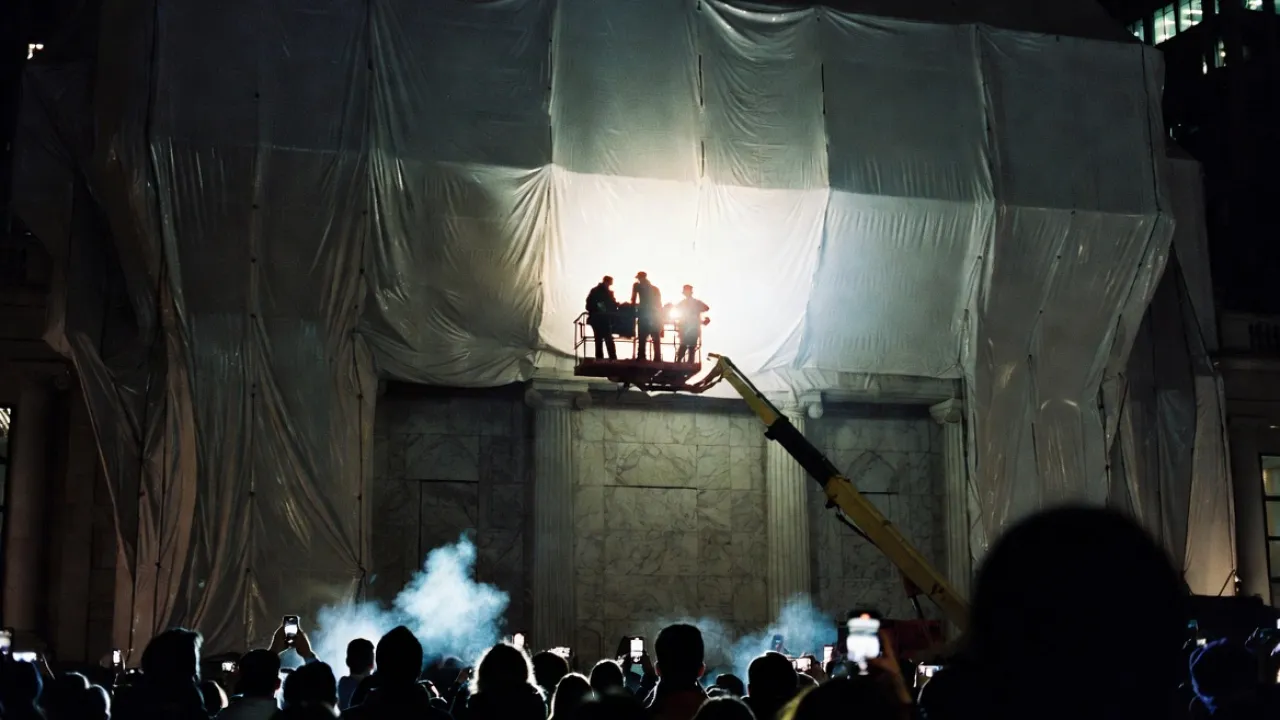
On the night of 13 to 14 June 2026, workers removed, behind tarpaulins, the eighteen gold letters that had been added in December 2025 to the facade of the Kennedy Center, the monument dedicated to the memory of assassinated president John F. Kennedy. The removal, documented to the hour, was the culmination of proceedings begun after the sitting president's name was affixed to the federal building, and it stands as a charged symbolic moment in the case.
The basis of the case is a ruling handed down on 29 May by federal judge Christopher Cooper: only the U.S. Congress may change the name of the Kennedy Center. Before the court's order was carried out, the administration filed several appeals, including an emergency motion, all of which were rejected. The scene thus took on the character of an institutional standoff between the executive and the judiciary.
The episode is part of a broader sequence of tensions in the spring of 2026 over practices of personalizing power: renaming institutions, replacing governing boards, affixing presidential symbols to public buildings. That same weekend, another court ordered the reinstallation of signs about slavery in national parks.
Interpretations diverge on what the scene means. For some observers, it confirms the strength of checks and balances and the separation of powers, a judge having set out the limits of the executive and the executive having had to comply. Others see it mainly as a question of memory, of how a society relates to its history and its cultural institutions; yet another reading detects a sign of deeper institutional instability. The reach of the affair beyond the Kennedy Center itself, and its possible international dimension, remain disputed.