Common ground and differences in coverage across the media analysed.
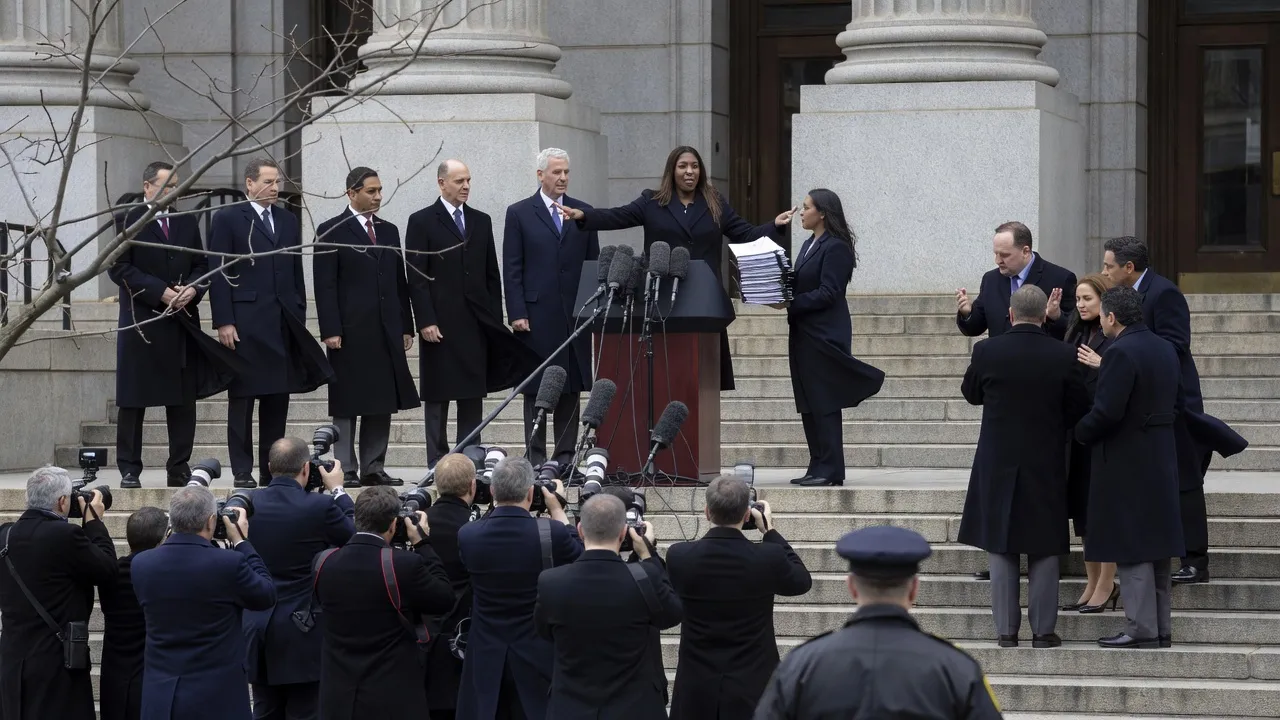
Twenty-five US states led by Democrats, at the initiative of New York Attorney General Letitia James, filed a lawsuit on August 3 with the International Trade Court to block Donald Trump's latest series of tariffs.
The new tariffs, ranging from 10% to 12.5%, took effect on July 24 and target around sixty trading partners as well as the European Union, accounting for nearly 99% of US imports.
This legal challenge follows the defeat the Trump administration suffered before the Supreme Court in February, which ruled that the 1977 IEEPA law did not authorize it to base tariffs on the trade deficit.
North American and European perspectives center the narrative on the constitutional battle in US courts, while South American perspectives emphasize the direct sectoral economic impact (jobs, labor costs, supply chains).
Coverage aligned with this reading
In Chile and Brazil, the US tariff dispute is tied to local domestic political dynamics (President Kast's popularity, Brazil's 2026 election), while other perspectives treat the issue as strictly a bilateral or judicial matter.
Coverage that diverges
Chile and Brazil explicitly mention an alternative commercial rapprochement (China, India) as a response to US tariff uncertainty, an option absent from North American and European perspectives which remain centered on the judicial outcome.
Coverage that diverges
This grouping describes the publications analysed, not the position of these countries’ populations or of their governments.
What the coverage of each country leaves aside, while others put it forward.
India
South Korea
Japan
South Africa
Preview: 3 of 9 media perspectives. Syntheses of the media analysed — not direct quotations. Method & limitations
Washington faces a third judicial challenge to Trump's tariff arsenal, filed by twenty-five Democratic-led states and accompanied by separate California lawsuits.
2 sources · View sources
Brasília closely monitors the legal challenge filed by twenty-five US states as a potential opening in the tariff regime already striking its exporters, while accelerating its search for new markets.
5 sources · View sources
Ottawa gauges the legal scope of 25 U.S. states' challenge to Trump's latest tariffs, a precedent that could redefine the White House's tariff powers over its trading partners, including Canada.
2 sources · View sources
DOMINANT ANGLE
Washington faces a third judicial challenge to Trump's tariff arsenal, filed by twenty-five Democratic-led states and accompanied by separate California lawsuits.
ANALYSIS
Washington, August 3, 2026.
DOMINANT ANGLE
Brasília closely monitors the legal challenge filed by twenty-five US states as a potential opening in the tariff regime already striking its exporters, while accelerating its search for new markets.
ANALYSIS
Brasília, August 4, 2026.
DOMINANT ANGLE
Ottawa gauges the legal scope of 25 U.S. states' challenge to Trump's latest tariffs, a precedent that could redefine the White House's tariff powers over its trading partners, including Canada.
ANALYSIS
Ottawa, August 4, 2026.
DOMINANT ANGLE
Santiago reads an overwhelming rejection of U.S. tariffs and examines a potential commercial pivot toward China, backed by fresh polling data.
ANALYSIS
Santiago, August 4, 2026.
DOMINANT ANGLE
Beijing assesses the legal battles over Trump's tariffs as a signal of policy instability affecting the broader network of trading partners.
ANALYSIS
Beijing, August 4, 2026.
DOMINANT ANGLE
Bogotá follows the two-pronged challenge from Washington: 25 U.S. states are suing over Trump's new tariffs, while Colombian flowers and copper face direct exposure to the same duties.
ANALYSIS
Bogotá, August 4, 2026.
DOMINANT ANGLE
Paris reads this bipartisan legal challenge as confirmation that Trump's tariff policy remains juridically fragile, with the European Union among the direct targets of this latest round of duties.
ANALYSIS
Paris, August 4, 2026.
DOMINANT ANGLE
Mexico City assesses the implications of this third legal challenge against Trump's tariffs, as Mexican exporters remain in limbo pending the outcome of the standoff between Washington and the courts.
ANALYSIS
Mexico City, August 4, 2026.
DOMINANT ANGLE
London views this tariff dispute with direct stakes: the United Kingdom stands explicitly named among countries targeted by new duties that twenty-five U.S. states are challenging in federal court.
ANALYSIS
London, August 4, 2026.
Explore every perspective on this subject across 9 countries.
Compare viewpoints and see where they diverge.
published on
countries
sources
articles
gap
Twenty-five US states, led by New York Attorney General Letitia James, filed suit on Monday, August 3 at the US Court of International Trade in New York to challenge the new 10% to 12.5% tariffs imposed by the Trump administration on July 24. The complaint invokes the fight against forced labour in imports and targets, depending on the source, 59 to 60 trading partners plus the European Union, amounting to nearly 99% of American imports. California filed a second suit the same day over the sharing of welfare recipients' data with immigration authorities. In February, the Supreme Court ruled that the 1977 IEEPA statute did not authorise Trump to impose tariffs based on the trade deficit.
Measured with the previous method (distance between texts), on a different scale.