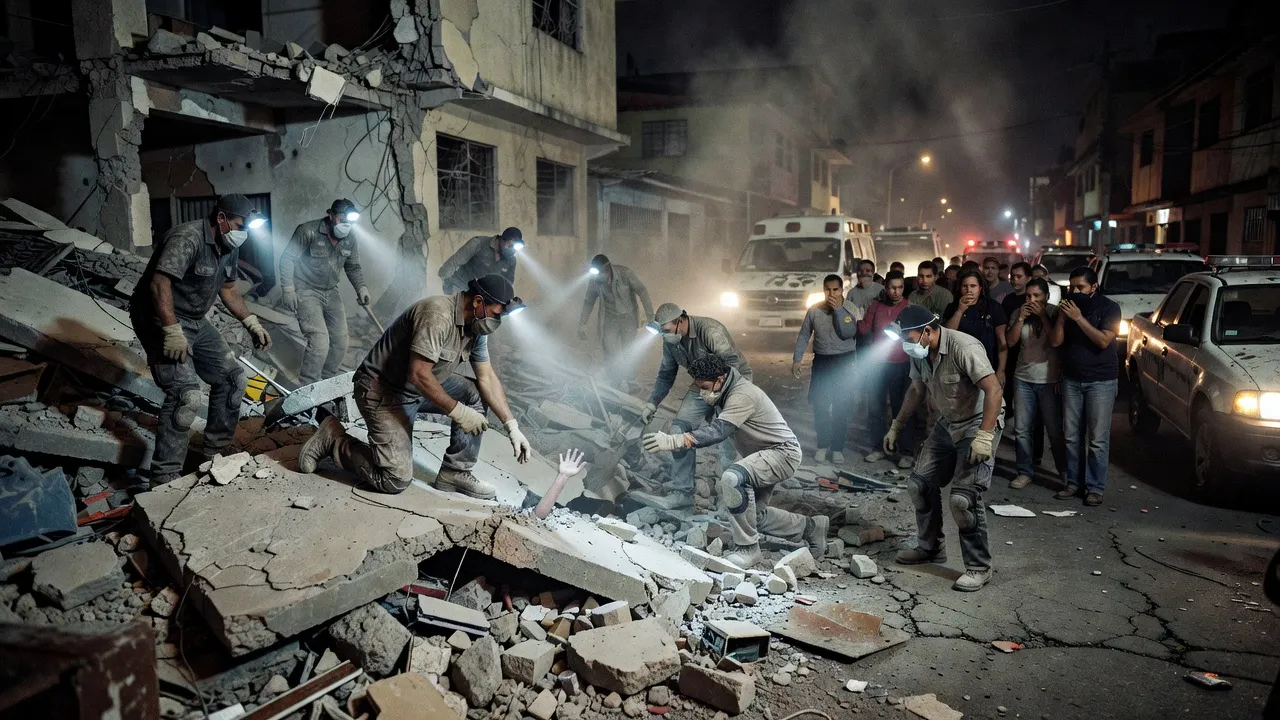
Two earthquakes, measuring magnitude 7.2 and then 7.5, struck Venezuela thirty-nine seconds apart. This seismic doublet, the most powerful recorded in the country in over a century, caused entire buildings to collapse in Caracas. The death toll rose sharply within hours. Data from the leading U.S. scientific institute, the USGS, serves as a common reference for observers, from Western outlets to non-aligned countries.
The disaster strikes a Venezuela that is diplomatically isolated and economically drained. Its government is targeted by U.S. sanctions and only partially recognized by Washington. Against this backdrop of fractures, the quake opens an unusual window: Washington offered assistance, and several countries announced they would send rescue teams. A shared humanitarian impulse briefly suspends long-standing geopolitical tensions.
Yet the way this mobilization is told remains disputed. Some actors foreground the American offer of aid as a central gesture, while others place it within a broader international solidarity in which no single country plays an exclusive role. Blind spots persist depending on the account: the effect of sanctions on the delivery of relief, the specifics of the American offer, or the organization of Venezuelan authorities are alternately highlighted or left unmentioned.
At this stage, the raw facts are agreed upon — the scale of the shock, the destruction, a rising toll — but the interpretation of the international response remains uncertain, and above all reveals the alliances and memories particular to each capital.