12 perspectives, each in the voice of that country's press.
The United States government clearly distinguishes these South African shootings from American mass shootings: organized crime and gang rivalries predominate over the isolated and ideological act.
4 sources
Canberra links these two South African shootings to a structural problem of illegal firearms rather than an isolated incident
2 sources
Ottawa is first focusing on the police investigation into the double South African shooting, with its two distinct leads — a mining territory war and a business rivalry — before any political fallout.
2 sources
Copenhagen is aware of the immediate extent of the massacre at the bar near Johannesburg, relayed straightforwardly by the Reuters and Ritzau agencies, even before the South African police could advance a motive.
2 sources
Helsinki takes away from these two shootings the image of a South African society plagued by chronic violence, to the point of adjusting its advice to Finnish travelers.
2 sources
Paris is interpreting these two shootings as a sign of structured armed crime, between gangs of illegal gold mining and an abundance of firearms, while the police have announced no arrests.
The Netherlands is measuring these two shootings against the backdrop of national crime statistics, which are considered to be among the highest in the world, rather than as an isolated incident.
Islamabad takes away from these South African dispatches a familiar security lesson: a proliferation of illegal weapons that neither police crackdowns nor the November polls seem able to stem.
Dakar is drawing up a chilling assessment of two separate shootings that left 27 dead and 26 injured in South Africa, particularly noting the numerical toll of the carnage and the ongoing manhunt for the perpetrators.
London sees these two shootings as a symptom of a structural armed crime problem in South Africa, caught between a mining territory war and police failures, rather than as an isolated incident.
Pretoria points to organized crime, particularly illegal gold mining gangs, as the common thread behind the two shootings that left 27 dead in one night, placing the investigation and security deployment at the center of the narrative rather than a debate on firearms.
6 sources
Cross-media analysis
What the comparison reveals
Common ground and differences in coverage across the media analysed.
What the media report in common
1
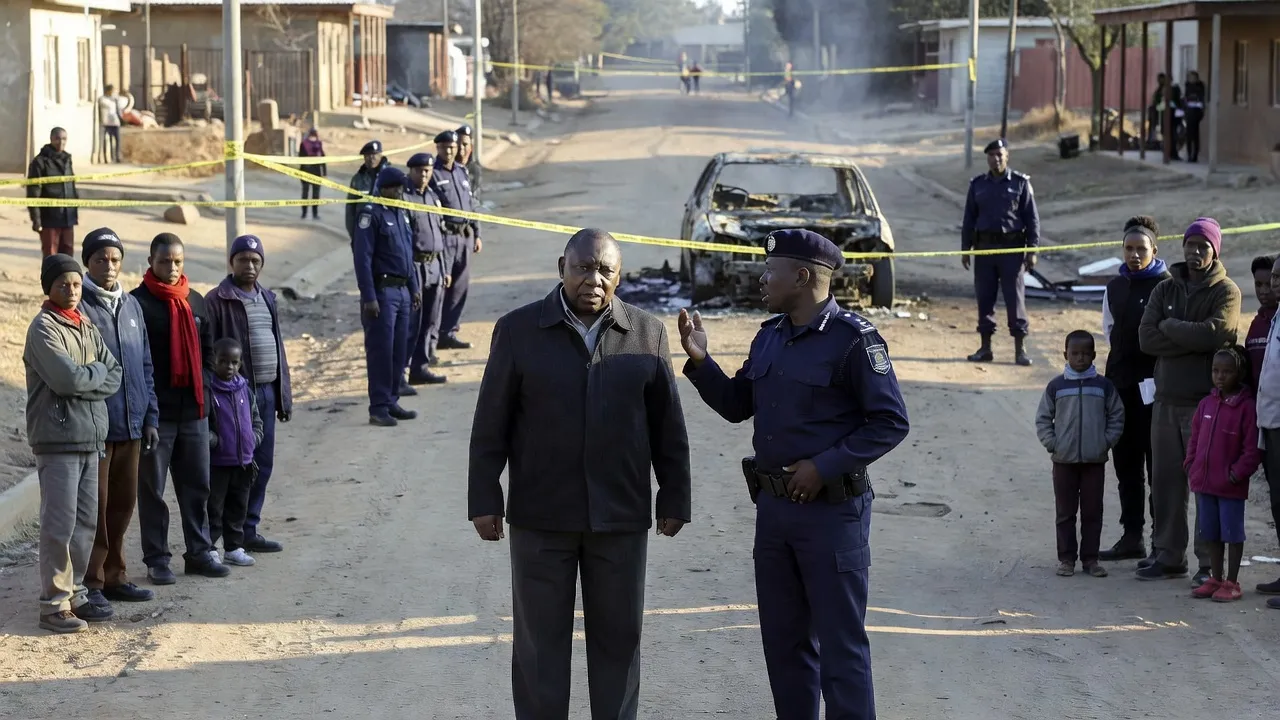
In the night of September 26 to 27, eight armed men with AK-47 assault rifles and pistols killed 17 people (13 men, 4 women) and injured at least 15 others around 21:30 in a bar in the Wedela township, before stealing phones and setting two vehicles on fire.
2
About four hours later, a second shooting at a business linked to an entertainment venue in the Lwandle township, near Cape Town, left 10 dead and 11 injured.
3
The cumulative toll of the two attacks stands at 27 dead, and no arrests had been announced on Sunday.
Where media coverage diverges
Motives for the shootings
Part of the coverage reports specific leads put forward by the police — a territorial war linked to illegal gold mining for Wedela, commercial rivalry for Lwandle — while another part indicates that the motive or motives have not yet been established.
Coverage aligned with this reading
Coverage that diverges
This grouping describes the publications analysed, not the position of these countries’ populations or of their governments.
The United States government clearly distinguishes these South African shootings from American mass shootings: organized crime and gang rivalries predominate over the isolated and ideological act.
KEY POINTS
17 dead and 15 injured in Wedela near Johannesburg, 10 dead and 11 injured in Lwandle near Cape Town, totaling 27 killed in a few hours on the night of September 26-27
Five days earlier, a shooting in Durban had killed 11 people, including a pregnant woman; NPR puts the weekly toll at 38 dead in three major cities
ABC News notes that the South African police define a mass shooting as one where at least three people are hit, and that these attacks are linked to organized crime rather than an ideological motive, unlike American mass shootings
ANALYSIS
Washington, September 28, 2026. The American press has extensively covered the two shootings that left at least 27 people dead in South Africa in the night of Saturday, September 26, to Sunday, September 27, near Johannesburg and Cape Town. According to the South African police, cited by ABC News and CBS News, eight armed men with AK-47 rifles and pistols opened fire around 9:30 p.m. on Saturday in front of a bar in the Wedela township, 80 kilometers southwest of Johannesburg, before continuing the killing inside. The death toll stands at 17, thirteen men and four women, and at least 15 injured. The attackers robbed clients of their phones and set two vehicles on fire before fleeing. About four hours later, in the Lwandle township near Cape Town, armed men killed 10 people and injured 11 others in a business linked to a nightlife venue. No arrests had been announced on Sunday.
American media are putting these violent acts into a broader context: five days earlier, a shooting had already killed 11 people, including a pregnant woman, at a party in KwaMakhutha, near Durban. NPR reports that 38 people have been killed in one week in three major South African cities.
A key point in the American coverage is the distinction from mass shootings in the United States. ABC News notes that "South African mass shootings often differ from the lone gunman attacks seen in the United States and elsewhere," with local police defining a mass shooting as any attack that injures three or more people. Organized crime, rather than an ideological motive or personal grievance, is presented as the common thread: rivalries between informal businesses, territorial wars linked to illegal gold mining by the "zama zamas," and phone thefts.
CBS News recalls that with a population of around 62 million, South Africa records nearly 60 murders per day, one of the highest rates in the world, and that the army had already been deployed in March in the most crime-affected areas of Johannesburg, which President Cyril Ramaphosa then described as "one of the greatest threats" to the country. The use of the army in times of crisis is traced back to the Covid lockdown in 2020, the 2021 riots after Jacob Zuma's incarceration, and the truck fires in 2023.
Australia
DOMINANT ANGLE
Canberra links these two South African shootings to a structural problem of illegal firearms rather than an isolated incident
KEY POINTS
Eight armed men with assault rifles killed 17 people (13 men, 4 women) and injured 15 in a bar in Wedela around 9:30 p.m. Saturday, according to ABC News Australia
A second attack left 10 dead and 11 injured around 2 a.m. at a grilled meat shop in Lwandle, near Cape Town
Provincial police commissioner Tommy Mthombeni says one lead being explored for Wedela is a turf war between illegal gold miners, the "zama zamas"
ANALYSIS
Canberra, September 28, 2026. Australian media are providing detailed accounts of the two shootings that left at least 27 people dead in South Africa in the night of September 26 to 27, without downplaying the extent of the toll. According to ABC News Australia, eight armed men with assault rifles stormed a bar in the Wedela township, about 80 kilometres west of Johannesburg, at around 9:30 pm on Saturday. They first shot at customers outside before continuing the attack inside the establishment, killing 17 people, 13 men and four women, and injuring 15 others. The South African police specified that the attackers searched some of the victims and took their phones before fleeing in two vehicles, which were set on fire at the scene.
Four hours later, at around 2 am, a second attack targeted a grilled meat business in the Lwandle township, in the suburbs of Cape Town, leaving 10 people dead and 11 injured. No arrests have been announced in either case.
The Australian press is particularly focusing on the lead put forward by investigators: a territorial war between illegal gold miners, the "zama zamas", to explain the Wedela massacre, and a commercial rivalry for the Lwandle attack. Provincial police commissioner Tommy Mthombeni confirmed to journalists that this hypothesis remains a line of investigation. PerthNow recalls that powerful gangs control the illicit gold trade in the region and that the area is identified by experts as a hub of armed violence.
Canada
DOMINANT ANGLE
Ottawa is first focusing on the police investigation into the double South African shooting, with its two distinct leads — a mining territory war and a business rivalry — before any political fallout.
KEY POINTS
17 people killed and at least 15 injured in Wedela during an AK-47 attack around 21:30 Saturday, according to CBC News and the Globe and Mail.
10 people killed and 11 injured in a business in the Lwandle township, near Cape Town, about four hours after the Wedela attack.
Police Commissioner Tommy Mthombeni cites a turf war related to illegal mining to explain the Wedela shooting.
ANALYSIS
Ottawa, September 28, 2026. Canadian media are leading their coverage with the work of South African investigators, who are dealing with two distinct crime scenes in a single night. According to CBC News, the South African police "were hunting on Sunday for the perpetrators of two separate shootings that killed 27 people in a few hours," a toll that "highlights the country's problem of armed violence." In the township of Wedela, about 80 kilometers southwest of Johannesburg, eight men armed with AK-47 rifles and pistols opened fire at around 9:30 p.m. on Saturday in front of a bar and then inside, killing 17 people — 13 men and four women — and injuring at least 15, before searching customers, stealing their phones, and fleeing in two vehicles, not without setting two cars on fire at the scene. Four hours later, 10 people were killed and 11 injured in a business linked to an entertainment venue in the township of Lwandle, near Cape Town.
The Canadian press is particularly retaining the two distinct leads put forward by the authorities: a possible territorial war between illegal miners for Wedela, and a commercial rivalry for Lwandle. The provincial police commissioner, Tommy Mthombeni, mentions a "territorial war in terms of illegal mining." The Globe and Mail recalls that residents of Wedela mention the presence in the area of "zama zamas," these organized gold miners who form powerful gangs that control the clandestine trade.
Denmark
DOMINANT ANGLE
Copenhagen is aware of the immediate extent of the massacre at the bar near Johannesburg, relayed straightforwardly by the Reuters and Ritzau agencies, even before the South African police could advance a motive.
KEY POINTS
According to the report relayed by Ritzau, seventeen people were killed in a shooting at a bar near Johannesburg, in South Africa.
The South African police launched a manhunt on Sunday morning, Danish time, without being able to comment on a motive.
The attackers are described as being armed with AK-47 rifles and pistols.
ANALYSIS
Copenhagen, September 28, 2026. Danish editorial offices open their international Sunday edition with a sober dispatch, almost word for word from Reuters via the Ritzau agency: seventeen people have been killed in a shooting at a bar near Johannesburg, South Africa. Politiken and Berlingske publish nearly identical text, a sign of the minimal treatment reserved by the Danish press for an event that occurred thousands of kilometers away, without a special correspondent or in-house analysis on the ground.
According to the dispatch, the South African police "has launched a manhunt" as early as Sunday morning, Danish time, after the carnage committed during the night. The assailants are described as being "armed with AK-47 rifles and pistols", a detail taken verbatim from local police services and relayed without independent verification by the two Danish titles. No motive has been established at the time of publication: the two newspapers note that it is "too early", Sunday morning Danish time, for the police to comment.
Neither the number of injured, nor the identity of the victims, nor the name of the township where the attack took place are mentioned in the Danish articles consulted. There is also no mention of a second episode that occurred the same night near Cape Town, or of any official statement from the South African authorities: the coverage stops at the factual account transmitted by the press agency, sourced twice as "Ritzau" at the end of the text, a sign of a direct reprint without additional editorial step.
Finland
DOMINANT ANGLE
Helsinki takes away from these two shootings the image of a South African society plagued by chronic violence, to the point of adjusting its advice to Finnish travelers.
KEY POINTS
At least 17 people killed and 15 injured in a shooting at a bar in Wedela, 80 km southwest of Johannesburg, by men armed with AK-47 rifles and pistols (YLE Uutiset, citing AFP/Reuters)
At least ten people killed and about ten injured on the same night in Cape Town, in a shooting targeting a recreational venue in the Lwandle township, bringing the weekend death toll to around thirty without any announced arrests (MTV Uutiset)
The Ministry of Foreign Affairs recommends constant vigilance and avoiding townships, as South Africa records an average of 60 homicides per day (MTV Uutiset)
ANALYSIS
Helsinki, September 28, 2026. The deadliest weekend of the year in South Africa made the front page of Finnish newspapers on Sunday, when YLE Uutiset reported that "at least 17 people" had been killed by armed men in a bar in Wedela, about 80 kilometers southwest of Johannesburg. According to AFP and Reuters agencies, cited by the public broadcaster, the attackers, equipped with AK-47 rifles and pistols, opened fire outside and then inside the establishment; at least 15 people were injured, and rescue services pronounced the 17 victims dead on the scene. The local police have not yet advanced any motive.
MTV Uutiset completes the toll: on the same night, in Cape Town, at least ten people were killed and a dozen injured in a shooting targeting a recreational venue in the Lwandle township. In total, "about thirty people" died in a single weekend in the two shootings, according to local authorities cited by the channel. The attackers in Wedela, MTV specifies, first shot at customers outside before pursuing the attack inside the bar; no arrests have been announced at this stage in either case.
The Finnish editorial team links these two attacks to a third one that occurred on Tuesday, September 22, near Durban: at least 11 dead and three injured during a party, a massacre that the police attribute to a possible rivalry between gangs. This chronological connection - three collective shootings in one week - serves as a thread in the Finnish narrative, which insists less on the details of the investigation than on what these figures reveal about South African society.
France
DOMINANT ANGLE
Paris is interpreting these two shootings as a sign of structured armed crime, between gangs of illegal gold mining and an abundance of firearms, while the police have announced no arrests.
KEY POINTS
Eight armed men with AK-47 rifles and pistols killed 17 people (13 men, 4 women) on Saturday, September 26, at around 9:30 p.m. in a bar in the Wedela township, west of Johannesburg, also injuring 15
In Lwandle, near Cape Town, armed men entered a nightclub at 1:46 a.m. and opened fire on customers, leaving 10 dead and 11 injured
According to RFI, South Africa records around 60 homicides per day, and Wedela is a former mining town plagued by illegal gold mining criminal networks
ANALYSIS
Paris, September 28, 2026. The French press is detailing hour by hour the two shootings that killed at least 27 people in South Africa in the night of Saturday, September 26, to Sunday, September 27, before President Cyril Ramaphosa promised on Sunday that "levels of crime and violence" would decrease. Le Monde and RFI are reconstructing the first attack: around 9:30 p.m. on Saturday, eight armed men with AK-47 assault rifles and pistols approached a bar in the Wedela township, in the mining region of West Rand, west of Johannesburg. They opened fire first on the terrace, then inside, killing 13 men and 4 women and injuring 15 customers. According to the police, "it seems that they searched some customers, taking their cell phones before fleeing in two unidentified cars," which they then set on fire. Four hours later, at 1:46 a.m., a second attack hit a nightclub in the Lwandle township, near Cape Town: armed men "fired on customers," according to the police, killing 10 people and injuring 11. No arrests had been announced on Sunday in either case, and the motive for the two killings remains, according to the police, unknown. The authorities have mobilized a team of detectives and specialized units to track down the eight suspects from Johannesburg. RFI recalls that Wedela is a former mining town plagued by illegal gold mining criminal networks, where the local press described as early as August the fear of residents faced with repeated shootings. RFI's correspondent in Johannesburg situates these violent acts in a country that records around 60 homicides per day and where, according to Le Monde, "legal and illegal" firearms are abundant. These two shootings come five days after another killing that left at least 11 people dead at a party near Durban, and as the police are also investigating, according to Sud Ouest, the discovery of eleven women's bodies in the Ekurhuleni region. Faced with this accumulation, Cyril Ramaphosa stated on Sunday that the security forces had received "clear instructions" to reduce crime, adding: "We cannot be a country where people take up arms and shoot people at random."
Netherlands
DOMINANT ANGLE
The Netherlands is measuring these two shootings against the backdrop of national crime statistics, which are considered to be among the highest in the world, rather than as an isolated incident.
KEY POINTS
27 people were killed and 26 injured in total in the two shootings over the weekend, according to the South African police cited by NRC.
In Wedela, eight suspects killed 17 people (13 men, 4 women) and stole the victims' phones before fleeing, with no arrests announced.
The police are investigating a trail of commercial rivalry between hospitality entrepreneurs for the Lwandle shooting, according to De Telegraaf.
ANALYSIS
Amsterdam, September 28, 2026. The Dutch press reports on the two shootings that took place in South Africa over the weekend, first by the numbers, those of a crime rate already at the top of global statistics. According to the South African police, cited by NRC in a statement published on X, 27 people were killed and 26 injured in two separate incidents, one on Saturday evening and the other on the night of Saturday, September 26 to Sunday, September 27.
The first incident occurred in Wedela, a township west of Johannesburg. Eight armed suspects, carrying automatic rifles and pistols, opened fire on customers in front of and inside a café, searching those present and stealing their phones. Thirteen men and four women were killed, and fifteen others were injured. No arrests have been announced.
The second incident took place the same night at an entertainment venue in Lwandle, a township near Cape Town. Armed men fired on those present, killing ten people and injuring eleven. Again, no one has been apprehended. De Telegraaf reports that the police are investigating a lead on a "commercial rivalry between hospitality entrepreneurs" to explain the Lwandle shooting, and a manhunt has been launched for the perpetrators.
The Dutch media are placing these two tragedies in a series: a week earlier, eleven people, including a pregnant woman, were killed in a shooting south of Durban. Official figures cited by NRC show an average of 58 homicides per day in South Africa over the first four months of the year, a level that the press describes as one of the highest in the world. NRC also mentions a deployment of the army, without yet detailing its scope.
Pakistan
DOMINANT ANGLE
Islamabad takes away from these South African dispatches a familiar security lesson: a proliferation of illegal weapons that neither police crackdowns nor the November polls seem able to stem.
KEY POINTS
17 dead and 15 injured in Wedela, where eight armed men with AK-47s and pistols attacked a tavern around 9:30pm Saturday, before setting two vehicles on fire
10 dead and 11 injured in Lwandle, near Cape Town, at a barbecue business around 2am Sunday, four hours after the first attack
Crime expert Yusuf Abramjee, quoted by Reuters, calls on authorities to investigate "the broader networks behind the violence", beyond the direct perpetrators
ANALYSIS
Islamabad, September 28, 2026. Pakistani agencies are wrapping up the weekend with a bloody toll from South Africa: 27 dead in a matter of hours, in two separate shootings near Johannesburg and Cape Town. According to reports picked up by Business Recorder and ARY News, eight armed men with AK-47 rifles and pistols opened fire around 9:30 p.m. on Saturday at a tavern in the Wedela township, 80 km southwest of Johannesburg, killing 17 people — 13 men and four women — and injuring 15 others. The attackers searched customers, took their phones, set two vehicles on fire before fleeing in two unidentified cars. Four hours later, around 2 a.m. on Sunday, 10 people were killed and 11 injured in a store selling grilled food in Lwandle, near Cape Town. No arrests had been announced on Sunday, with the police mobilizing "a team of detectives and specialized units" to track down the perpetrators.
The Pakistani press is particularly focusing on the structural dimension of the problem: according to crime expert Yusuf Abramjee, cited by Reuters, "South Africa has a serious problem with illegal firearms," which are frequently used by organized crime groups. He calls on the authorities to "look at the broader networks behind the violence," rather than limiting themselves to the investigation into the direct perpetrators. The reports recall that with around 60 people killed every day, South Africa has one of the highest homicide rates in the world, and that these shootings come five days after another massacre that killed at least 11 people near Durban. In March, soldiers had already been deployed in high-risk areas of Johannesburg, with crime being described by President Cyril Ramaphosa as "one of the greatest threats" to the country. The articles also note the electoral stakes: crime is expected to weigh heavily in the November municipal elections, where the African National Congress is facing further erosion of its support. Ramaphosa has promised that the security forces "will do everything" to reduce violence — a phrase that the Pakistani press reports without comment, letting the numbers speak.
Sweden
DOMINANT ANGLE
Stockholm views these two South African shootings in light of a staggering statistic: around 60 deaths per day in the country, according to AFP.
KEY POINTS
In Wedela, west of Johannesburg, eight armed men with AK-47s and pistols killed 17 people (13 men, 4 women) and injured at least 15 people on Saturday around 21:30, according to police cited by Aftonbladet.
A second shooting near Cape Town, at an establishment also selling grilled meat, left 10 dead and 11 injured; police were alerted at 1:46 and no arrests were announced, according to Aftonbladet.
Aftonbladet and Svenska Dagbladet place these attacks in the context of a country where around 60 people are killed every day, according to AFP.
ANALYSIS
Stockholm, Monday, September 28, 2026. The Swedish press reports on the double shooting that left 27 dead in South Africa in the night of Saturday, September 26 to Sunday, September 27, immediately framing it in a figure: about 60 people killed every day in the country, according to the AFP agency, cited by both Aftonbladet and Svenska Dagbladet.
In Wedela, west of Johannesburg, eight armed men with AK-47 rifles and pistols opened fire at around 9:30 p.m. on Saturday in front of a bar before entering it. According to the South African police cited by Aftonbladet, they searched customers, stole their phones, and then set two vehicles on fire before fleeing in two other unidentified cars. The police reported 17 dead - thirteen men and four women - and at least 15 injured. The motive for the attack remains unknown, according to the police. The eight suspects are the subject of a manhunt, still ongoing on Sunday.
Four hours later, a second shooting targeted a leisure establishment that also sold grilled meat, near Cape Town. The police were alerted at 1:46 a.m.; ten people were killed and eleven injured. "The investigators are working hard to find the perpetrators of the shooting and no arrests have been made yet," the South African police said, cited by Aftonbladet. There, too, the motive has not been established.
Senegal
DOMINANT ANGLE
Dakar is drawing up a chilling assessment of two separate shootings that left 27 dead and 26 injured in South Africa, particularly noting the numerical toll of the carnage and the ongoing manhunt for the perpetrators.
KEY POINTS
In Wedela (Gauteng), eight armed men killed 17 people (13 men and 4 women) and injured 15 others at Dora's Tavern on Saturday around 21:30, before fleeing with the victims' phones
In Lwandle (Western Cape), a shooting at an entertainment venue/shisanyama resulted in 10 fatalities and 11 injuries around 1:46 Sunday
The police have opened 17 murder cases, 15 attempted murder cases, and two cases of property damage related to the Wedela attack alone, without announcing any arrests
ANALYSIS
Dakar, September 28, 2026. The Senegalese press, via dispatches relayed by PressAfrik and Dakaractu, reports the gruesome toll of two separate shootings that occurred just hours apart in South Africa, on the night of Saturday, September 26, to Sunday, September 27, 2026: at least 27 dead and 26 injured, two festive venues targeted in different provinces.
The first tragedy occurred in Wedela, near Carletonville, in the province of Gauteng. Around 9:30 p.m. on Saturday, eight armed men arrived at the Dora's Tavern, on Hector Peterson Street, in the Extension 3 neighborhood, and opened fire on customers, both inside and outside the establishment. PressAfrik details the count: "Five people, four men and one woman, were killed outside the tavern, while twelve other people, nine men and three women, were killed inside." Fifteen other people were injured and taken care of. According to Dakaractu, citing the police, the attackers "searched some customers, taking their cell phones before fleeing in two unidentified cars."
About four hours later, around 1:46 a.m. on Sunday, a second shooting struck Lwandle, a township in the Western Cape, at a entertainment venue that also serves as a shisanyama, a business where meat is grilled. Armed men entered and opened fire on the clientele: ten people died — five on the spot, five others after being transferred to medical facilities — and eleven were injured, currently being treated according to the provincial police.
United Kingdom
DOMINANT ANGLE
London sees these two shootings as a symptom of a structural armed crime problem in South Africa, caught between a mining territory war and police failures, rather than as an isolated incident.
KEY POINTS
17 dead (13 men, 4 women) and at least 15 injured in the attack on the Wedela bar, carried out by eight armed men with AK-47s and pistols who set two vehicles on fire
10 dead and 11 injured four hours later at a shisanyama business in Lwandle, near Cape Town; no arrests announced on Sunday
President Cyril Ramaphosa said: "This cannot continue", promising that security forces will "do everything" to combat crime
ANALYSIS
London, 28 September 2026. Twenty-seven dead in one night: the British press is dedicating this bloody weekend to South Africa, with coverage that focuses less on the toll and more on what it reveals about the country's police system and criminal economy. On Saturday evening, eight armed men with AK-47 rifles and pistols opened fire in front of and inside a bar in the Wedela township, about fifty kilometres southwest of Johannesburg. Seventeen people - thirteen men and four women, according to the BBC - died, and at least fifteen others were injured; the attackers robbed customers and set two vehicles on fire before fleeing. Four hours later, another shooting targeted a shisanyama business in Lwandle, near Cape Town: ten dead, eleven injured. No arrests had been announced by Sunday.
The Guardian puts the episode into a broader context, recalling that South Africa is facing "one of the highest murder rates in the world" while investigations target "corruption and crime within the police" itself. The BBC, citing Gauteng police commissioner Tommy Mthombeni, suggests theft as the likely motive in Wedela - personal effects had disappeared - without ruling out a turf war between groups of illegal miners, the "zama zamas". Deputy Commissioner Fred Kekana, on the other hand, mentions a possible revenge attack linked to an incident that occurred last month. The Independent, more factual, limits itself to the toll at the Wedela bar.
South Africa
DOMINANT ANGLE
Pretoria points to organized crime, particularly illegal gold mining gangs, as the common thread behind the two shootings that left 27 dead in one night, placing the investigation and security deployment at the center of the narrative rather than a debate on firearms.
KEY POINTS
17 dead and 15 injured in Wedela (Gauteng), where eight armed men with AK-47s and pistols opened fire around 21:30 Saturday before stealing phones and setting two vehicles on fire.
10 dead and 11 injured in Lwandle, near Cape Town, where armed men targeted a shisanyama at 1:46 Sunday; police cite a business rivalry.
According to the GI-TOC, 196 people have been killed in 41 mass shootings since January 2026.
ANALYSIS
Pretoria, Monday, September 28, 2026. Twenty-seven people were killed in the space of a few hours on the night of Saturday, September 26, to Sunday, September 27, in two separate shootings that revive the South African debate on armed crime. Around 9:30 p.m. on Saturday, eight men armed with AK-47 rifles and pistols opened fire outside and then inside Dora's Tavern, in the Wedela township, about 80 kilometers southwest of Johannesburg. Seventeen people — thirteen men and four women — died, and fifteen others were injured. The attackers searched customers, stole phones, and set two vehicles on fire before fleeing. According to Gauteng Police Commissioner Tommy Mthombeni, one of the preferred leads is "a territorial war related to illegal mining," without excluding a qualified robbery; the same establishment had already been targeted two months ago.
Four hours later, in Lwandle, on the outskirts of Cape Town, armed men opened fire at 1:46 a.m. in a shisanyama, killing ten people — five on the spot, five others in the hospital — and injuring eleven. The Western Cape police mention a possible commercial rivalry. No arrests had been announced on Sunday.
The South African press links these two attacks to a broader increase: according to the Global Initiative Against Transnational Organised Crime organization, 196 people have been killed in 41 mass shootings since January 2026, a figure described as an "alarming trend" by its advisor Julian Rademeyer. The bloody weekend comes five days after another shooting that killed eleven people at a party in KwaMakhutha, near Durban.
Explore every perspective on this subject across 12 countries.
Two mass shootings kill 27 in one night in South Africa, near Johannesburg and Cape Town
published on
September 28, 2026
12
countries
33
sources
38
articles
5%
gap
Beyond the toll of the two shootings over the weekend, South African officials have reacted to the attack in Wedela, while the foreign press has focused on very different aspects of this deadly night, and this article looks back at these reactions, the history of the targeted tavern, and the angles chosen abroad, from Denmark to the United States.
On Sunday, no arrests had been announced, and the police were working on two distinct, unconfirmed leads: a mining territory war in Wedela, and a business rivalry in Lwandle.
South African institutional reactions
The premier of Gauteng, Panyaza Lesufi, also reacted to the Wedela shooting, according to the South African press.
« a senseless loss of life »
Panyaza Lesufi, Premier of Gauteng, quoted by the South African press
In opposition, the Democratic Alliance is calling for the appointment of a permanent Police Minister and an enhancement of criminal intelligence, the South African press reports.
The National Liquor Traders Council warned of an existential threat to liquor outlets, which are exposed to armed groups with assault rifles, according to the same press.
The history of the targeted tavern
According to the South African press, the targeted establishment in Wedela, Dora's Tavern, had already been the subject of an attack two months earlier.
Deputy Commissioner Fred Kekana mentioned a possible revenge linked to this previous incident, according to the BBC.
The Senegalese press details the scene on Hector Peterson street, in the Extension 3 neighborhood: five people were killed outside the tavern, four men and one woman, and twelve inside, nine men and three women, according to PressAfrik.
Very different perspectives abroad
Of the twelve national perspectives gathered for this synthesis, coverage varies greatly in scope. Danish newspapers Politiken and Berlingske limited their account to a single dispatch from the Ritzau agency, picked up from Reuters, focusing solely on the Wedela shooting, without mentioning the Lwandle attack or President Ramaphosa's reaction.
The US press, on the other hand, resituated the episode in relation to the mass shootings observed in the United States. CBS News retraces South Africa's repeated resort to the army in times of crisis, from the 2020 Covid lockdown to the 2021 riots following the incarceration of former President Jacob Zuma, and then to the 2023 truck fires.
The Finnish press prioritized a practical angle: according to MTV Uutiset, the Finnish Ministry of Foreign Affairs recommends constant vigilance to travelers and advises against visiting townships.
Illegal weapons and electoral calendar
Crime expert Yusuf Abramjee, cited by Reuters and picked up by the Pakistani press, states that South Africa has a serious problem with illegal firearms, frequently used by organized criminal groups, and calls on authorities to look at the broader networks behind the violence rather than just the direct perpetrators.
According to Pakistani articles, these shootings are also occurring as municipal elections approach in November, where the African National Congress is facing further erosion of its support, with security becoming a campaign issue.
Several headlines also place the incident within a national statistic: according to AFP, cited by the Finnish, French, and Swedish press, South Africa records around 60 homicides per day. Dutch daily NRC, on the other hand, reports an average of 58 daily homicides over the first four months of the year.
The Canadian Globe and Mail also mentions a separate investigation into a possible serial killer in Ekurhuleni, east of Johannesburg, after the discovery of a ninth woman's body. Svenska Dagbladet, meanwhile, reports an eleventh similar murder reported since mid-July in the same area, which has led authorities to warn women against traveling alone at night.
The method of operation
In Wedela, the attackers searched customers, stole phones, and set two vehicles on fire before fleeing.
The military deployment
The South African army had already been deployed in March 2026 in the most affected areas of Johannesburg.
The judicial procedure
For the Wedela attack alone, the police have opened 17 files for murder and 15 for attempted murder.
The definition used
The South African police describe as a mass shooting any attack that affects at least three people.
Crime expert Yusuf Abramjee, quoted by PerthNow, sums up the finding shared by the Australian coverage: "South Africa has a serious problem with illegal firearms, frequently used by organised crime groups and in gang-related violence." President Cyril Ramaphosa promised that the police would find the perpetrators of the two attacks, stating: "This cannot continue."
For Canberra, these two shootings are part of a broader statistic, already known for having one of the highest homicide rates per inhabitant in the world, despite the government's efforts to curb it.
No arrests had been announced on Sunday in either case, despite the deployment of specialized units. President Cyril Ramaphosa, quoted by CBC, promised that the security forces would continue to "do everything": "This cannot continue like this." He specified that the police had images of the suspects from Wedela and were working to identify them.
The two publications are linking these killings to another shooting that occurred a few days earlier near Durban, which had killed at least 11 people, including a pregnant woman, during a party in KwaMakhutha — with no arrests at this stage either. The Globe and Mail also mentions a separate investigation into a possible serial killer, a ninth woman's body having been found, a sign that the Canadian coverage is placing these killings in a broader context of endemic crime rather than as an isolated incident.
This editorial choice reflects a habit of Danish journalism when it comes to violence occurring outside Europe: coverage by dispatch, brief, without local perspective or announced follow-up, leaving the Danish reader with a partial image of an event whose actual scope does not appear in the columns consulted on Sunday. The two texts indeed situate the information above all in the calendar of their own readers, by specifying Danish time rather than local South African time.
For now, no Danish source has produced an independent analysis of the causes of this violence or a potential political response in Pretoria. The subject remains, in the Danish press, an international news item treated through an agency, awaiting additional elements on the motive and potential arrests.
MTV Uutiset thus situates the episode in a national statistic: South Africa records an average of 60 homicides per day, a rate among "the darkest in the world". The article recalls the recommendation of the Finnish Ministry of Foreign Affairs, which calls for "constant vigilance" when traveling and advises against visiting townships. The link between urban poverty, proliferation of weapons, and township violence structures the Finnish reading, which is more focused on the societal observation and practical advice for travelers than on the police follow-up of the ongoing investigation.
This reading, essentially factual and police-related, is based solely on statements from the South African authorities and does not mention either the illegal miners sometimes cited elsewhere as a lead for Wedela, or any official Dutch reaction. The emphasis is on the gruesome toll, the lack of arrests, and the recurrence of these killings, rather than their underlying causes.
Svenska Dagbladet, which is providing live updates, places this double toll alongside a separate case: the discovery, in the municipality of Ekurhuleni, east of Johannesburg, of the body of a woman found on a vacant lot - the eleventh similar murder in the area since mid-July, which has led the authorities to warn women against traveling alone at night.
None of the Swedish articles consulted mention the reaction of President Cyril Ramaphosa or any government measures announced from Pretoria. The coverage remains focused on the raw facts - the weapons used, the numerical toll, the lack of arrests - and on the statistical perspective of a country ranked among those with the highest homicide rate in the world, according to the AFP.
On the sole case of Wedela, the South African police have opened 17 cases for murder, 15 for attempted murder, and two for property damage, as two vehicles were set on fire by the fleeing attackers. On Sunday, no arrests had been announced, and the perpetrators of the two attacks were still being actively sought.
The Senegalese press, essentially relaying available dispatches, sticks to the precise count of victims and the immediate circumstances of each shooting, without relaying any official statement from the South African government or a privileged line of investigation into the killers' motives. The connection between the two killings, one in a mining township bar, the other in a popular hangout spot, highlights the recurring vulnerability of these social spaces to organized armed violence.
All three titles report the same statement from President Cyril Ramaphosa: "This cannot continue," he said on South African television, promising that the security forces "will now continue to do everything". The British newspapers place these two attacks in a series: five days earlier, a shooting at a party near Durban had already killed eleven people, including a pregnant woman. For the London press, these serial shootings are not an isolated incident but an illustration of the link between street crime, illegal gold economy, and structural failures of the institutions responsible for containing it.
President Cyril Ramaphosa reacted by promising that the security forces "will do everything" to reduce crime: "This cannot continue." He praised the role of technology in identifying the suspects in Wedela. Gauteng Premier Panyaza Lesufi denounced "senseless loss of life." In the opposition, the Democratic Alliance is calling for the appointment of a permanent Police Minister and an strengthening of criminal intelligence. The National Liquor Traders Council, on the other hand, warns of an "existential threat" to liquor outlets, exposed to armed groups with assault rifles.