Common ground and differences in coverage across the media analysed.
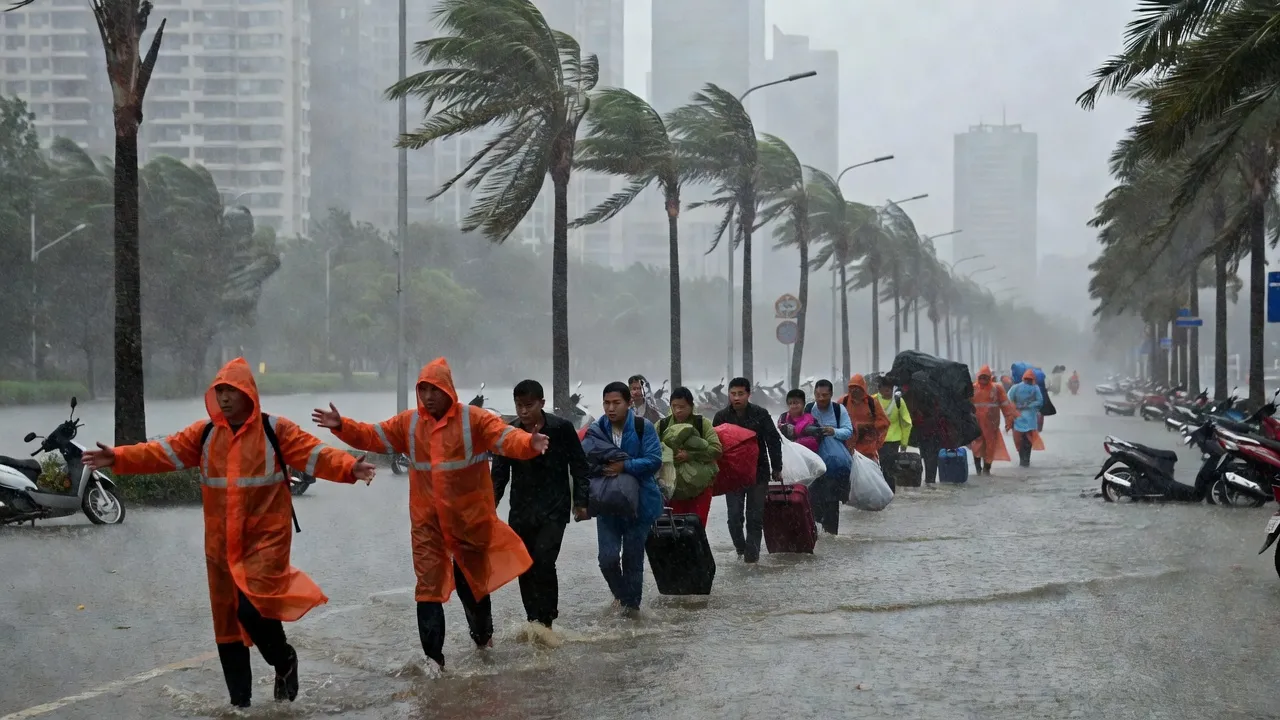
Noul is unanimously presented as the most powerful typhoon to have struck China in 2026, with sustained winds of approximately 162 km/h at its landfall near Pinghai/Huidong (Guangdong) at around 3:50 AM.
All perspectives report massive evacuations in Guangdong, with counts ranging from several hundred thousand to more than 700,000-800,000 people depending on when the figure was updated.
All perspectives report significant disruptions to air traffic in Hong Kong (several hundred flights cancelled) and the shift in typhoon alert level from T9 to T8.
Philippine press traces the typhoon from its initial phase under the name Kiyapo, with its own human and material toll in the Philippines, while most other coverage reports only the Chinese phase under the name Noul, at best mentioning the Philippines briefly at the end of the article.
Coverage aligned with this reading
Some coverage relies almost exclusively on a single wire agency dispatch (AP/AFP) repeated in nearly identical form, while others draw on their own regional or national sources (local news agencies, airport authorities, state media).
Coverage aligned with this reading
Coverage that diverges
Part of the coverage implicitly connects the event to Asia's shared regional climate vulnerability, while another sticks to an operational account of figures without evoking climate dimensions or crisis management critique.
This grouping describes the publications analysed, not the position of these countries’ populations or of their governments.
What the coverage of each country leaves aside, while others put it forward.
Australia
Bangladesh
Canada
China
Preview: 3 of 11 media perspectives. Syntheses of the media analysed — not direct quotations. Method & limitations
Singapore focuses on the direct impact of Typhoon Noul on its own air connections with South China, rather than on the human toll in Guangdong
4 sources · View sources
New Delhi assesses China's mobilization against Typhoon Noul, weighing technical appreciation for Beijing's alert system with broader regional concerns about Asia's shared climate exposure and cyclone frequency.
3 sources · View sources
Beijing reports China deploys unprecedented emergency mobilization in response to Typhoon Noul, described by national meteorological services as the most powerful storm to strike the country this year.
2 sources · View sources
DOMINANT ANGLE
Singapore focuses on the direct impact of Typhoon Noul on its own air connections with South China, rather than on the human toll in Guangdong
ANALYSIS
Singapore, July 27, 2026.
DOMINANT ANGLE
New Delhi assesses China's mobilization against Typhoon Noul, weighing technical appreciation for Beijing's alert system with broader regional concerns about Asia's shared climate exposure and cyclone frequency.
ANALYSIS
New Delhi, July 27, 2026.
DOMINANT ANGLE
Beijing reports China deploys unprecedented emergency mobilization in response to Typhoon Noul, described by national meteorological services as the most powerful storm to strike the country this year.
ANALYSIS
Beijing, July 27, 2026.
DOMINANT ANGLE
Dhaka reads Typhoon Noul through the lens of its own Bay of Bengal cyclones, examining the gap between China's evacuation machinery and Bangladesh's recurring climate vulnerability.
ANALYSIS
Dhaka, July 27, 2026.
DOMINANT ANGLE
Malaysian media gauges the regional shockwave of Typhoon Noul, weighing flight cancellations to Hong Kong and Shenzhen against heightened vigilance for its nationals in transit.
ANALYSIS
Kuala Lumpur, July 27, 2026.
DOMINANT ANGLE
Manila traces Kiyapo's path from deadly Philippine typhoon to disaster now striking Guangdong
ANALYSIS
Manila, July 27, 2026.
DOMINANT ANGLE
Canberra assesses the scale of the logistics shock hitting its regional neighborhood, with air traffic paralyzed at Hong Kong and an unprecedented red alert in southern China.
ANALYSIS
Canberra, 27 July 2026.
DOMINANT ANGLE
Canada relays a single wire agency dispatch on Typhoon Noul without local reporting or independent analysis of southern China.
ANALYSIS
Toronto, July 27, 2026.
DOMINANT ANGLE
Paris examines an unprecedented evacuation operation in southern China, balancing recognition of Beijing's logistical capacity with careful attention to French economic stakes anchored in Hong Kong's role as a regional financial hub.
ANALYSIS
Paris, July 27, 2026.
DOMINANT ANGLE
Moscow methodically documents the scale of evacuations and transport paralysis caused by the typhoon, without linking the event to climate change
ANALYSIS
Moscow, July 27, 2026.
DOMINANT ANGLE
Washington assesses the unprecedented scale of Chinese evacuations amid Typhoon Noul, presented as the most powerful to make landfall in China this year, and scrutinizes the logistical cost of a continent-wide alert system.
ANALYSIS
Washington, July 27, 2026.
Explore every perspective on this subject across 11 countries.
Compare viewpoints and see where they diverge.
published on
countries
sources
articles
gap
Typhoon Noul made landfall overnight from 25 to 26 July 2026 near Pinghai, in Huidong County (Guangdong, southern China), with sustained winds reaching 162 km/h. Chinese authorities evacuated several hundred thousand people, suspended provincial rail traffic and halted activity in a dozen cities, including Guangzhou and Shenzhen. In Hong Kong, the Observatory raised the storm-warning signal to level 9 before lowering it to level 8, leading to the cancellation of hundreds of flights. China's National Meteorological Center called Noul the most powerful typhoon to hit China in 2026, the third tropical system to strike the country in a month.
Measured with the previous method (distance between texts), on a different scale.