Common ground and differences in coverage across the media analysed.
What the media report in common
1
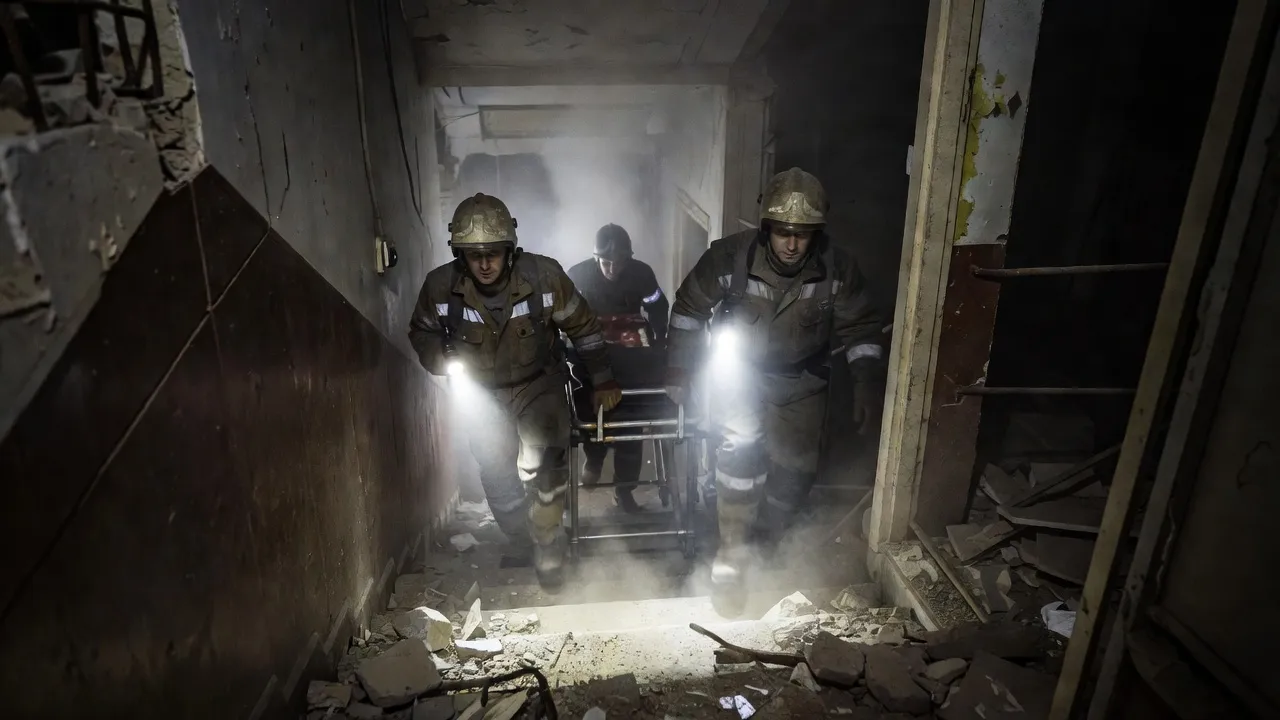
A missile destroyed a five-story residential building in Prylouky, in the Chernihiv region, resulting in the highest local toll for the night of October 6-7.
2
Volodymyr Zelensky estimates the attack at 70 missiles, many of which were ballistic, and dozens of drones, and reports around 100 injured.
3
The national toll is 28 dead according to Interior Minister Ivan Vyhivskyi, with children among the victims in Prylouky.
Where media coverage diverges
National Death Toll
Question: how many people were killed across Ukraine? Some reports retain 28 deaths (Vyhivskyi), while others stop at earlier counts, ranging from 19 to 25 deaths, or higher (32 deaths in Pakistan).
Question: how many children are among the dead in Prylouky? Five according to the authorities cited in most reports, four in older dispatches repeated in Canada, Germany, Russia, and the United States.
Kyiv mourns its dead and tallies the night of October 6 to 7: in Prylouky, five children including three one-year-old babies, and days of mourning decreed from October 7 to 9.
Canberra sees the night of strikes as a demonstration of the weaknesses in Ukraine's air defense: without ammunition for its Patriots, Kyiv cannot stop Russian ballistic missiles.
Brasília is gauging the October 7 attack by the standards of an air war: ballistic missiles, jet-powered drones and a lack of Patriot interceptors before winter.
ANALYSIS
Brasília, October 8, 2026.
Canada
DOMINANT ANGLE
Ottawa is first considering the human cost of the night of October 7, with the Prylouky building and the children killed, relayed by Zelensky's voice and the figures from Ukrainian authorities.
ANALYSIS
Ottawa, October 8, 2026.
Germany
DOMINANT ANGLE
Berlin is assessing the human toll of a night of strikes, focused on a building in Pryluky, while also noting that many of the attacks targeted Ukraine's energy infrastructure.
ANALYSIS
Berlin, October 8, 2026.
France
DOMINANT ANGLE
Paris first takes stock of the civilian toll from the night: a gutted building in Prylouky, five children dead, and the looming energy winter in the background.
ANALYSIS
Paris, October 8, 2026.
South Korea
DOMINANT ANGLE
Seoul is tallying the civilian toll of the night's strikes on Ukraine, tracking the evolving numbers from 8 to 28 dead, and noting Zelensky's comment on Putin's "birthday gift".
ANALYSIS
Seoul, October 8, 2026.
Pakistan
DOMINANT ANGLE
Islamabad is reporting the civilian toll from the night of strikes, with children from Prylouky among the victims, while also recording the version of the Russian Defense Ministry regarding military-industrial targets.
ANALYSIS
Islamabad, October 8, 2026.
Russia
DOMINANT ANGLE
Moscow presents the night of October 7 as a massive strike against the Ukrainian military-industrial complex, while the independent Russian-language press reports the civilian toll given by Kiev.
ANALYSIS
Moscow, October 8, 2026.
Singapore
DOMINANT ANGLE
Singapore first focuses on the human drama of Pryluky: the city-state's press highlights five children who died in their sleep and the accounts of survivors, more than the strategy or diplomacy.
ANALYSIS
Singapour, 8 October 2026.
United Kingdom
DOMINANT ANGLE
London first reports on the children killed in Prylouky: the British press leads with the civilian toll of the night and Zelensky's phrase of a "birthday gift" to Putin.
ANALYSIS
London, 8 October 2026.
United States
DOMINANT ANGLE
The United States is gauging the night of strikes by the limits of Ukraine's air defense: without ammunition for American-made Patriots, Kiev cannot stop Russian ballistic missiles.
ANALYSIS
Washington, October 8, 2026.
South Africa
DOMINANT ANGLE
Pretoria is above all mindful of the human cost of the night of strikes: the children killed in Prylouky and Zelensky's formula for the "birthday gift" to Putin, as reported by Reuters dispatches.
ANALYSIS
Pretoria, October 8, 2026.
Explore every perspective on this subject across 13 countries.
Ukraine: at least 28 killed in Russian strikes, including five children in a Pryluky apartment block
published on
October 8, 2026
13
countries
33
sources
36
articles
46/100
gap
The toll for the night of October 6-7 changed by the hour, and each national press outlet froze on a different figure, beyond the deaths, the coverage follows three threads: the residents of Prylouky, the shortage of interceptors, and the military version given by Moscow.
The toll is not stabilized: according to the media and updates, it varies from 19 to 32 dead, and Russia says it targeted military-industrial sites.
A changing toll
The figure depends on the time of the dispatch. Ukrainska Pravda reports twelve dead and forty injured at 11:03, according to Interior Minister Ivan Vyhivskyi, then relays the total of 28. The Korea Times, in a dispatch on October 7, sticks to at least eight dead "according to Ukrainian officials".
The Moscow Times goes from 20 to 24 dead between two versions of the same article. Business Recorder headlines at least 32 dead and indicates that the Ukrainian emergency service puts the toll in Prylouky at 22 dead on Thursday morning. According to PerthNow and the Ukrainian press, Volodymyr Zelensky speaks of 25 dead in his evening address.
The number of children follows the same trend. The Globe and Mail, CBC, and FAZ count four in Prylouky in their older versions; later dispatches, including those from Reuters picked up by Daily Maverick, count five.
Six of the thirteen covers in the corpus (Australia, France, South Korea, Singapore, Ukraine, South Africa) report 28 dead. This count measures the figure each press had on hand at the time of publication, not an estimate of the actual toll.
Prylouky, scene and witnesses
Ukrainian and Asian headlines focus on the building. According to Zelensky, as reported by the Ukrainian press, a Kh-101 missile directly hit the building. Le Monde and 20 Minutes place the impact at around 6:30 and describe a five-story building, half of which was "gutted".
« That's the kind of birthday gift Putin gave himself: killing children, killing people. »
Volodymyr Zelensky, quoted by the Korea Herald, October 8
Channel News Asia and the Straits Times, which pick up the AFP report, lead with children killed in their sleep. Zelensky specifies that three of the victims were 12 months old and another was eight years old, and that seven other children are among the injured. A resident, Olena Sayun, tells the AFP: "We were at home, sleeping".
Deputy Mayor Danylo Savenko, quoted by Reuters and the Globe and Mail, mentions "a lot of destruction, especially in the city center". The Ukrainian press reports that October 7, 8, and 9 are declared days of mourning in Prylouky.
Air defense in question
Three out of thirteen covers (Australia, Brazil, United States) focus on air defense rather than victims. This count measures the chosen angle in the corpus, not its importance. The dispatch reprinted by NBC News states that, due to a lack of ammunition for its American-made Patriots, Ukraine cannot stop ballistic weapons, and it is seeking to develop interceptors fast enough for jet-powered drones.
« The deaths and damage illustrate Ukraine's difficulty in countering Russian ballistic missiles and new jet-powered drones. »
agency dispatch reprinted by NBC News, October 8
The Ukrainian air force claims to have shot down or neutralized 161 targets: five ballistic missiles, 39 cruise missiles, and 117 drones, including 38 jet-powered ones, according to Kyiv Post. Tagesschau and G1 report the same total of 161 intercepted devices, for 130 drones and 48 cruise missiles fired, in addition to ballistic missiles.
The Moscow Times indicates that the Ukrainian air force says it has shot down a little over 80% of the 46 jet-powered drones, compared to 50 to 60% on average in recent weeks. Folha adds that the same air force estimates that at least 300 additional missiles would be needed for the Patriot batteries protecting the capital during the winter campaign.
TSN, citing the Institute for the Study of War, judges that the Geran jet-powered drones allow Moscow to concentrate its strikes. The Ukrainian press reports a new wave of jet-powered drones on the night of Wednesday to Thursday, October 8.
Announced targets, energy and winter
The Russian state press adheres to the Defense Ministry's statement. TASS and Sputnik report on high-precision weapons launched from the ground, sea, and air against military-industrial facilities; Sputnik mentions seven regions. According to the Korea Times, the ministry also cites port facilities and naval repair installations in Odessa.
« One of the main targets was our energy infrastructure. »
Volodymyr Zelensky, quoted by the French press (Le Monde, 20 Minutes), October 8
Details on the targets come from several sources. Le Monde and 20 Minutes report that the ministry targets cruise missile factories and long-range drone facilities in Kiev, Prylouky, and Kremenchouk. Daily Times writes that Russian officials link the targets to the Ukrainian company Fire Point. The TASS and Sputnik articles in the corpus do not mention Ukrainian civilian casualties.
On energy, Zelensky assures that one of the main targets was energy infrastructure. Sud Ouest notes that Kiev's grid suffered a power loss and Ukrenergo decided on emergency shutdowns; the newspaper links the approach of winter to the fear of repeating last year's scenario.
On the Ukrainian side, Ukrinform reports strikes on oil reservoirs in Samara and the Astrakhan gas plant, presented as sites that supply the Russian army. The Ukrainian articles in the corpus do not take up the version of the Russian Defense Ministry.
The version of the Russian ministry
The Russian Ministry of Defense claims to have carried out a "massive strike" against military-industrial sites, in Kiev and elsewhere.
Request for air defense
Volodymyr Zelensky is calling for Patriot systems, which are scarce due to the war with Iran.
Ukrainian strikes in Russia
Kiev indicates it has hit oil facilities in the Perm, Samara, and Astrakhan regions.
European reaction
Ursula von der Leyen, President of the Commission, speaks of a "deliberate strategy of terror".
Key figures
28 deaths
Toll announced by the Interior Minister for all the strikes