Common ground and differences in coverage across the media analysed.
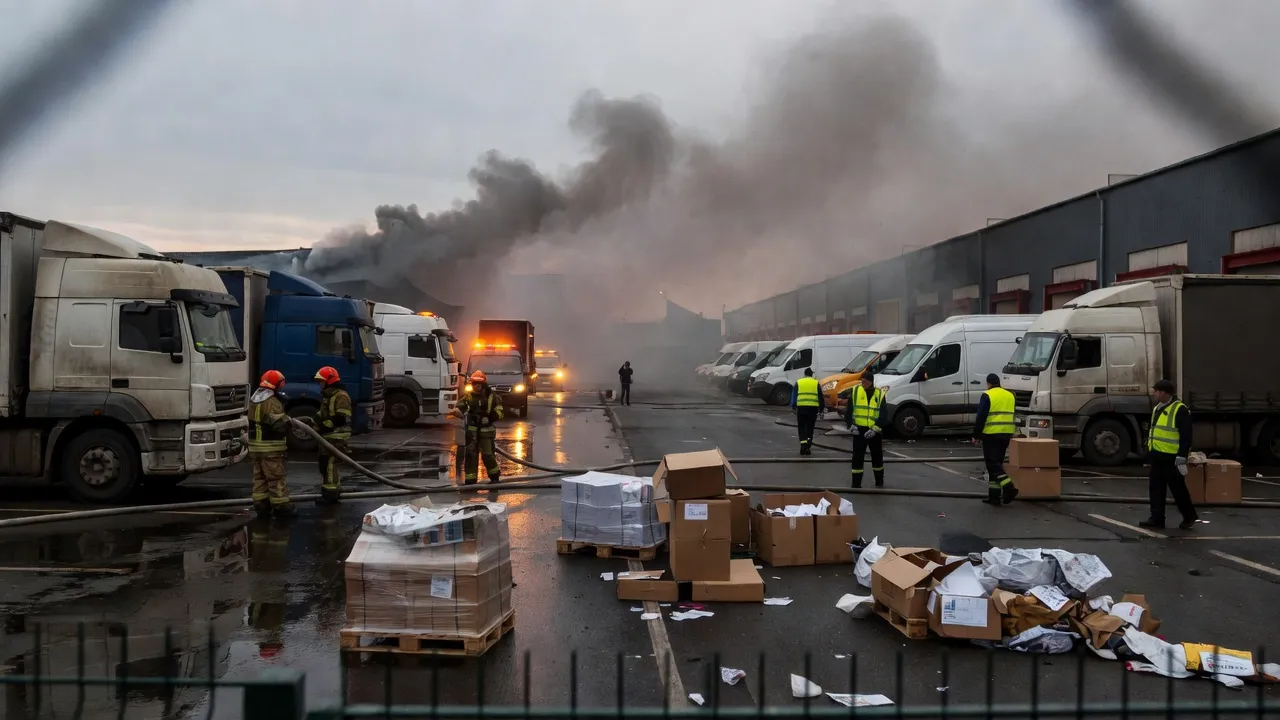
During the night of August 2-3, 2026, Ukraine launched a deep-strike wave against Russian territory targeting a 17th Wildberries logistics hub, the Rosneft refinery in Saratov, and the Engels military aerodrome.
The Russian Ministry of Defense claims to have shot down or intercepted 635 Ukrainian drones in a single night, with an official toll of at least eight dead on the Russian side.
Kyiv has conducted a repeated campaign against Wildberries logistics sites since July 18, with Ukraine presenting this site as contributing to Russian military supply.
Ukraine and its supporters present Wildberries warehouses as legitimate military supply infrastructure to strike, while Russia characterizes these strikes as terrorist acts against civilians; Meduza documents a human toll without confirming a systematic military role.
Coverage aligned with this reading
Romanian press develops a theory of Kremlin attrition through logistics strikes, corroborated in Norway by signs of fuel shortages and stagnation, while Hungary, through DeepState, points to net Russian territorial gains in July that downplay the scale of effects.
Ukraine and American and German press document urgent demand for Patriot systems and tensions over Western deliveries, while in Italy, Giuseppe Conte (M5S) refuses any new military support to Kyiv and advocates for a negotiated shift.
Coverage aligned with this reading
Coverage that diverges
This grouping describes the publications analysed, not the position of these countries’ populations or of their governments.
What the coverage of each country leaves aside, while others put it forward.
Russia
Italy
Hungary
Preview: 3 of 11 media perspectives. Syntheses of the media analysed — not direct quotations. Method & limitations
Kyiv meticulously documents each Russian strike on its cities while asserting the methodical erosion of Russian military logistics.
2 sources · View sources
Moscow condemns Ukrainian drone strikes on Wildberries warehouses and the Saratov refinery as 'terrorist' attacks, while Meduza questions Ukraine's claim of systematic military logistics through the e-commerce platform.
4 sources · View sources
Bucharest reads the Wildberries theory: striking Russia's logistical heartland would strain Putin more effectively than refinery strikes, while monitoring drones drifting toward Romanian airspace.
2 sources · View sources
DOMINANT ANGLE
Kyiv meticulously documents each Russian strike on its cities while asserting the methodical erosion of Russian military logistics.
ANALYSIS
Kyiv, August 3, 2026.
DOMINANT ANGLE
Moscow condemns Ukrainian drone strikes on Wildberries warehouses and the Saratov refinery as 'terrorist' attacks, while Meduza questions Ukraine's claim of systematic military logistics through the e-commerce platform.
ANALYSIS
Moscow, August 3, 2026.
DOMINANT ANGLE
Bucharest reads the Wildberries theory: striking Russia's logistical heartland would strain Putin more effectively than refinery strikes, while monitoring drones drifting toward Romanian airspace.
ANALYSIS
Bucharest, August 3, 2026.
DOMINANT ANGLE
Budapest reads an Ukrainian paradox: deep-strike operations inside Russia coexist, per Kyiv's military analysts, with visible territorial losses on the battlefield.
ANALYSIS
Budapest, August 3, 2026.
DOMINANT ANGLE
Berlin reads this escalatory night through two critical exposures: Ukrainian deep strikes degrading Russian logistics in depth, and a glaring shortfall in air defense leaving Kyiv increasingly vulnerable—while anti-Ukrainian violence in Poland signals fractures in European resolve.
ANALYSIS
Berlin, August 3, 2026.
DOMINANT ANGLE
Paris tallies the night number by number: 635 drones destroyed, a 17th Wildberries warehouse in flames, nine dead in Kyiv—a war ledger rather than a tale of escalation.
ANALYSIS
Paris, August 3, 2026.
DOMINANT ANGLE
London views the strike on the 17th Wildberries warehouse as evidence that Kyiv is now targeting Russia's economic rear as much as the military front.
ANALYSIS
London, August 3, 2026.
DOMINANT ANGLE
Washington weighs the cost of supporting Kyiv as Ukrainian deep strikes in Russia escalate and urgent calls mount for additional Patriot interceptors before winter.
ANALYSIS
Washington, August 3, 2026.
DOMINANT ANGLE
Rome separates the military escalation from the tragedy hitting its own community in Moscow, caught between Russian terrorism accusations and the Five Star Movement's pacifist impulse.
ANALYSIS
Rome, August 3, 2026.
DOMINANT ANGLE
Oslo examines, through on-the-ground reporting from NRK, the fuel shortage spreading across Russia's interior following Ukrainian strikes on refineries, while Dagbladet and VG document skepticism regarding military reports to Putin and Russian economic stagnation.
ANALYSIS
Oslo, August 3, 2026.
DOMINANT ANGLE
Dhaka reads an intensifying Russia-Ukraine escalation where civilian logistics networks become deliberate military targets
ANALYSIS
Dhaka, August 3, 2026.
Explore every perspective on this subject across 11 countries.
Compare viewpoints and see where they diverge.
published on
countries
sources
articles
gap
On the night of August 2-3, 2026, Ukraine struck a 17th warehouse belonging to the Russian e-commerce group Wildberries, along with a Rosneft refinery in Saratov and the Engels military airfield. Russia's Defense Ministry says it shot down 635 Ukrainian drones over the same night and reported eight dead in Russia. In Kyiv, a Russian strike carried out overnight Friday to Saturday killed nine people and wounded 33. According to Ukrainian President Volodymyr Zelensky, 1,900 Russian drones and 144 missiles targeted 16 Ukrainian regions in the space of one week.
Measured with the previous method (distance between texts), on a different scale.