
Common ground and differences in coverage across the media analysed.
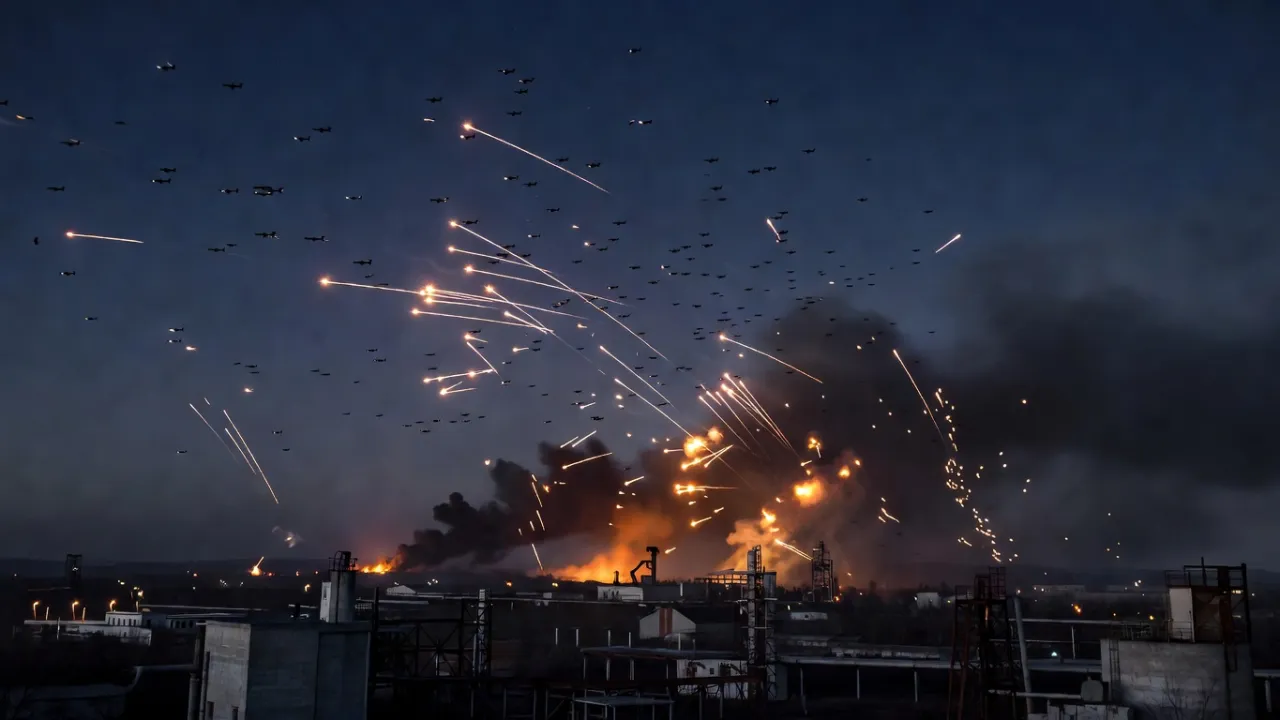
Ukraine launched one of its most significant drone offensive operations against Russia during the night of May 16-17, 2026, mobilizing more than 500 aircraft according to all sources.
The Russian Ministry of Defense announced the interception of 556 drones across more than 14 Russian regions, a figure cited by all perspectives without exception.
The attack caused at least three to five deaths on Russian soil, including at least three in the Moscow region, according to all perspectives.
Western and Ukrainian perspectives present the strikes as a proportional response to Russian attacks on Kyiv, while Russian coverage characterizes them as terrorist attacks against civilians, without mentioning simultaneous Russian strikes.
Coverage aligned with this reading
Coverage that diverges
The Russian perspective details locality by locality Russian victims and residential damage, while the majority of other perspectives mention these losses factually without humanitarian development comparable to coverage of strikes on Ukraine.
Coverage aligned with this reading
Coverage that diverges
Asia-Pacific countries (Japan, South Korea, Taiwan, Singapore) reframe the event within a regional security prism and doctrinal focus on drones, while European and North American countries concentrate on the logic of retaliation and diplomatic deadlock.
Coverage aligned with this reading
Coverage that diverges
This grouping describes the publications analysed, not the position of these countries’ populations or of their governments.
What the coverage of each country leaves aside, while others put it forward.
Russia
Ukraine
Italy
Preview: 3 of 17 media perspectives. Syntheses of the media analysed — not direct quotations. Method & limitations
Canberra reads the Ukrainian drone assault as a direct response to deadly Russian airstrikes on Kyiv, within an escalation cycle where both belligerents now target each other's energy infrastructure.
2 sources · View sources
Ottawa closely monitors the escalation of Ukrainian strikes against Russia, reporting facts with precision while emphasizing the diplomatic impasse and the shift of American attention away from the Ukraine front since late February.
2 sources · View sources
Beijing observes with close attention the escalation of drone strikes between Ukraine and Russia, recording factual data from the record attack on Moscow without taking a position on the legitimacy of military operations.
1 source · View sources
DOMINANT ANGLE
Canberra reads the Ukrainian drone assault as a direct response to deadly Russian airstrikes on Kyiv, within an escalation cycle where both belligerents now target each other's energy infrastructure.
ANALYSIS
Canberra, May 17, 2026.
DOMINANT ANGLE
Ottawa closely monitors the escalation of Ukrainian strikes against Russia, reporting facts with precision while emphasizing the diplomatic impasse and the shift of American attention away from the Ukraine front since late February.
ANALYSIS
Ottawa, May 18, 2026.
DOMINANT ANGLE
Beijing observes with close attention the escalation of drone strikes between Ukraine and Russia, recording factual data from the record attack on Moscow without taking a position on the legitimacy of military operations.
ANALYSIS
Beijing, May 17, 2026.
DOMINANT ANGLE
Berlin reads the massive Ukrainian drone assault on Moscow as a direct response to deadly Russian strikes on Kyiv, within a context of symmetric escalation where both capitals now face targeting.
ANALYSIS
Berlin, May 18, 2026.
DOMINANT ANGLE
Paris frames Ukraine's massive drone attack on Moscow as a deliberate and claimed retaliation, embedded within a symmetric escalation following lethal strikes on Kyiv, while emphasizing the stalemate in peace negotiations.
ANALYSIS
Paris, May 17, 2026.
DOMINANT ANGLE
New Delhi monitors the escalation of cross-border strikes between Kyiv and Moscow with particular attention to risks of regional destabilization, while refraining from endorsing the legitimacy of either side's operations.
ANALYSIS
New Delhi, May 17, 2026.
DOMINANT ANGLE
Rome reports the attack without marked positioning, relaying Russian figures while emphasizing the scale of the Ukrainian offensive.
ANALYSIS
Rome, May 17, 2026.
DOMINANT ANGLE
Tokyo closely monitors the escalating Ukraine conflict, noting a large-scale drone strike described as one of the most significant since the war's onset.
ANALYSIS
Tokyo, May 17, 2026.
DOMINANT ANGLE
Seoul observes the escalation of the Ukraine-Russia conflict with strategic attention, noting the unprecedented scope of the drone attack on Moscow and its implications for Eurasian regional stability.
ANALYSIS
Seoul, May 17, 2026.
DOMINANT ANGLE
Doha monitors with concern the massive Ukrainian drone campaign against Russia, occurring precisely when diplomatic signals from Washington and Moscow had suggested a possible exit from the conflict.
ANALYSIS
Doha, May 17, 2026.
DOMINANT ANGLE
Moscow frames the attack as the largest in over a year, emphasizing the effectiveness of its air defense capabilities and documenting the human toll inflicted on civilians in the capital region.
ANALYSIS
Moscow, May 17, 2026.
DOMINANT ANGLE
Singapore reports the facts of the Ukrainian drone attack on Moscow with factual restraint, emphasizing the unprecedented scale of the offensive and the context of mutual escalation between the two belligerents.
ANALYSIS
Singapore, May 17, 2026.
DOMINANT ANGLE
Ankara is closely monitoring the largest Ukrainian drone offensive in four years of war, an episode that illustrates the conflict's intensification and complicates Turkey's ongoing mediation efforts.
ANALYSIS
Ankara, May 18, 2026.
DOMINANT ANGLE
Taipei reads Ukraine's 500-drone strike on Russia as a direct strategic signal, at the precise moment Trump declares he has not yet decided on a major arms sales package for the island.
ANALYSIS
Taipei, May 18, 2026.
DOMINANT ANGLE
Kyiv methodically documents the scale of Russian overnight drone strikes on May 16-17, highlighting air defense effectiveness against a wave of 287 drones while detailing damage inflicted on civilian populations.
ANALYSIS
Kyiv, May 17, 2026.
DOMINANT ANGLE
London views the attack as a calculated Ukrainian response to Russian strikes on Kyiv, with UK outlets emphasizing the structural nature of escalation on both sides.
ANALYSIS
London, May 17, 2026.
DOMINANT ANGLE
Washington emphasizes Ukraine's demonstrated capacity to strike deep into Russian territory, and reads the operation as a proportionate response to Russian strikes on Kyiv that followed the Victory Day ceasefire.
ANALYSIS
Washington, May 17, 2026.
Explore every perspective on this subject across 17 countries.
Compare viewpoints and see where they diverge.
published on
countries
sources
articles
gap
On the night of 16 to 17 May 2026, Ukraine launched one of its largest drone offensives since the start of the conflict, deploying more than 500 aircraft. Russia's Defence Ministry reported intercepting 556 drones across more than fourteen regions. The attack caused between three and five deaths on Russian soil, including at least three in the Moscow region, and targeted refineries and infrastructure.
The Ukrainian president claimed the operation, calling it "entirely justified" and framing it as a response to Russian strikes that killed 24 people in Kyiv on 15 May, including three children. The episode followed a resumption of hostilities after the expiry of a three-day truce tied to the 80th anniversary of the Soviet victory, brokered under Washington's auspices.
The escalation reflects a logic of mutual attrition: both sides target the other's energy and logistics infrastructure, while peace negotiations are described as deadlocked. Ukraine's ability to strike more than 500 km from the border reshapes perceptions of the balance of power and complicates the calculations of actors seeking to keep mediation channels open.
Several points remain disputed. The Russian death toll ranges from three to five depending on the source and timing of publication. Readings of the event also differ: some actors see a proportionate response, others an attack on civilians. Finally, simultaneous Russian strikes — roughly 287 drones launched at Ukraine the same night — appear or not depending on the account, a sign that each side foregrounds its own losses.
Measured with the previous method (distance between texts), on a different scale.