Common ground and differences in coverage across the media analysed.
What the media report in common
1
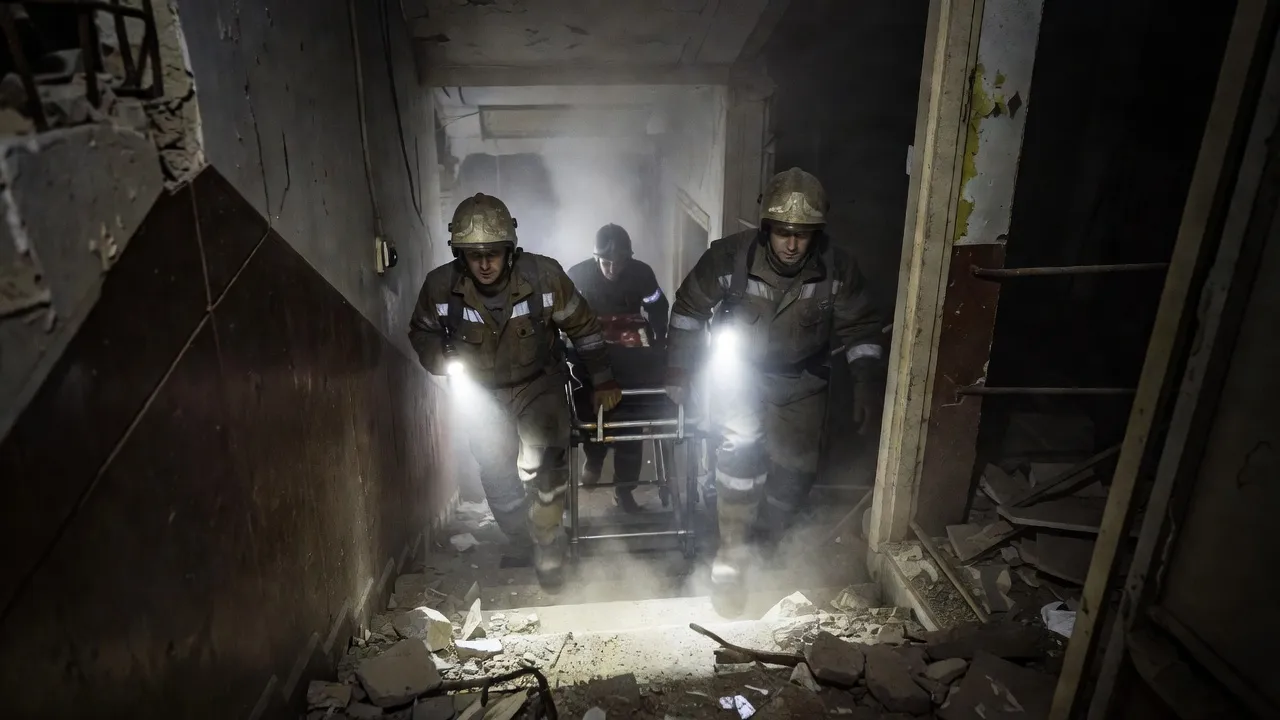
A missile destroyed a five-story residential building in Prylouky, in the Chernihiv region, resulting in the highest local toll for the night of October 6-7.
2
Volodymyr Zelensky estimates the attack at 70 missiles, many of which were ballistic, and dozens of drones, and reports around 100 injured.
3
The national toll is 28 dead according to Interior Minister Ivan Vyhivskyi, with children among the victims in Prylouky.
Where media coverage diverges
National Death Toll
Question: how many people were killed across Ukraine? Some reports retain 28 deaths (Vyhivskyi), while others stop at earlier counts, ranging from 19 to 25 deaths, or higher (32 deaths in Pakistan).
Question: how many children are among the dead in Prylouky? Five according to the authorities cited in most reports, four in older dispatches repeated in Canada, Germany, Russia, and the United States.
Kyiv mourns its dead and tallies the night of October 6 to 7: in Prylouky, five children including three one-year-old babies, and days of mourning decreed from October 7 to 9.
Canberra sees the night of strikes as a demonstration of the weaknesses in Ukraine's air defense: without ammunition for its Patriots, Kyiv cannot stop Russian ballistic missiles.
Brasília is gauging the October 7 attack by the standards of an air war: ballistic missiles, jet-powered drones and a lack of Patriot interceptors before winter.
Kyiv mourns its dead and tallies the night of October 6 to 7: in Prylouky, five children including three one-year-old babies, and days of mourning decreed from October 7 to 9.
KEY POINTS
Vyhivskyi reports 28 deaths in total, including 20 in Prylouky, among them five children, three of whom were one year old (Ukrinform).
Zelensky mentions 70 missiles, many of which were ballistic, and says he is searching every day for missiles for the Patriots (Ukrinform).
The air force claims to have shot down or neutralized 161 targets: 5 ballistic missiles, 39 cruise missiles, and 117 drones (Kyiv Post).
ANALYSIS
Kyiv, October 8, 2026. The Ukrainian press is focusing on the human toll in its coverage. Ukrainska Pravda reported at 11:03 that there were twelve dead and forty injured, including an eight-year-old boy in Prylouky, according to Interior Minister Ivan Vyhivskyi. Kyiv Post and Ukrinform later reported 19 dead in Prylouky, then 20, including five children, and 28 dead in total across the country. Volodymyr Zelensky, in his evening address, spoke of 25 dead and one hundred injured, and specified that a Kh-101 missile had directly hit the building. October 7, 8, and 9 have been declared days of mourning in Prylouky.
The headlines are dwelling on the victims. Ukrainska Pravda, citing Suspilne, names Viktoriia Bondarenko, 58, her daughter Kateryna Antypenko, and her one-year-old grandson Oleksandr, while little Olha survived in another room. Kyiv Post cites the three one-year-old boys, Oleksandr, Kyrylo, and Serhii, as well as Maksym, who is eight years old. Ukrinform reports the image of team leader Pavlo Levchenko carrying a five-year-old girl rescued from the rubble, and the minister notes that the rescue efforts saved 29 people.
The military aspect comes next. The air force claims to have shot down or neutralized 161 targets overnight: five ballistic missiles, 39 cruise missiles, and 117 drones, including 38 jet-powered ones. Zelensky mentions 70 missiles, "many of which were ballistic," only some of which were intercepted, and says he is searching every day for missiles for the Patriots. TSN, citing the Institute for the Study of War, believes that the jet-powered Geran drones allow Moscow to concentrate its strikes, and that winter will be tougher for energy. A new wave of jet-powered drones targeted Kyiv and several regions on the night of Wednesday to Thursday, October 8.
The account links the strike to the date: Zelensky describes it as a "birthday gift" that Putin gave himself. He also sees it as a rehearsal of what Russia wants to reserve against any country, and he warns against easing sanctions. Ukrinform reports in parallel the Ukrainian strikes on oil reservoirs in Samara and the gas plant in Astrakhan, presented as facilities that supply the Russian army. The articles do not repeat the version of the Russian Ministry of Defense.
Australia
DOMINANT ANGLE
Canberra sees the night of strikes as a demonstration of the weaknesses in Ukraine's air defense: without ammunition for its Patriots, Kyiv cannot stop Russian ballistic missiles.
KEY POINTS
Zelensky reported 25 deaths and around 100 injured; Interior Minister Ivan Vyhivskyi gave a figure of 28 (PerthNow).
In Pryluky (Chernihiv region), a missile destroyed a five-story building: 19 dead, including five children, according to Zelensky, with 15 survivors extracted (PerthNow).
Russia fired 70 missiles, including many ballistic ones, and dozens of Shahed drones; Ukraine, without ammunition for its Patriots, cannot stop the ballistic weapons (SBS).
ANALYSIS
Canberra, October 8, 2026. Australian media, led by PerthNow and SBS News, are reporting on the night of Russian strikes against Ukraine and are first drawing a military lesson from it. Missiles and drones hit Kyiv and around a dozen other regions. President Volodymyr Zelensky reported 25 deaths and around a hundred injured; Interior Minister Ivan Vyhivskyi gave a toll of 28.
The heaviest toll comes from Pryluky, in the Chernihiv region, where a missile destroyed a five-story building. According to Zelensky, 19 people died there, including five children. Rescue workers, equipped with an excavator and shovels, extracted 15 survivors, and around fifty injured were counted in the town. The initial versions of PerthNow, which were released earlier, spoke of 19 deaths in total, then 13 in Pryluky: the toll increased throughout the day.
The account quotes Zelensky extensively, who said Russia wanted to "strike painfully and demonstratively". He noted that the attack coincided with the 74th anniversary of Vladimir Putin: "That's the birthday present Putin gave himself: killing children, killing people." He said 70 missiles, including many high-speed ballistic munitions, and dozens of Shahed drones had been fired.
The dominant angle is technical. SBS emphasizes that the attack was expected: Zelensky had warned the day before, according to intelligence services, of a "massive" strike, but Ukraine was unable to repel it completely. The deaths illustrate, according to the report, the difficulty in countering ballistic missiles and new reaction drones. Due to a lack of ammunition for its American Patriots, Kyiv cannot stop ballistic weapons and is seeking to develop fast enough interceptors.
Brazil
DOMINANT ANGLE
Brasília is gauging the October 7 attack by the standards of an air war: ballistic missiles, jet-powered drones and a lack of Patriot interceptors before winter.
KEY POINTS
According to G1, the Russian attack targeted civilians and energy infrastructure; Zelensky reports 15 dead in Prylouky, including four children, and 130 drones and 48 cruise missiles in addition to ballistic missiles.
La Folha reports 70 missiles, mostly ballistic, and 46 jet drones, with an interception rate rising from 50% to 80% according to Zelensky.
La Folha quotes the Ukrainian Air Force: at least 300 additional missiles would be needed for the Patriot batteries before winter.
ANALYSIS
Brasília, October 8, 2026. Brazil's major media outlets are treating the night of strikes on Wednesday, October 7, as an episode of the air war, with lower tolls than those of the international briefing. G1 headlines "Presente para Putin" (A Gift for Putin): 20 dead. Folha de S.Paulo speaks of a "mega-attack" that left "at least 19 dead" and ranks it among the most intense missile attacks of the war.
The two newspapers place the deadliest point in Prylouky, in the Chernihiv region, where a missile hit a five-story residential building. The numbers vary according to the source and time. G1, citing Volodymyr Zelensky, reports 15 dead and 50 injured on the spot, including four dead children. Folha de S.Paulo, in an earlier toll, reports 13 dead, including three children, and 40 injured. Deaths are also reported in Kiev, Dnipro, Kremenchouk, and Oleksandria.
G1 repeats Zelensky's phrase: the destroyed building in Prylouky is a "birthday present" for Vladimir Putin, who turned 74 on Wednesday. The Ukrainian president says that the infrastructure of Kiev and 12 regions was affected. G1 details the armament used according to the Ukrainian aviation: 130 drones, including a third with jet propulsion, 48 cruise missiles, and ballistic missiles.
Folha de S.Paulo adopts a more military reading. It reports the 70 missiles, mostly ballistic and more difficult to intercept, and 46 jet drones launched to saturate the defenses. Zelensky mentions an interception rate that has gone from 50% to 80% without detailing the reason. The newspaper links it to an agreement with Poland, Belgium, and Spain on 20mm ammunition for F-16s.
Canada
DOMINANT ANGLE
Ottawa is first considering the human cost of the night of October 7, with the Prylouky building and the children killed, relayed by Zelensky's voice and the figures from Ukrainian authorities.
KEY POINTS
According to Zelensky, Russia fired 70 missiles, including many ballistic ones, and dozens of Shahed drones overnight.
In Prylouky, a missile destroyed a five-story building; 15 people were pulled alive from the rubble.
The tolls vary according to the article: at least 24 dead for the Globe and Mail, at least 19 for CBC News.
ANALYSIS
Ottawa, October 8, 2026. Canada is examining the night of strikes from Tuesday, October 6, to Wednesday, October 7, through its human toll and the words of Ukrainian President Volodymyr Zelensky. The Globe and Mail reports that Russia struck Ukraine with "waves of missiles and drones" in one of its "most ignoble strikes", according to Zelensky, killing at least 24 people, including children, and damaging industrial sites and energy infrastructure. CBC News reports a lower toll, with at least 19 civilians killed, including four children, and around 60 injured, according to Ukrainian officials.
The hardest-hit area is Prylouky, in the Chernihiv region, where a missile destroyed a five-story building. The Globe and Mail reports at least 18 deaths, including four children, according to local authorities; CBC cites Interior Minister Ihor Vyhivskyi, who reported 13 deaths, including four children, and around 50 injured. Both media outlets describe rescuers searching through the rubble with an excavator and shovels, and 15 people pulled out alive. Deputy Mayor Danylo Savenko speaks of "a lot of destruction, especially in the city center" and recounts running to shelter with his wife.
Both articles relay Zelensky's count: 70 missiles, including many high-speed ballistic missiles, and dozens of Shahed drones. They highlight the coincidence with Vladimir Putin's 74th birthday; Zelensky calls it a "birthday gift". Deaths are reported in Kyiv, Oleksandria, and Kremenchouk.
Germany
DOMINANT ANGLE
Berlin is assessing the human toll of a night of strikes, focused on a building in Pryluky, while also noting that many of the attacks targeted Ukraine's energy infrastructure.
KEY POINTS
The FAZ, citing the Ukrainian emergency service, reports at least 14 dead in Pryluky, including four children, and 50 injured, including seven children.
The Tagesschau cites the Ukrainian air force: 130 drones, 48 cruise and ballistic missiles fired, 161 devices intercepted.
Zelensky described the attack as "one of the most heinous" and linked it to Putin's anniversary; he cited 70 missiles, most of them ballistic.
ANALYSIS
Berlin, October 8, 2026. The German press is following the Russian strikes of the night of Tuesday, October 6, to Wednesday, October 7, through evolving reports. The FAZ liveblog headlines with "at least 20 dead"; the Tagesschau, in an earlier version, counts "at least 19 dead" according to the authorities.
The focal point is Pryluky, a small town in the Chernihiv region. According to the FAZ, which cites the Ukrainian emergency service, at least 14 people have died there and 50 have been injured, including four children killed and seven injured. The missiles have almost completely destroyed a five-story building. The Tagesschau cites Governor Viacheslav Chaus, who mentions at least 13 dead. Rescue workers were still searching for survivors in the rubble, with some seriously injured being taken down by ladders.
The FAZ reprints Volodymyr Zelensky's statement on Telegram: the Russian army has destroyed a residential building "as a gift" for Putin's birthday. The Ukrainian president spoke of "one of the most heinous attacks" and 70 missiles, mostly ballistic, as well as jet drones. He confirmed other victims in Dnipro and Kremenchuk (two dead, eight injured), in Kiev and Oleksandria (two dead each).
The Tagesschau details the military inventory provided by the Ukrainian air force: 130 drones, 48 cruise missiles and ballistic missiles fired, including 161 intercepted devices. It relays Zelensky's mention of attacks largely targeting the energy infrastructure, and reports damage to industrial facilities in Dnipro and to transportation in Zaporizhzhia. In Kiev, Mayor Vitali Klitschko reported two deaths under garages in the Darnytsia district; two people were rescued alive. Reporters from the Kyiv Independent describe successive explosions.
France
DOMINANT ANGLE
Paris first takes stock of the civilian toll from the night: a gutted building in Prylouky, five children dead, and the looming energy winter in the background.
KEY POINTS
At least 28 people were killed in Russian strikes on Wednesday, October 7, including five children in the same building gutted by a missile in Prylouky.
Zelensky talks of "70 missiles in total, including many ballistic ones" and drones sent to 12 regions, with energy infrastructure as the primary target.
The Russian Ministry of Defense claims to have struck factories assembling Flamingo cruise missiles and long-range drones in Kiev, Prylouky, and Kremenchouk.
ANALYSIS
Paris, October 8, 2026. The French press is making the Prylouky building, in the Chernihiv region, the symbol of the night of strikes on Wednesday, October 7. Le Monde and 20 Minutes describe a five-story residential building, half of which was "gutted by a missile" around 6:30 am. The toll evolves over the hours: 26 dead according to 20 Minutes and Sud Ouest on Wednesday, then at least 28 dead, including five children in this single building, in the live updates of Le Monde and 20 Minutes published on Thursday, October 8. BFMTV, earlier in the day, still counted only five dead and 26 injured in Prylouky, before the police spoke of nine dead.
The headlines largely repeat the words of Volodymyr Zelensky: "one of the most heinous attacks: 70 missiles in total, including many ballistic ones", and drones sent to 12 regions. BFMTV retains the phrase of a "birthday gift" to Vladimir Putin, born on October 7 and 74 years old. The Ukrainian president also mentions victims in Kiev, Kremenchouk, and Oleksandriya, damaged buildings in Dnipro and Zaporijia, and demands more ballistic missile interception systems.
The Russian version is reported, but in second place. The Ministry of Defense claims to have struck factories assembling and storing cruise missiles, including Ukrainian-made Flamingo, and long-range drones in Kiev, Prylouky, and Kremenchouk. The articles do not comment on it and do not confront it with the findings on the ground. 20 Minutes adds that the Kremlin denounces a French shot, without developing it in the available excerpt.
South Korea
DOMINANT ANGLE
Seoul is tallying the civilian toll of the night's strikes on Ukraine, tracking the evolving numbers from 8 to 28 dead, and noting Zelensky's comment on Putin's "birthday gift".
KEY POINTS
Interior Minister Ivan Vyhivskyi puts the national death toll at 28, and Zelensky mentions 100 injured (Korea Herald).
In Pryluky, Governor Viatcheslav Tchaous reports 20 dead, including five children, and 15 survivors have been pulled from the rubble (Korea Herald).
The Russian Defense Ministry says it targeted missile and drone production and storage sites, as well as port facilities in Odessa (Korea Times).
ANALYSIS
Seoul, October 8, 2026. The South Korean press is treating the Russian strikes of the night of Tuesday, October 6, to Wednesday, October 7, as an event that is first and foremost human, and its account is evolving with the toll. The Korea Times, in a dispatch dated October 7, reports at least eight dead "according to Ukrainian officials": in Pryluky, in the Chernihiv region, a missile struck a high-rise building, with at least four dead and 20 injured, according to the State Emergency Service, including three children. Kiev reports two dead, Kremenchuk two dead and seven injured. The newspaper also details the material damage: ballistic missiles hit Kiev around 3 am, a non-residential building and a garage complex caught fire, and three production and storage sites were damaged in the Obukhiv district.
The Korea Herald, dated October 8, provides the consolidated toll. Interior Minister Ivan Vyhivskyi puts the death toll at 28 in the country, and Governor Viacheslav Chaus announces 20 dead in Pryluky, including five children, where "a Russian missile destroyed" a five-story building. Fifteen survivors were pulled from the rubble by rescuers equipped with shovels and an excavator. Zelensky mentions 100 injured, 70 missiles, often ballistic, and dozens of Shahed drones, and judges that it is "one of the most heinous strikes", which "wanted to strike painfully and demonstratively".
Pakistan
DOMINANT ANGLE
Islamabad is reporting the civilian toll from the night of strikes, with children from Prylouky among the victims, while also recording the version of the Russian Defense Ministry regarding military-industrial targets.
KEY POINTS
In Prylouky (Chernihiv region), a missile destroyed a five-story building: 20 dead, including five children, according to Ivan Vyhivskyi, 22 dead according to the emergency service Thursday morning.
Zelensky mentions 70 missiles, mostly ballistic, and dozens of Shahed drones, with around a hundred injured.
The Russian Ministry of Defense describes a "massive strike" against military-industrial sites, linked according to Russian officials to the company Fire Point.
ANALYSIS
Islamabad, October 8, 2026. Pakistani media is covering the Russian strikes on Ukraine through news agency dispatches, with a death toll that varies from one headline to another. Business Recorder reports "at least 32 dead" and describes one of the strikes as "one of the most heinous" according to Volodymyr Zelensky. Daily Times, in an earlier version, reported only eight dead: two in Kiev, four in Prylouky, and two in the Poltava region.
Business Recorder's account places Prylouky, in the Chernihiv region, at the center: a Russian missile destroyed a five-story residential building there. The Ukrainian emergency service reported a local death toll of 22 on Thursday morning, after Interior Minister Ivan Vyhivskyi had announced 20 dead, including five children, and a national death toll of 28. Two more bodies were found in Kiev, bringing the capital's death toll to four. Prosecutors in Kiev also reported two deaths caused by drone debris in the suburbs. Zelensky mentioned around 100 injured. The article describes a bulldozer and dozens of rescuers with shovels in the rubble.
The dispatch quotes Zelensky's statement on Vladimir Putin's birthday: "the kind of birthday present Putin gave himself: killing children, killing people." The Ukrainian president reported that the attack involved 70 missiles, including many high-speed ballistic missiles, and dozens of Shahed drones.
Russia
DOMINANT ANGLE
Moscow presents the night of October 7 as a massive strike against the Ukrainian military-industrial complex, while the independent Russian-language press reports the civilian toll given by Kiev.
KEY POINTS
The Defense Ministry claims to have carried out a "massive strike" against military-industrial facilities in Kiev and other Ukrainian regions (Moscow Times, Sputnik).
In Prylouky, a missile destroyed a five-story building: at least 18 dead, including four children, and 15 survivors extracted, according to local authorities cited by the Moscow Times.
The Ukrainian air force says it shot down just over 80% of the 46 Russian jet drones, compared to 50 to 60% on average in recent weeks (Moscow Times).
ANALYSIS
Moscow, October 8, 2026. Russian coverage of the night of Tuesday, October 6, to Wednesday, October 7, is divided between two registers. The first is that of state media. According to TASS and Sputnik, the Russian Ministry of Defense carried out a "massive strike" with high-precision weapons launched from the ground, sea, and air, as well as drones, against Ukrainian military-industrial installations. Sputnik reports on the production of missiles and drones affected in seven regions. TASS details, for the day, strikes on drone assembly workshops, ammunition depots, and deployment areas in 146 points, and estimates Ukrainian losses at around 1,440 men in 24 hours, according to data from the same ministry. In these texts, the formulation remains that of the statement: designated targets, units, and locations, without mention of Ukrainian civilian casualties.
The second register is that of the Moscow Times, which reports the toll and Kiev's version. The newspaper quotes Volodymyr Zelensky, who says Russia fired 70 missiles, including many ballistic ones, and dozens of Shahed drones, in "one of the most heinous strikes". He describes a five-story building destroyed in Prylouky, in the Chernihiv region: according to local authorities, at least 18 dead, including four children in the latest version, 15 people rescued alive from the rubble, and around 55 injured. Six other people died in Kiev, Oleksandria, and Kremenchuk. The title changes from 20 to 24 dead between two versions of the same article, a sign of a still evolving toll.
Singapore
DOMINANT ANGLE
Singapore first focuses on the human drama of Pryluky: the city-state's press highlights five children who died in their sleep and the accounts of survivors, more than the strategy or diplomacy.
KEY POINTS
Channel News Asia puts the death toll at at least 26, including five children, while the Straits Times reports at least 28 dead after the strikes on Wednesday, October 7.
In Pryluky, in the Chernihiv region, Ukrainian authorities count 20 dead in the strike on a five-story building, according to the Straits Times.
Zelensky states that three of the children killed were 12 months and eight years old, and that seven other children are among the injured.
ANALYSIS
Singapour, 8 October 2026. The two Singaporean titles in the corpus, Channel News Asia and the Straits Times, cover the Russian strikes of Wednesday, 7 October, from a news agency account dated Pryluky, in the Chernihiv region. The headline is the same for both: children killed in their sleep.
The toll evolves from one edition to another. Channel News Asia reports "at least 26" dead across Ukraine, including five children, and a toll of 19 dead in Pryluky after the discovery of another child's body in the evening. The Straits Times, in a more recent version, mentions "at least 28" dead and indicates that Ukrainian authorities count 20 dead in the single strike in Pryluky. The URL title of the Straits Times, which still mentions four children and 24 dead, retains the trace of these successive revisions.
The account emphasizes the scene: a missile shattered windows and reduced half of a five-story building to "a smoking heap of calcined concrete and twisted metal". Volodymyr Zelensky specifies that three of the victims were 12 months old and another was eight years old, and that seven other children are among the dozens of injured. A resident, Olena Sayun, tells AFP: "We were at home, sleeping", before describing how she and her husband covered their child with their bodies.
United Kingdom
DOMINANT ANGLE
London first reports on the children killed in Prylouky: the British press leads with the civilian toll of the night and Zelensky's phrase of a "birthday gift" to Putin.
KEY POINTS
According to the Independent, at least 25 people were killed, including five children, and around 100 injured; the heaviest toll is in Prylouky, in the Chernihiv region.
Zelensky mentioned 70 missiles fired and stated: "The Russians wanted to strike in a painful and demonstrative way", linking the attack to Putin's anniversary.
The BBC reports that Moscow had not commented and that BBC Verify confirmed the authenticity of images of an unexploded Iskander missile in Kiev.
ANALYSIS
London, 8 October 2026. The British press leads with the children. The Independent headlines with children "killed in their sleep" among 25 dead, in what Volodymyr Zelensky calls a "birthday present" for Vladimir Putin, who turned 74 on Wednesday, 7 October. The BBC, in an initial version, reports 20 dead and picks up Zelensky's qualifier: one of the Russian attacks most "vile", that is, heinous.
The account focuses on Prylouky, in the Chernihiv region, where a Russian missile destroyed a five-story residential building. According to the BBC, the Ukrainian emergency service had initially counted 14 dead, including four children, and 50 injured, including seven children; The Independent, later, puts the national total at 25, including five children, and around a hundred injured. The BBC specifies that people could still be trapped in the rubble.
The other affected cities are listed briefly: Kyiv, Dnipro, Kremenchuk, Zaporizhzhia, and Oleksandriya. The BBC reports two dead in Kyiv, two in Oleksandriya, two in Dnipro, and Kremenchuk. It notes that the Ukrainian police have released images of an unexploded Iskander missile in the middle of a Kyiv neighborhood, and that BBC Verify has confirmed they are authentic.
Zelensky has given a figure of 70 missiles and stated: "The Russians wanted to strike in a painful and demonstrative way." He also said that Ukraine had hit targets in the Russian regions of Perm, Samara, and Astrakhan, as well as a "response in the Black Sea", without details. The BBC indicates that Moscow had not yet commented at the time of publication.
United States
DOMINANT ANGLE
The United States is gauging the night of strikes by the limits of Ukraine's air defense: without ammunition for American-made Patriots, Kiev cannot stop Russian ballistic missiles.
KEY POINTS
Russian strikes on Kyiv and around a dozen other regions have killed at least 21 civilians, including four children, and injured about 60, according to Ukrainian officials.
Without ammunition for its US-made Patriots, Ukraine cannot stop Russian ballistic missiles; it is seeking interceptors against jet-powered drones.
Peace efforts led by the United States appear unlikely to bring short-term relief, with low-level technical talks still under discussion.
ANALYSIS
Washington, October 8, 2026. The American media reports on the night of Tuesday, October 6, to Wednesday, October 7, through a news agency dispatch relayed by ABC News and NBC News. According to this text, Russian missiles and drones struck Kiev and a dozen other Ukrainian regions, killing at least 21 civilians, including four children, and injuring about 60, according to Ukrainian officials. The account is more cautious than the subsequent Ukrainian reports and does not repeat the heaviest figures.
The dispatch emphasizes that the attack was anticipated: President Volodymyr Zelensky had warned the day before that intelligence services judged Russia to be preparing a "massive" strike. The attack coincided with the 74th anniversary of Vladimir Putin. Nevertheless, notes the text, Ukraine was unable to repel it completely.
It is the military thread that structures the American reading. The deaths and damage, writes the agency, "illustrate the difficulty" of Ukraine to counter Russian ballistic missiles and new jet-powered drones. Due to a lack of ammunition for its American-made Patriot systems, Kiev cannot stop the ballistic weapons; the country is trying to develop a new generation of interceptors fast enough to reach these drones flying at high altitude.
The text places the episode in a long-range air war, as the armies remain largely bogged down on the ground more than four and a half years after the invasion. The incessant attacks, according to it, weigh on Russia but could be "ruinous" for Ukraine, which is smaller.
South Africa
DOMINANT ANGLE
Pretoria is above all mindful of the human cost of the night of strikes: the children killed in Prylouky and Zelensky's formula for the "birthday gift" to Putin, as reported by Reuters dispatches.
KEY POINTS
Ukrainian Interior Minister Ivan Vyhivskyi puts the national toll at 28 dead; Zelensky mentions around a hundred injured.
In Prylouky, Governor Viatcheslav Tchaous reports 20 dead, including five children, in a five-story building; 15 survivors have been extracted.
According to Zelensky, Russia fired 70 missiles, including many ballistic ones, and dozens of Shahed drones; Moscow speaks of a "massive strike" against military-industrial sites.
ANALYSIS
Pretoria, October 8, 2026. The South African press (Daily Maverick, Business Day, TimesLIVE) picks up the Reuters dispatch by Olena Harmash and Vladyslav Smilianets on the night of Russian strikes from Tuesday, October 6, to Wednesday, October 7. The toll varies from one title to another: "at least 24" dead in the October 7 versions of Business Day and TimesLIVE, including 18 in Prylouky with four children, then "at least 28" in the October 8 version of Daily Maverick, a figure given by Interior Minister Ivan Vyhivskyi.
In Prylouky, in the Chernihiv region, a missile destroyed a five-story residential building. Governor Viacheslav Chaus counts 20 dead, including five children. With an excavator, shovels, and ladders, rescuers pulled out 15 survivors by descending the floors; about 55 people were injured in the town. Deputy Mayor Danylo Savenko describes "a lot of destruction, especially in the city center" and recounts how he ran to shelter with his wife as soon as he heard the missiles.
The articles relay Volodymyr Zelensky's reading: 70 missiles, including many high-speed ballistic missiles, and dozens of Shahed drones, "one of the most heinous strikes." He links the attack to Vladimir Putin's anniversary: "That's the kind of birthday gift Putin gave himself: killing children, killing people." Deaths are also reported in Kiev, Oleksandria, and Kremenchuk; about a hundred injured in total in the country, according to the Ukrainian president. Daily Maverick adds that two people were killed in a Kiev suburb by drone debris, according to the prosecutor's office.
Explore every perspective on this subject across 13 countries.
Ukraine: at least 28 killed in Russian strikes, including five children in a Pryluky apartment block
published on
October 8, 2026
13
countries
33
sources
36
articles
46/100
gap
The toll for the night of October 6-7 changed by the hour, and each national press outlet froze on a different figure, beyond the deaths, the coverage follows three threads: the residents of Prylouky, the shortage of interceptors, and the military version given by Moscow.
The toll is not stabilized: according to the media and updates, it varies from 19 to 32 dead, and Russia says it targeted military-industrial sites.
A changing toll
The figure depends on the time of the dispatch. Ukrainska Pravda reports twelve dead and forty injured at 11:03, according to Interior Minister Ivan Vyhivskyi, then relays the total of 28. The Korea Times, in a dispatch on October 7, sticks to at least eight dead "according to Ukrainian officials".
The Moscow Times goes from 20 to 24 dead between two versions of the same article. Business Recorder headlines at least 32 dead and indicates that the Ukrainian emergency service puts the toll in Prylouky at 22 dead on Thursday morning. According to PerthNow and the Ukrainian press, Volodymyr Zelensky speaks of 25 dead in his evening address.
The number of children follows the same trend. The Globe and Mail, CBC, and FAZ count four in Prylouky in their older versions; later dispatches, including those from Reuters picked up by Daily Maverick, count five.
Six of the thirteen covers in the corpus (Australia, France, South Korea, Singapore, Ukraine, South Africa) report 28 dead. This count measures the figure each press had on hand at the time of publication, not an estimate of the actual toll.
Prylouky, scene and witnesses
Ukrainian and Asian headlines focus on the building. According to Zelensky, as reported by the Ukrainian press, a Kh-101 missile directly hit the building. Le Monde and 20 Minutes place the impact at around 6:30 and describe a five-story building, half of which was "gutted".
« That's the kind of birthday gift Putin gave himself: killing children, killing people. »
Volodymyr Zelensky, quoted by the Korea Herald, October 8
Channel News Asia and the Straits Times, which pick up the AFP report, lead with children killed in their sleep. Zelensky specifies that three of the victims were 12 months old and another was eight years old, and that seven other children are among the injured. A resident, Olena Sayun, tells the AFP: "We were at home, sleeping".
Deputy Mayor Danylo Savenko, quoted by Reuters and the Globe and Mail, mentions "a lot of destruction, especially in the city center". The Ukrainian press reports that October 7, 8, and 9 are declared days of mourning in Prylouky.
Air defense in question
Three out of thirteen covers (Australia, Brazil, United States) focus on air defense rather than victims. This count measures the chosen angle in the corpus, not its importance. The dispatch reprinted by NBC News states that, due to a lack of ammunition for its American-made Patriots, Ukraine cannot stop ballistic weapons, and it is seeking to develop interceptors fast enough for jet-powered drones.
« The deaths and damage illustrate Ukraine's difficulty in countering Russian ballistic missiles and new jet-powered drones. »
agency dispatch reprinted by NBC News, October 8
The Ukrainian air force claims to have shot down or neutralized 161 targets: five ballistic missiles, 39 cruise missiles, and 117 drones, including 38 jet-powered ones, according to Kyiv Post. Tagesschau and G1 report the same total of 161 intercepted devices, for 130 drones and 48 cruise missiles fired, in addition to ballistic missiles.
The Moscow Times indicates that the Ukrainian air force says it has shot down a little over 80% of the 46 jet-powered drones, compared to 50 to 60% on average in recent weeks. Folha adds that the same air force estimates that at least 300 additional missiles would be needed for the Patriot batteries protecting the capital during the winter campaign.
TSN, citing the Institute for the Study of War, judges that the Geran jet-powered drones allow Moscow to concentrate its strikes. The Ukrainian press reports a new wave of jet-powered drones on the night of Wednesday to Thursday, October 8.
Announced targets, energy and winter
The Russian state press adheres to the Defense Ministry's statement. TASS and Sputnik report on high-precision weapons launched from the ground, sea, and air against military-industrial facilities; Sputnik mentions seven regions. According to the Korea Times, the ministry also cites port facilities and naval repair installations in Odessa.
« One of the main targets was our energy infrastructure. »
Volodymyr Zelensky, quoted by the French press (Le Monde, 20 Minutes), October 8
Details on the targets come from several sources. Le Monde and 20 Minutes report that the ministry targets cruise missile factories and long-range drone facilities in Kiev, Prylouky, and Kremenchouk. Daily Times writes that Russian officials link the targets to the Ukrainian company Fire Point. The TASS and Sputnik articles in the corpus do not mention Ukrainian civilian casualties.
On energy, Zelensky assures that one of the main targets was energy infrastructure. Sud Ouest notes that Kiev's grid suffered a power loss and Ukrenergo decided on emergency shutdowns; the newspaper links the approach of winter to the fear of repeating last year's scenario.
On the Ukrainian side, Ukrinform reports strikes on oil reservoirs in Samara and the Astrakhan gas plant, presented as sites that supply the Russian army. The Ukrainian articles in the corpus do not take up the version of the Russian Defense Ministry.
The version of the Russian ministry
The Russian Ministry of Defense claims to have carried out a "massive strike" against military-industrial sites, in Kiev and elsewhere.
Request for air defense
Volodymyr Zelensky is calling for Patriot systems, which are scarce due to the war with Iran.
Ukrainian strikes in Russia
Kiev indicates it has hit oil facilities in the Perm, Samara, and Astrakhan regions.
European reaction
Ursula von der Leyen, President of the Commission, speaks of a "deliberate strategy of terror".
Key figures
28 deaths
Toll announced by the Interior Minister for all the strikes
The articles put the episode into a long-range air war, as the armies remain largely bogged down on the ground, more than four and a half years after the invasion. The strikes, PerthNow writes, weigh on Russia but could be "ruinous" for a smaller Ukraine. The peace efforts led by the United States seem unlikely to bring rapid relief; only low-level technical talks are mentioned. Western analysts believe that Putin is pursuing the invasion by betting that Ukrainians will give in and that Western supporters will not hold out.
European reactions and the version of the Russian Defense Ministry do not appear in the excerpts from the Australian press provided; The Age is limited to a brief video of a struck building and its victims.
The daily notes that Kiev still lacks missiles for its Patriot batteries. The Ukrainian air force estimates that at least 300 more are needed to protect the capital during the winter campaign, which begins at the end of December. Folha de S.Paulo adds that 2026 is the most violent year for civilians since the start of the conflict: according to Acled, 15 people died every day from September 1 to 24, 80% of them in Ukraine.
The excerpts provided do not contain the version of the Russian Ministry of Defense or European reactions. The Brazilian angle remains focused on the damage, energy, and air defense.
CBC emphasizes the air defense dimension: Ukraine had anticipated a "massive" attack but was unable to repel it entirely. Zelensky is seeking Patriot missiles worldwide, which are rare due to the war with Iran, and states that "Russian ballistic missiles remain the biggest challenge". CBC also mentions Ukrainian strikes against Russian oil facilities.
The Globe and Mail reports Moscow's version: the Russian Defense Ministry claims to have carried out a "massive strike" against military-industrial sites. A subheading notes a significant increase in reported drone interceptions.
The FAZ liveblog also mentions, in its header, a Ukrainian drone strike triggering a violent fire on a tanker, placed on the same level as the Pryluky drama. The excerpts provided do not contain the version of the Russian Ministry of Defense or the political reactions of Germany or Europe.
The energy dimension comes next. Zelensky assured that "one of the main targets was our energy infrastructure". Sud Ouest notes that Kiev's network suffered a power loss, that the electrical transport on the right bank was stopped "temporarily" and that emergency cuts were decided by Ukrenergo. The approach of winter is feared to repeat the scenario of last year, when millions of households were plunged into darkness and cold.
The live updates of Le Monde and 20 Minutes mix this story with other information from the war, including the controversy over South Korean diesel deliveries to Russia revealed by The Guardian, which Seoul judges "factually incorrect". France 24 offers a video format on the toll of Prylouky. Overall, the treatment remains factual, focused on the victims and Ukrainian official figures.
The Herald extensively quotes the Ukrainian president's comment on Vladimir Putin's anniversary: "That's the kind of birthday present Putin gave himself: killing children, killing people." It also notes the death of two people in a Kiev suburb, killed by drone debris, according to the capital's prosecutors.
The Russian version only appears in the Korea Times: the Russian Ministry of Defense says it targeted missile and drone production and storage facilities in the Chernihiv, Kirovohrad, Dnipropetrovsk, Poltava, and Kharkiv regions, as well as port and naval repair facilities in Odessa. The same article recalls that Zelensky had warned the day before, on X, that Moscow was preparing a massive strike.
Both titles stick to agency facts, without editorial or commentary on South Korea itself.
Daily Times provides a more military-focused perspective. The Ukrainian air force said that Russia launched 130 drones and 48 cruise missiles, in addition to ballistic missiles, and that air defenses intercepted 161 targets. The Russian Defense Ministry spoke of a "massive strike" against military-industrial installations. Russian officials claimed that the targets were linked to the Ukrainian company Fire Point, which produces Flamingo cruise missiles and medium- and long-range drones. The same article refers to other topics covered by the media: a massive drone attack on the Moscow region, which killed two people, and a Russian strike on another major bridge in Kiev.
The overall tone remains factual and without editorial commentary. Neither of the two articles reports on any Pakistani reaction or develops Zelensky's calls for new air defense systems.
The Moscow Times also notes a military point: the Ukrainian air force says it shot down a little over 80% of the 46 jet drones launched, compared to 50 to 60% on average in recent weeks. It reports Zelensky's statement that the strike coincided with Vladimir Putin's anniversary.
The Russian pool finally contains a counter-narrative on the front: TASS publishes a toll of three civilians killed and eight injured in the Donetsk People's Republic by Ukrainian attacks, according to the regional bureau for documenting war crimes. The official press thus places civilian casualties on the Russian side and strikes on Kiev on the side of military targets.
None of the provided articles deal with European reactions or Kiev's request for Patriot missiles.
The Ukrainian voice dominates. Zelensky describes the strike as a "completely deliberate choice of terror" and accuses Russia of deliberately targeting "ordinary cities, ordinary life". Channel News Asia also quotes him speaking of one of the strikes as one of the "most heinous" in a conflict of nearly five years. He had warned on Tuesday of a "massive" attack targeting energy infrastructure in particular.
The other affected areas are mentioned more briefly: two dead in Kremenchouk in a high-rise building, then Kiev, Dnipro, and Oleksandria. The Straits Times, whose summary box is generated by AI, retains the 50 missiles and 130 drones fired during the night, according to Zelensky, as well as residents taking shelter underground and the growing threat to energy and civilian life.
In the available excerpts, no strategic analysis, no Singaporean commentary, and no official reaction from Singapore appear: the framing remains that of a war news item, carried by the testimonies and figures of the Ukrainian authorities.
The Independent adds a second thread, outside Ukraine: the Kremlin has reacted to the test of a ballistic missile launched from a submarine off Brittany, hailed by Emmanuel Macron as a message "sent loud and clear". Dmitry Peskov sees in it an identity of defense built on "confrontation with the Russian Federation", a "dead-end path". The newspaper therefore treats the night of strikes in a flow of news where Franco-Russian tension occupies a neighboring place.
The angle is thus human and chronological: a worsening toll, quotes from Zelensky, images of the rubble. Debates on air defense or energy occupy little space in the available excerpts.
On the diplomatic level, the dispatch notes that the United States' peace efforts seem unlikely to bring relief in the short term, with the holding of low-level technical talks still under discussion. Western analysts, cited without being named, judge that Putin is pursuing the offensive by betting that the Ukrainians will give in and that Kiev's Western supporters will not hold out.
The European reaction appears through a quote from Commission President Ursula von der Leyen: "Russia is pursuing a deliberate strategy of terror." No official American reaction is reported in the provided excerpts.
The Russian version is summed up in one sentence: the Defense Ministry claims to have carried out a "massive strike" against military-industrial installations. Business Day and TimesLIVE specify that industrial sites and energy infrastructure were damaged.
The treatment remains that of a news agency dispatch: figures, field testimonies, and presidential statements, without editorial or reaction from South Africa in these articles. The children and the coincidence with Putin's birthday structure the narrative, and the headlines quote Zelensky.