DOMINANT ANGLE
Athens is deciphering the sanction against Meta through the reasoning of the New Mexico judge, who applies the legal cap per infraction and brings the total from 219.5 to 25 billion dollars.
Dominant angle identified — does not reflect unanimity of this country’s media
KEY POINTS
- 01
A New Mexico court has imposed a $25 billion penalty on Meta, after an initial amount of $219.5 billion (Naftemporiki).
- 02
The Santa Fe jury found more than 43 million violations, each liable for a civil penalty of up to $5,000 (Naftemporiki).
- 03
Judge Francis Mathew puts Meta's shortcomings "at the heart of its essential business practices" (To Vima).
ANALYSIS
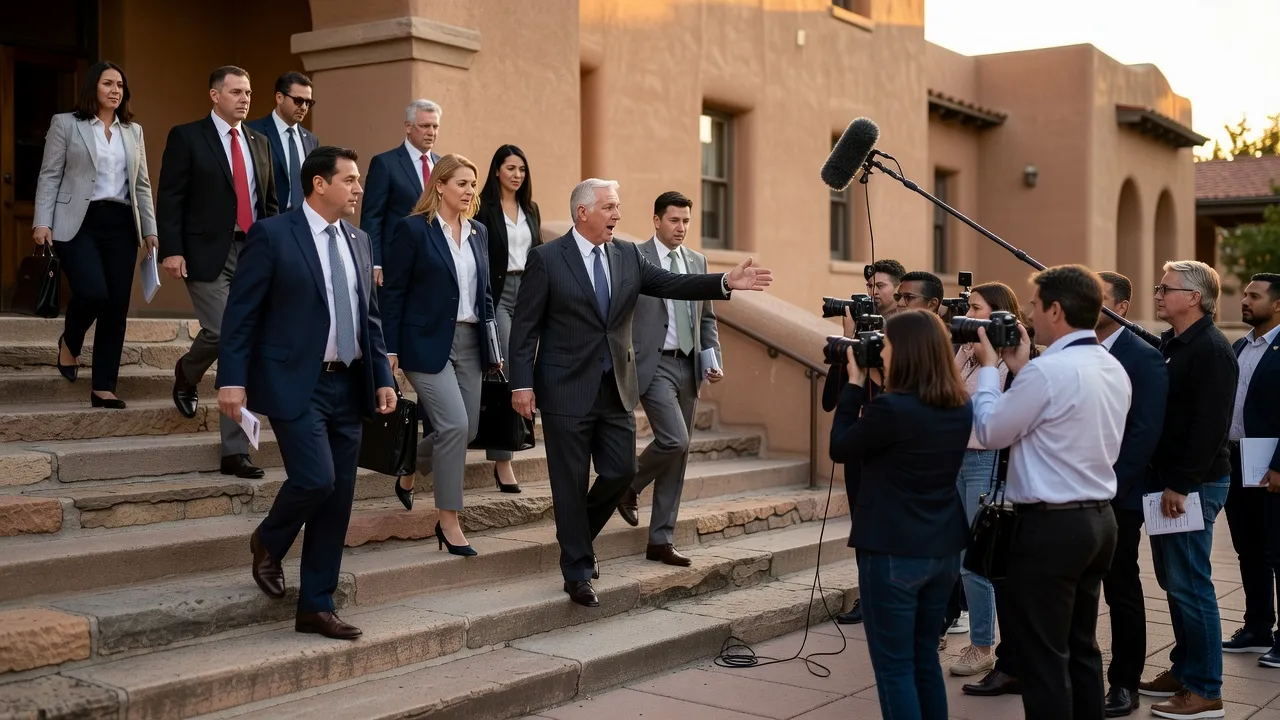
Athens, October 22, 2026. The Greek press, both economic and general, reports on the decision of the New Mexico judge, emphasizing its judicial construction. Naftemporiki indicates that a state court imposed a $25 billion penalty on Meta on Wednesday, in a data protection case stemming from the Cambridge Analytica scandal, "a matter that dates back nearly a decade." The newspaper specifies that the sanction, known through a judicial document, follows the verdict of a Santa Fe jury in September, according to which the group had deceived the state's residents about data collection and protection, as well as how it prevents the spread of harmful content.
The daily details the mechanism: the jurors retained more than 43 million violations of the state's law on unfair practices, each liable to a civil penalty of up to $5,000. The initially set amount, $219.5 billion, was finally reduced to $25 billion. Naftemporiki extensively quotes the judge, who mentions the "extremely high" number of deliberate violations, their duration and repetition, the involvement of high-ranking Facebook executives, and the "clearly intentional and systematic" nature of the false statements.
To Vima headlines with a "bell" of $25 billion that falls on Meta. It presents Cambridge Analytica as the British political consulting firm linked to Donald Trump's 2016 campaign, which had collected millions of users' data without consent. Judge Francis Mathew is quoted: Meta's shortcomings had been at the "heart of its essential business practices" for years. To Vima recalls that the state's attorney general had seized the justice system in 2021, after revelations about Cambridge Analytica's access to up to 87 million users' data via a third-party application.
The newspaper also reiterates the prosecution's thesis: Meta would have known that third parties had broad access to personal information and tolerated harmful content when it served its financial interests. It notes that on September 25, the jurors found 26 of the company's and its management's 29 statements on these issues to be misleading. According to To Vima, a Meta spokesperson did not immediately respond to a request for comment.
The two titles treat the case as a US state judgment, without incorporating it into the European debate on platform regulation, and do not mention either the appeal announced by the group or the 15% annual interests.







