Common ground and differences in coverage across the media analysed.
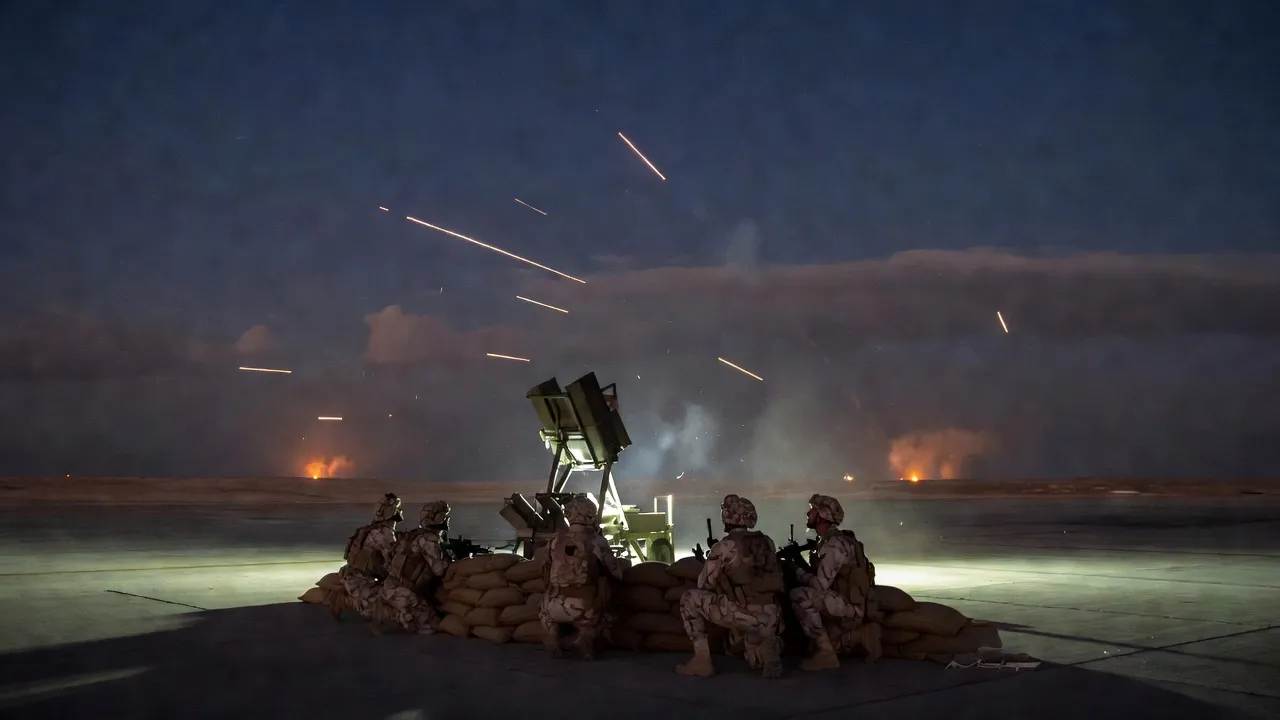
After an Iranian missile attack on a US military base in Jordan, CENTCOM launched a massive wave of strikes against dozens of Islamic Revolutionary Guard Corps (IRGC) targets in Iran, including command centers, missile sites, drones, and coastal defense systems.
Joint US-Saudi airstrikes targeted pro-Iranian militias (Hashd al-Shaabi/PMF) across multiple Iraqi provinces for the first time publicly acknowledged, killing at least 20 and wounding 32 according to the PMF themselves.
Jordan claims to have intercepted part of the Iranian ballistic missiles targeting its territory and Muwaffaq Salti air base.
Riyadh and Washington present the joint strikes in Iraq as legitimate self-defense (UN Article 51) following drone attacks on Saudi oil installations, while other capitals view them as a dangerous escalation attributed to Washington.
Coverage aligned with this reading
The official US narrative (massive and effective strikes) and Iranian narrative (resilience, limited damage) are relayed as-is by some media outlets, while Chinese satellite analysis and Russian press challenge the reliability of both official accounts.
Coverage aligned with this reading
Some countries emphasize market resilience or continuation of energy agreements despite the conflict, while others warn primarily of the risk of broader regional escalation and human losses.
This grouping describes the publications analysed, not the position of these countries’ populations or of their governments.
What the coverage of each country leaves aside, while others put it forward.
France
India
China
Preview: 3 of 12 media perspectives. Syntheses of the media analysed — not direct quotations. Method & limitations
Moscow reads US military escalation in the Middle East as evidence of a growing diplomatic isolation for Washington, with no clear political resolution in sight.
3 sources · View sources
Washington asserts the resumption of strikes: the Trump administration claims the "massive wave" against Iran and joint strikes with Saudi Arabia in Iraq as a legitimate response to the Iranian missile attack in Jordan.
5 sources · View sources
Israel assesses the strategic gains from the latest wave of American strikes against Iran, while monitoring persisting tensions between Netanyahu and Trump over Lebanon and Syria.
3 sources · View sources
DOMINANT ANGLE
Moscow reads US military escalation in the Middle East as evidence of a growing diplomatic isolation for Washington, with no clear political resolution in sight.
ANALYSIS
Moscow, July 30, 2026.
DOMINANT ANGLE
Washington asserts the resumption of strikes: the Trump administration claims the "massive wave" against Iran and joint strikes with Saudi Arabia in Iraq as a legitimate response to the Iranian missile attack in Jordan.
ANALYSIS
Washington, July 30, 2026.
DOMINANT ANGLE
Israel assesses the strategic gains from the latest wave of American strikes against Iran, while monitoring persisting tensions between Netanyahu and Trump over Lebanon and Syria.
ANALYSIS
Jerusalem, July 30, 2026.
DOMINANT ANGLE
Riyadh frames its entry into the conflict as self-defense following weeks of drone attacks on oil facilities, pledging a decisive response against Iranian-backed militias.
ANALYSIS
Riyadh, July 30, 2026.
DOMINANT ANGLE
Doha activates its mediation diplomacy amid regional escalation, condemning Iran's attack on Jordan while pushing for freedom of navigation through the Strait of Hormuz.
ANALYSIS
Doha, July 30, 2026.
DOMINANT ANGLE
Beijing questions the extent of American strikes on Iran and calls for de-escalation while closely monitoring risks to its energy supplies through the Strait of Hormuz.
ANALYSIS
Beijing, July 30, 2026.
DOMINANT ANGLE
London reads the escalation as the trap Riyadh fears, pressured to choose sides after five months of inconclusive US-Iran conflict.
ANALYSIS
London, July 30, 2026.
DOMINANT ANGLE
Paris reads the triangular dynamics of Washington-Riyadh-Tehran strikes while raising its voice against Iran following the assault on two French diplomats in mid-July.
ANALYSIS
Paris, July 30, 2026.
DOMINANT ANGLE
Canberra assesses the scope of an escalation that shatters any hope of swift de-escalation, between American strikes in Iran and joint US-Saudi operations in Iraq.
ANALYSIS
Canberra, July 30, 2026.
DOMINANT ANGLE
New Delhi weighs the energy and financial risks of Iran escalation, while noting unexpected market resilience.
ANALYSIS
New Delhi, July 30, 2026.
DOMINANT ANGLE
Ankara locks in its energy position in Iraq even as U.S.-Saudi strikes against Iranian-aligned militias reignite regional warfare, compartmentalizing its economic interests from neighboring military escalation.
ANALYSIS
Ankara, July 30, 2026.
DOMINANT ANGLE
Islamabad denounces the expansion of a war threatening to ignite the entire Muslim world, caught between US strikes on Iran and a joint Saudi raid in Iraq
ANALYSIS
Islamabad, July 30, 2026.
Explore every perspective on this subject across 12 countries.
Compare viewpoints and see where they diverge.
published on
countries
sources
articles
gap
On July 30, 2026, the United States launched a fresh wave of strikes against dozens of Iranian Revolutionary Guard targets, in retaliation for Iranian ballistic missile fire at the American Muwaffaq Salti base in Jordan, five of which were intercepted by Jordan's military. The same day, US and Saudi forces carried out their first joint strikes in Iraq against the Popular Mobilization Forces (PMF), pro-Iranian militias, killing at least 20 and wounding 32 according to the PMF. Brent crude jumped more than 8% to top $90 a barrel.
Measured with the previous method (distance between texts), on a different scale.










