Explore every perspective on this subject across 14 countries.
Compare viewpoints and see where they diverge.
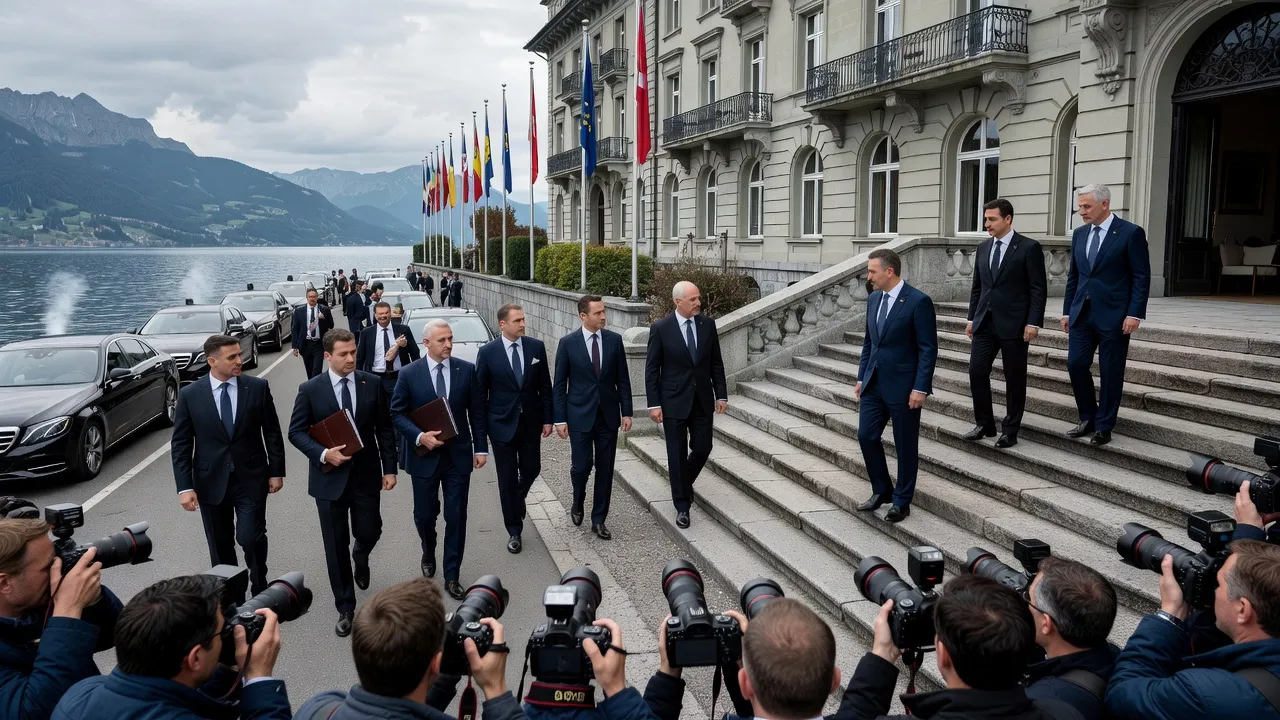
Meeting at the Bürgenstock complex near Lake Lucerne, the American and Iranian delegations concluded a fourteen-point memorandum of understanding accompanied by a sixty-day roadmap toward a final agreement. Qatar and Pakistan acted as official co-mediators and issued a joint statement describing a "positive and constructive" atmosphere. The process was disrupted when the Iranian delegation walked out after a social-media post by Donald Trump deemed threatening, before talks resumed through the mediators.
This first formal de-escalation framework, known as the Islamabad accord, comes amid a conflict open since 28 February 2026, marked by military strikes and a naval blockade. The Strait of Hormuz, through which 20% of the world's hydrocarbon supplies normally pass, was a central point of friction: Tehran announced its closure while U.S. Central Command stated that commercial traffic was continuing normally. The conclusion of the first round coincided with a fall in crude oil prices.
Several points remain disputed. The nuclear file was not addressed in substance, with Iran conditioning that discussion on the prior implementation of several provisions of the memorandum, notably a ceasefire in Lebanon — a requirement rejected by the United States and Israel. The release of frozen Iranian assets and the oil waivers are presented by some as concrete gains, by others as conditional leverage not yet granted.
The parties also diverge on the overall assessment: some hail a historic breakthrough, others stress structural fragilities and unmet conditions. The sixty-day roadmap remains contingent on the parties' ability to disentangle these intertwined files.
published on
countries
sources
articles
gap







