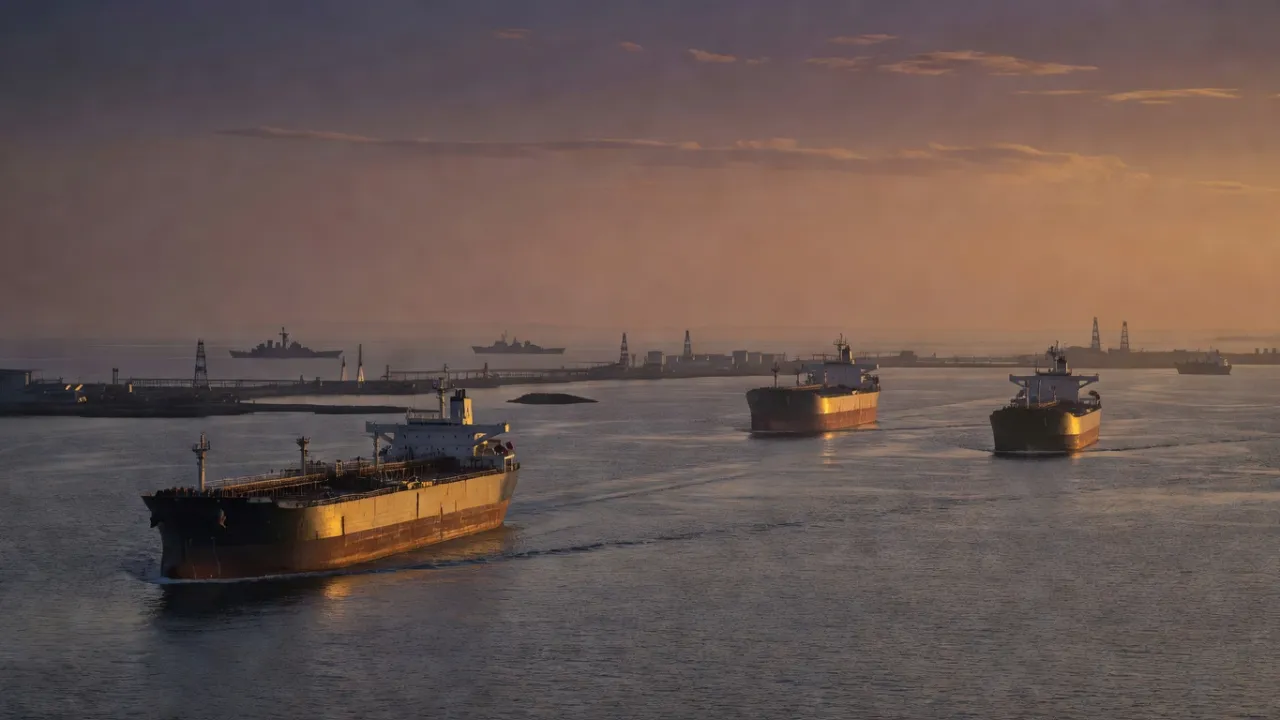
Toward a deal to end the U.S.-Iran war
Context
On 24 May 2026, Donald Trump announced that a framework agreement with Iran, intended to end roughly 86 days of war, was "largely negotiated". The text remains unsigned: several disputed points, notably the precise wording, are still to be settled between the two sides. The central gain put forward is the reopening of the Strait of Hormuz, a passage for about one fifth of the world's oil and liquefied natural gas, whose closure weighs simultaneously on Western markets, Gulf economies and Asian importers.
The conflict broke out in late February 2026, after US-Israeli strikes in which Iran's supreme leader was killed, plunging the region into its gravest crisis in decades. The framework agreement marks a first step toward de-escalation. Its architecture reflects mutual concessions as much as friction: Washington has softened its initial demands on enrichment and pushed the nuclear file to a later phase, estimated at 30-60 days, while Tehran maintains its stance on sovereignty over the strait.
Pakistani mediation, backed by consultations with Gulf states, is credited by the parties with bringing positions closer. The settlement of Iran's nuclear programme, deliberately deferred, remains the major unknown for any lasting deal.
Several uncertainties persist. The postponement of the nuclear component is presented by some actors as the central unresolved obstacle, while others favour the energy angle. The reliability of the process is itself debated: Saturday's announcement was followed by a call "not to rush". Finally, internal fragmentation in the United States, between an executive eager to restore oil flows and senators who deem the deal insufficient, remains an uncertainty for the finalisation of the text.
What the comparison reveals
What everyone says
- Donald Trump announced on May 24, 2026, that a framework agreement with Iran to end approximately 86 days of war is 'substantially negotiated,' including the reopening of the Strait of Hormuz.
- The agreement has not yet been signed at the time of the announcement: disputed points, particularly regarding precise wording, remain unresolved between the two parties.
- The reopening of the Strait of Hormuz constitutes the central gain highlighted, with direct repercussions on energy prices and global supply chains.
Where it breaks apart
- Reliability of Trump's statements — British and Canadian press emphasize Trump's reversal — 'substantially negotiated' on Saturday, then 'do not rush' the following day — as a signal of structural fragility. US coverage treats these oscillations as normal negotiating tactics.
- Weight of the nuclear issue — The United Kingdom, Singapore, and India treat the nuclear deadlock as the central and unresolved obstacle to any durable agreement. Australia and Qatar prioritize the energy angle and minimize the nuclear dimension in their editorial treatment.
- Role of Israel in the agreement — Singapore explicitly develops Netanyahu's position — dismantling of nuclear facilities as a sine qua non condition — and his exchange with Trump. Qatar almost entirely omits Israeli positions and conditions from its coverage.
Explore every perspective on this subject across 7 countries.
Compare viewpoints and see where they diverge.






