Common ground and differences in coverage across the media analysed.
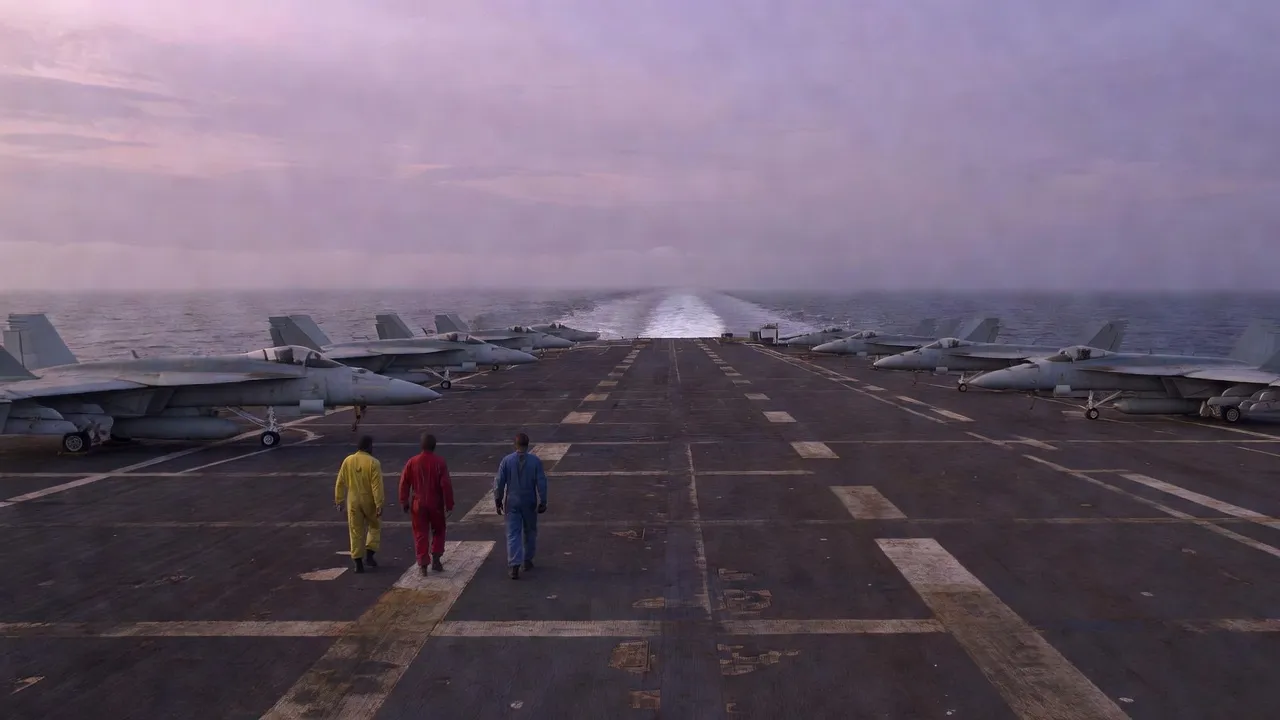
The USS Abraham Lincoln carrier, deployed from San Diego on November 21, 2025, has exceeded 250 days of uninterrupted deployment, well beyond the usual six-month limit for a carrier strike group.
Donald Trump has explicitly dismissed concerns about the deployment duration, judging the mission as 'not nearly long enough.'
The replacement of the Lincoln by the USS George Washington is confirmed and in the process of being routed to the Gulf.
Perspectives diverge on the credibility given to Donald Trump's and Pete Hegseth's statements denying any degradation in onboard conditions, ranging from adoption of official versions to mobilization of sailor testimony and independent verification tools that contradict them.
Coverage that diverges
Greece and Israel link the prolonged deployment to issues extending beyond the crew's welfare—oil traffic security for the Greek merchant fleet, capacity gaps in the Pacific facing China for Israel—while other perspectives remain focused on onboard living conditions or the political controversy in Washington.
Coverage that diverges
Washington frames the matter as an internal political rift between the White House and Congress, while British and Russian media present it more as a symptom of an American naval apparatus under strain against Iran.
Coverage aligned with this reading
Coverage that diverges
This grouping describes the publications analysed, not the position of these countries’ populations or of their governments.
What the coverage of each country leaves aside, while others put it forward.
France
United Kingdom
Pakistan
Preview: 3 of 7 media perspectives. Syntheses of the media analysed — not direct quotations. Method & limitations
Paris reads a stark contrast between presidential denial and mounting testimonies from sailors' families, reflecting prolonged operational pressure on the US Navy in the Gulf.
6 sources · View sources
Athens gauges the logistical implications of the aircraft carrier crisis against the backdrop of its merchant fleet: the diversion of American replenishment operations toward Diego Garcia underscores the fragility of the shipping lanes traversed by numerous Greek tankers in the Gulf.
3 sources · View sources
Jerusalem assesses the strategic cost of an overstretched U.S. naval posture in the face of Iran, weighing support for continued deterrence against mounting strain on Pacific force commitments.
2 sources · View sources
DOMINANT ANGLE
Paris reads a stark contrast between presidential denial and mounting testimonies from sailors' families, reflecting prolonged operational pressure on the US Navy in the Gulf.
ANALYSIS
Paris, August 16, 2026.
DOMINANT ANGLE
Athens gauges the logistical implications of the aircraft carrier crisis against the backdrop of its merchant fleet: the diversion of American replenishment operations toward Diego Garcia underscores the fragility of the shipping lanes traversed by numerous Greek tankers in the Gulf.
ANALYSIS
Athens, August 15, 2026.
DOMINANT ANGLE
Jerusalem assesses the strategic cost of an overstretched U.S. naval posture in the face of Iran, weighing support for continued deterrence against mounting strain on Pacific force commitments.
ANALYSIS
Jerusalem, August 16, 2026.
DOMINANT ANGLE
Islamabad watches the strain on American naval operations near its Iranian neighbor, reflecting persistent tensions in the Persian Gulf region.
ANALYSIS
Islamabad, August 16, 2026.
DOMINANT ANGLE
Moscow dissects the gap between Washington's narrative of a planned rotation and the actual condition of the USS Abraham Lincoln carrier crew engaged in operations against Iran.
ANALYSIS
Moscow, August 14, 2026.
DOMINANT ANGLE
London deconstructs the presidential narrative through its own fact-checking apparatus: BBC Verify's maritime tracking data and press-gathered testimonies contradict Trump's minimized account of conditions aboard USS Abraham Lincoln.
ANALYSIS
London, August 16, 2026.
DOMINANT ANGLE
Washington grapples with a rare breach between the White House and Congress over the USS Abraham Lincoln's record-long deployment, as Trump dismisses crew welfare concerns and questions arise about naval leadership.
ANALYSIS
Washington, August 16, 2026.
Explore every perspective on this subject across 7 countries.
Compare viewpoints and see where they diverge.
published on
countries
sources
articles
gap
The aircraft carrier USS Abraham Lincoln, departing San Diego on November 21, 2025, with approximately 5,000 sailors and Marines, has surpassed 260 days of continuous deployment in the Gulf, where it was redirected to support U.S. military operations against Iran. U.S. and British media outlets have reported food shortages, sanitation failures, and reports of psychological distress aboard, including alleged attempts to jump overboard. When questioned on Friday, August 14, 2026, Donald Trump dismissed these concerns, calling the deployment duration 'far from sufficient,' and confirmed the ship's replacement by the USS George Washington.
The relief aircraft carrier, USS George Washington, has not yet reached the Gulf: it is expected in Duqm, Oman, around August 22.
USS George Washington, departing Da Nang, Vietnam, is scheduled to replace Lincoln at Duqm, Oman, around August 22.
Pete Hegseth calls reports 'entirely distorted'; Hung Cao acknowledges 'a small number of cases.'
Senators Richard Blumenthal and Ruben Gallego demand accountability from the Pentagon on this deployment.
Once relieved, Abraham Lincoln will leave no U.S. aircraft carriers in the western Pacific, per Haaretz.
Measured with the previous method (distance between texts), on a different scale.