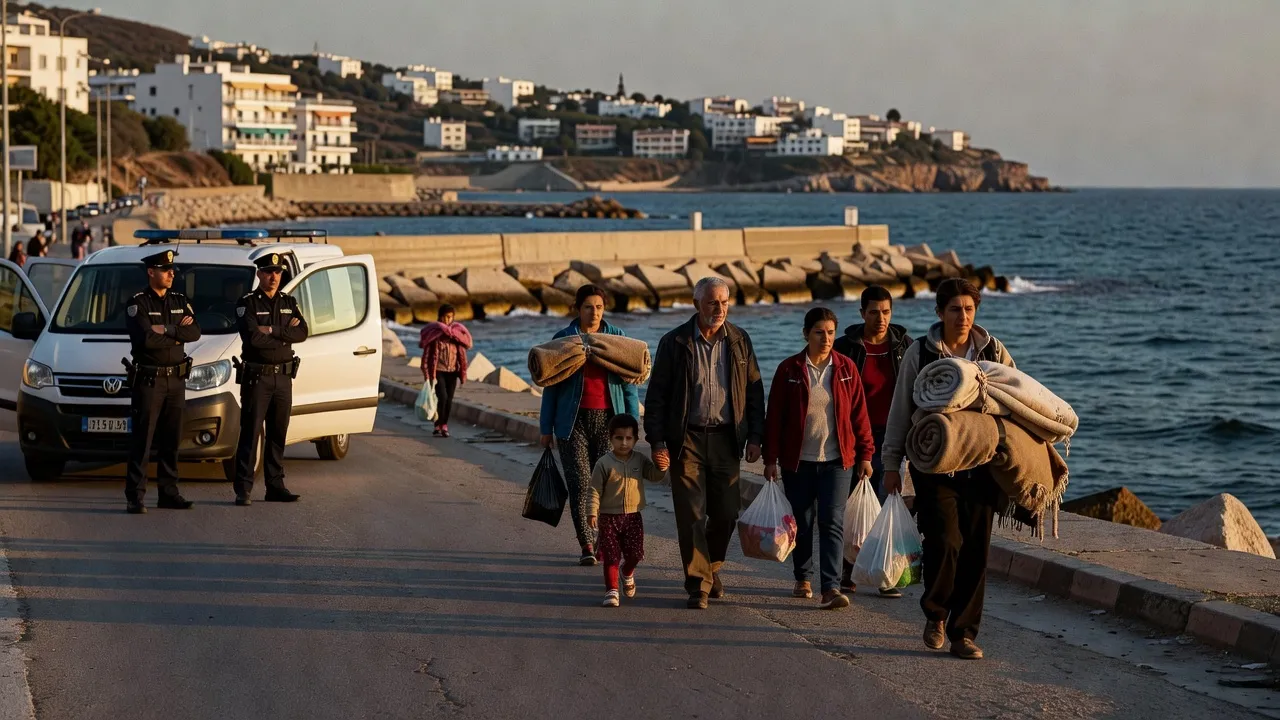
Common ground and differences in coverage across the media analysed.
Around 72,000 people crossed or attempted to cross the border between Morocco and Ceuta on July 30 and 31; the vast majority quickly returned, but between 5,000 and 10,000 migrants remained in the enclave a month later.
A Spanish military vehicle was attacked with stones near Benzú by a group of migrants, resulting in the arrest of twelve Moroccan nationals.
Residents of Ceuta attacked, set fire to, or dismantled migrant camps, including on Trampolín beach, in a climate of increasing tension between locals and the migrant and Muslim population, also marked by the blockade of a Red Cross convoy.
The Spanish government attributes the recent escalation to a politically orchestrated scenario by the Spanish right and far-right; Italian media, on the other hand, frames the crisis as evidence of a structural failure of the Spanish migration model, in contrast to their own.
Italy is considering suspending the Schengen area with Spain starting from August 31, presented by Rome as a technical measure for border control; Madrid views it as arbitrary and an affront to European solidarity.
Some media outlets focus the narrative on migrants trapped in the violence and blocked humanitarian aid, while others emphasize the fear and exhaustion of the Ceuta population itself in the face of the influx and violence.
This grouping describes the publications analysed, not the position of these countries’ populations or of their governments.
What the coverage of each country leaves aside, while others put it forward.
France
Argentina
Preview: 3 of 10 media perspectives. Syntheses of the media analysed — not direct quotations. Method & limitations
Buenos Aires is mainly concerned about the breakdown of coexistence in Ceuta, where patrols of armed local residents and frightened teachers paint a picture of a society on edge, rather than a border or diplomatic crisis with Rabat.
2 sources · View sources
Doha is shedding light on the plight of migrants trapped in Ceuta, amid burned-out camps and blocked humanitarian aid.
2 sources · View sources
Madrid rules: the surge in violence in Ceuta is not merely a social outburst but the result of a scenario orchestrated by the right and the far right, while the Spanish government rules out any official responsibility on the part of Morocco
3 sources · View sources
DOMINANT ANGLE
Buenos Aires is mainly concerned about the breakdown of coexistence in Ceuta, where patrols of armed local residents and frightened teachers paint a picture of a society on edge, rather than a border or diplomatic crisis with Rabat.
ANALYSIS
Buenos Aires, August 29, 2026.
DOMINANT ANGLE
Doha is shedding light on the plight of migrants trapped in Ceuta, amid burned-out camps and blocked humanitarian aid.
ANALYSIS
Doha, August 29, 2026.
DOMINANT ANGLE
Madrid rules: the surge in violence in Ceuta is not merely a social outburst but the result of a scenario orchestrated by the right and the far right, while the Spanish government rules out any official responsibility on the part of Morocco
ANALYSIS
Madrid, August 29, 2026.
DOMINANT ANGLE
France views the Ceuta crisis as a domestic Spanish political showdown, where the left-wing government of Pedro Sánchez and a right mobilized on immigration issues are clashing just a few months ahead of legislative elections.
ANALYSIS
Paris, August 29, 2026.
DOMINANT ANGLE
Lisbon is examining the social divide in Spain that Ceuta has exposed, marked by neighborhood marches, campsite fires, and calls from authorities for unity.
ANALYSIS
Lisbon, August 29, 2026.
DOMINANT ANGLE
Bucharest views the Ceuta crisis primarily as a political test for Pedro Sánchez's government, rather than a humanitarian shock at the EU's southern border.
ANALYSIS
Bucharest, August 29, 2026.
DOMINANT ANGLE
Rome is using the Ceuta crisis as a domestic policy argument, contrasting the Italian government's claimed firmness with Spanish tensions and defending the suspension of Schengen as a technical rather than hostile measure towards Madrid.
ANALYSIS
Rome, August 29, 2026.
DOMINANT ANGLE
Berlin views the Ceuta crisis as a test of the rule of law in Spain in the face of violence from neighboring residents, rather than simply a border control issue.
ANALYSIS
Berlin, August 29, 2026.
DOMINANT ANGLE
Brasília views the unrest in Ceuta as a social fracture in Spain, where local residents are taking matters into their own hands by dismantling migrant camps while the government is slow to respond.
ANALYSIS
Brazil's capital, Brasília, August 29, 2026.
DOMINANT ANGLE
Helsinki describes a Ceuta where fear has shifted: the Finnish press notes the attempted lynchings of migrants by locals and the assaults on journalists, more so than the diplomatic standoff between Madrid and Rabat.
ANALYSIS
Helsinki, August 29, 2026.
Explore every perspective on this subject across 10 countries.
Compare viewpoints and see where they diverge.
published on
countries
sources
articles
gap
A month after approximately 72,000 people from Morocco crossed the border into Ceuta on July 30 and 31, the Spanish enclave has seen a surge in violence since August 26. Groups of local residents have attacked migrants, dismantled camps on Trampolín beach, and set tents on fire; police have fired rubber bullets. On the night of August 26-27, a military vehicle was pelted with stones by a group of migrants in Benzú, injuring soldiers, and twelve Moroccan nationals were arrested.
The number of migrants still present in Ceuta remains uncertain: around 5,000 according to Madrid, up to 10,000 according to local authorities.
The Defense Minister claims the CNI had warned Madrid the day before the influx, which the Interior Ministry denies.
The Health Minister accuses the People's Party and Vox of an "orchestrated scenario" behind the violence.
Approximately 1,500 unaccompanied minors have been identified in Ceuta, with around 500 considered especially vulnerable.
A national solidarity rally is scheduled to take place on September 2 in several Spanish cities.
From 82 (Portugal) to 96 (Germany). 5 countries give none. · see the detail
More divergent than 82% of recent comparable stories (reference: 91 recent stories measured with the same method).