
Common ground and differences in coverage across the media analysed.
A second wave of US strikes hit Iran on June 10, followed by Iranian reprisals against bases in Kuwait, Bahrain and Jordan.
April's truce, already fragile, is on the brink of collapse after a US Apache helicopter went down near Hormuz.
The war carries a tangible global economic cost: surging oil, ocean freight and US inflation.
Tehran and its allies call it a deliberate attack on civilian infrastructure; Washington frames it as a targeted operation against radar and air defenses.
Coverage aligned with this reading
US and Israeli media blame an Iran that is 'playing for time,' while Moscow, Tehran and parts of the Arab press point to unprovoked US-Israeli aggression.
Coverage aligned with this reading
India, South Korea and Pakistan foreground the material toll — stranded sailors, trapped ships, inflation — rather than the ideological showdown emphasized elsewhere.
Coverage aligned with this reading
Coverage that diverges
This grouping describes the publications analysed, not the position of these countries’ populations or of their governments.
What the coverage of each country leaves aside, while others put it forward.
United States
Iran
Israel
Preview: 3 of 9 media perspectives. Syntheses of the media analysed — not direct quotations. Method & limitations
Washington swings between ultimatum and the deal it swears is 'fully negotiated'
3 sources · View sources
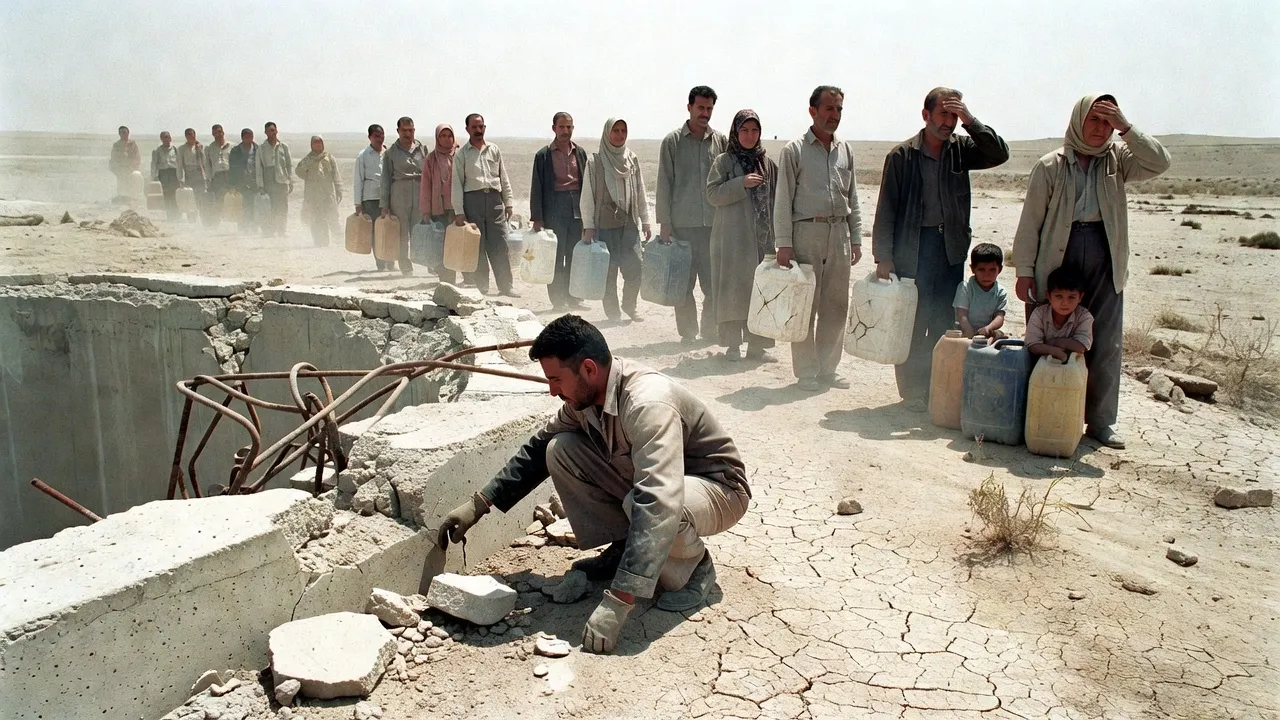
Tehran condemns the bombing of its water reservoirs as 'flagrant terrorism'
3 sources · View sources
Jerusalem reads the sequence as proof that military pressure, not diplomacy, makes Iran bend
3 sources · View sources
DOMINANT ANGLE
Washington swings between ultimatum and the deal it swears is 'fully negotiated'
ANALYSIS
Washington spent June 10 saying one thing and its opposite.
DOMINANT ANGLE
Tehran condemns the bombing of its water reservoirs as 'flagrant terrorism'
ANALYSIS
Tehran puts at the center everything Washington leaves out: water.
DOMINANT ANGLE
Jerusalem reads the sequence as proof that military pressure, not diplomacy, makes Iran bend
ANALYSIS
Jerusalem watches the escalation with the satisfaction of those who have argued for toughness for months.
DOMINANT ANGLE
Moscow calls the IAEA resolution a 'farce' and deems the civilian strikes 'categorically unacceptable'
ANALYSIS
Moscow positions itself as Tehran's advocate on two fronts at once.
DOMINANT ANGLE
Doha condemns Iran's strikes on its Gulf neighbors and pushes for immediate de-escalation
ANALYSIS
Doha finds itself exactly where it hates to be: in the middle.
DOMINANT ANGLE
New Delhi measures the war by its stranded sailors and its soaring prices
ANALYSIS
New Delhi views the Gulf through the eyes of a trading power held hostage by a war that isn't its own.
DOMINANT ANGLE
Seoul scans the Strait of Hormuz, where twenty-four of its ships remain trapped
ANALYSIS
Seoul watches the war through the porthole of its tankers.
DOMINANT ANGLE
Islamabad savors its mediator role while Washington wrestles with its 'Trumpflation'
ANALYSIS
Islamabad sees itself as the discreet but indispensable pivot.
DOMINANT ANGLE
Ottawa watches a 'boxed-in and frustrated' president whose war drives up gas and inflation
ANALYSIS
Ottawa reads the sequence as the portrait of a president caught in his own trap.
Explore every perspective on this subject across 9 countries.
Compare viewpoints and see where they diverge.
published on
countries
sources
articles
gap
A second wave of US strikes hit Iran on 10 June, followed by Iranian retaliation against US bases in Kuwait, Bahrain and Jordan. The episode came after an Apache helicopter went down near the Strait of Hormuz, which had already strained the truce reached in April under Pakistani mediation. Among the targets were water reservoirs in Hormozgan province, whose destruction left more than 20,000 residents without water during intense heat.
This sequence fits within an unstable ceasefire punctuated by escalations since 8 April. In parallel, the IAEA adopted a resolution by 21 votes demanding access to Iranian nuclear sites, and Washington launched a new round of sanctions dubbed "Economic Fury."
The Strait of Hormuz, through which oil, LNG and fertilizer flow, remains the crux of the crisis. Its partial blockage doubled containerized maritime freight, pushed up oil prices and drove US inflation to a three-year high (4.2% in May), with gasoline above four dollars. Twenty-four South Korean ships remain trapped in the strait and sixteen tankers have been spotted off Oman with their transponders switched off.
The nature of the strikes remains disputed: some actors see a deliberate attack on civilian infrastructure, while Washington describes a targeted operation against radars and air defenses. Responsibility for the breakdown of the truce is likewise the subject of crossed accusations, with each side blaming the other for the escalation.
Measured with the previous method (distance between texts), on a different scale.