Common ground and differences in coverage across the media analysed.
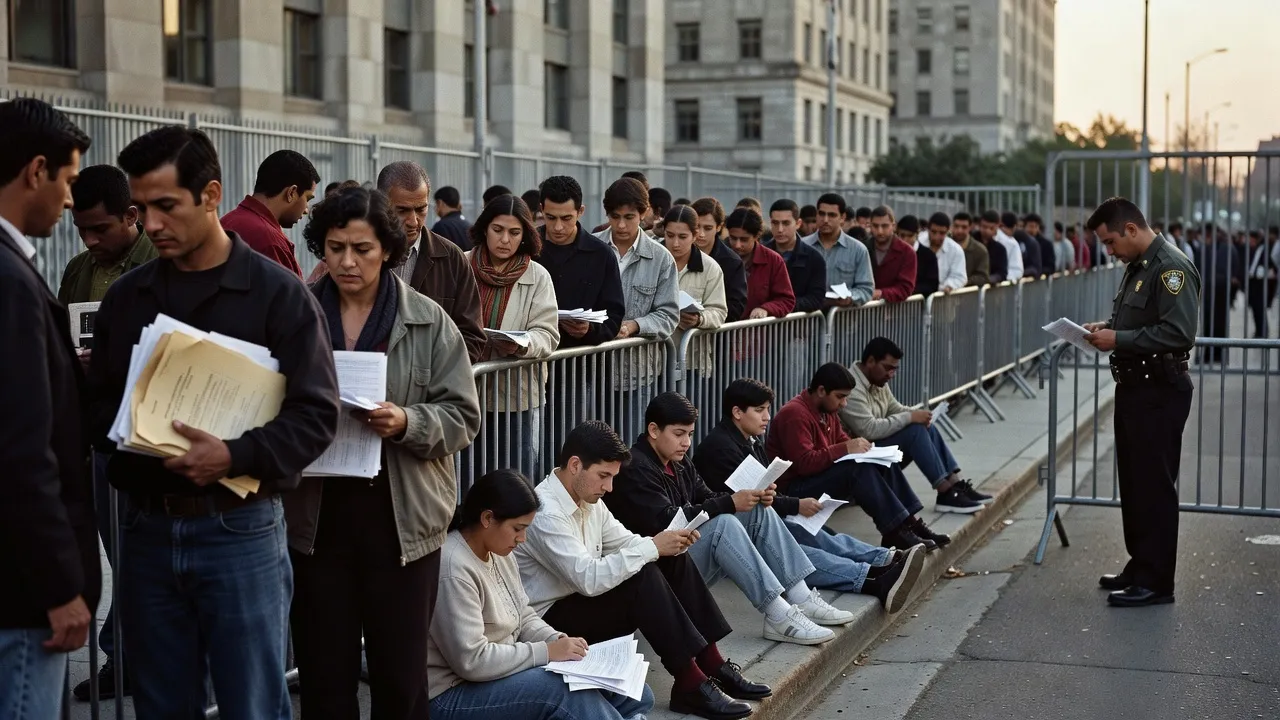
The US State Department is preparing to revoke up to 200,000 tourist and business visas (B1/B2) issued between 2016 and 2026 to individuals who later filed asylum applications, which would be the largest visa revocation in US history.
State Department spokesperson Tommy Pigott confirms coordination with the Department of Homeland Security (DHS) to identify these cases, without providing a definitive number, describing an ongoing process on a rolling basis.
Visa revocation does not automatically lead to deportation: ongoing asylum procedures remain open or are re-categorized during review.
Washington defends the measure as closing a migration loophole related to asylum fraud, while Colombia and Mexico frame it in the context of politically motivated revocations targeting their own nationals, suggesting a broader use of revocation power than the official reason alone.
Coverage aligned with this reading
Thailand contrasts its own case-by-case revocation doctrine with Washington's collective approach, which presents the scope of the measure as a proportionate response to a systemic fraud phenomenon.
Coverage aligned with this reading
Coverage that diverges
India presents a reassuring perspective by emphasizing the absence of automatic expulsion and the maintenance of ongoing asylum cases, while Nigeria highlights that its nationals are explicitly among those affected, underscoring the direct risk to its diaspora.
This grouping describes the publications analysed, not the position of these countries’ populations or of their governments.
What the coverage of each country leaves aside, while others put it forward.
Canada
Mexico
Nigeria
Preview: 3 of 11 media perspectives. Syntheses of the media analysed — not direct quotations. Method & limitations
Buenos Aires views the measure as an administrative crackdown targeting the misuse of tourist visas for asylum claims, rather than an isolated symbolic gesture.
2 sources · View sources
Ottawa is assessing the impact of a US administrative measure that could affect up to 200,000 people, without clarity from the US government on how many will actually be deported.
2 sources · View sources
Bogotá links the massive revocation of asylum visas announced by Washington to the withdrawal, the same week, of Colombian activist Viviana Marín's visa.
3 sources · View sources
DOMINANT ANGLE
Buenos Aires views the measure as an administrative crackdown targeting the misuse of tourist visas for asylum claims, rather than an isolated symbolic gesture.
ANALYSIS
Buenos Aires, August 26, 2026.
DOMINANT ANGLE
Ottawa is assessing the impact of a US administrative measure that could affect up to 200,000 people, without clarity from the US government on how many will actually be deported.
ANALYSIS
Ottawa, August 26, 2026.
DOMINANT ANGLE
Bogotá links the massive revocation of asylum visas announced by Washington to the withdrawal, the same week, of Colombian activist Viviana Marín's visa.
ANALYSIS
In Colombia, the announcement from the US regarding the potential revocation of up to 200,000 tourist and business visas held by asylum seekers is being viewed in light of a local incident that occurred the same week: the withdrawal of the US visa of Bogotá activist Viviana Marín, secretary of the Communist Youth (Juco) in Bogotá.
DOMINANT ANGLE
Quito is assessing the bureaucratic scope of a US measure that could potentially affect Ecuadorian nationals holding B1/B2 visas
ANALYSIS
Quito, August 26, 2026.
DOMINANT ANGLE
Accra is assessing the impact of a US measure that redefines the migration status of thousands of B1/B2 visa holders, not directly targeting Ghanaians but setting a precedent for widespread application.
ANALYSIS
Accra, August 26, 2026.
DOMINANT ANGLE
New Delhi recognizes the actual scope of the measure: losing a B1/B2 visa does not automatically result in expulsion, as it depends on each individual's asylum status.
ANALYSIS
New Delhi, August 26, 2026.
DOMINANT ANGLE
Mexico City is separating the migration measure announced in Washington from a phenomenon that is already a national issue: the revocation of visas for Mexican political figures, from Andy López Beltrán to the governor of Baja California, which is now worrying the country's banks.
ANALYSIS
Mexico, August 26, 2026.
DOMINANT ANGLE
Nigeria is assessing the risk to its diaspora in this US migration crackdown, which specifically targets Nigerian nationals holding B1/B2 visas who have filed asylum applications in the United States.
ANALYSIS
Abuja, August 26, 2026.
DOMINANT ANGLE
Singapore is deciphering the gap between the spectacular announcement from Washington and its actual legal effects, with the revocation not automatically leading to expulsions.
ANALYSIS
Singapore, August 26, 2026.
DOMINANT ANGLE
Bangkok has its own visa revocation doctrine, applied on a case-by-case basis, which differs from the massive crackdown the US is preparing to implement on approximately 200,000 holders of B-1 and B-2 visas.
ANALYSIS
Bangkok, August 26, 2026.
DOMINANT ANGLE
The United States government is carrying out an unprecedented administrative purge, framed as a response to what it sees as abusive asylum requests rather than a punitive measure against the migrants themselves.
ANALYSIS
The United States government is preparing to revoke up to 200,000 tourist and business visas (B1/B2) issued to foreigners between 2016 and 2026 who later applied for asylum in the US, the State Department confirmed.
Explore every perspective on this subject across 11 countries.
Compare viewpoints and see where they diverge.
published on
countries
sources
articles
gap
The Trump administration is preparing to revoke up to 200,000 tourist and business visas (B1/B2) issued between 2016 and 2026 to foreigners who later filed asylum applications in the United States, according to State Department documents obtained by the Associated Press and revealed on August 24, 2026, which would be the largest mass visa revocation in American history. The State Department is coordinating the operation with the Department of Homeland Security to identify the individuals concerned. The measure affects nationals of Mexico, Colombia, Nigeria, Ecuador, Ghana, India, and Thailand, among others, without an automatic expulsion being announced.
The exact number of revocations is not set: the State Department describes an ongoing process, with no timeline or final figure announced.
Tommy Pigott describes a "dynamic" recall process, without announcing a final figure.
Ongoing asylum cases would be reclassified, with loss of visitor status, but no immediate deportation.
The Under Secretary of State Christopher Landau revoked, that same week, the visa of Colombian activist Viviana Marín.
Several Mexican officials, including Andy López Beltrán and the governor of Baja California, have already had their US visa canceled.
Measured with the previous method (distance between texts), on a different scale.