Common ground and differences in coverage across the media analysed.
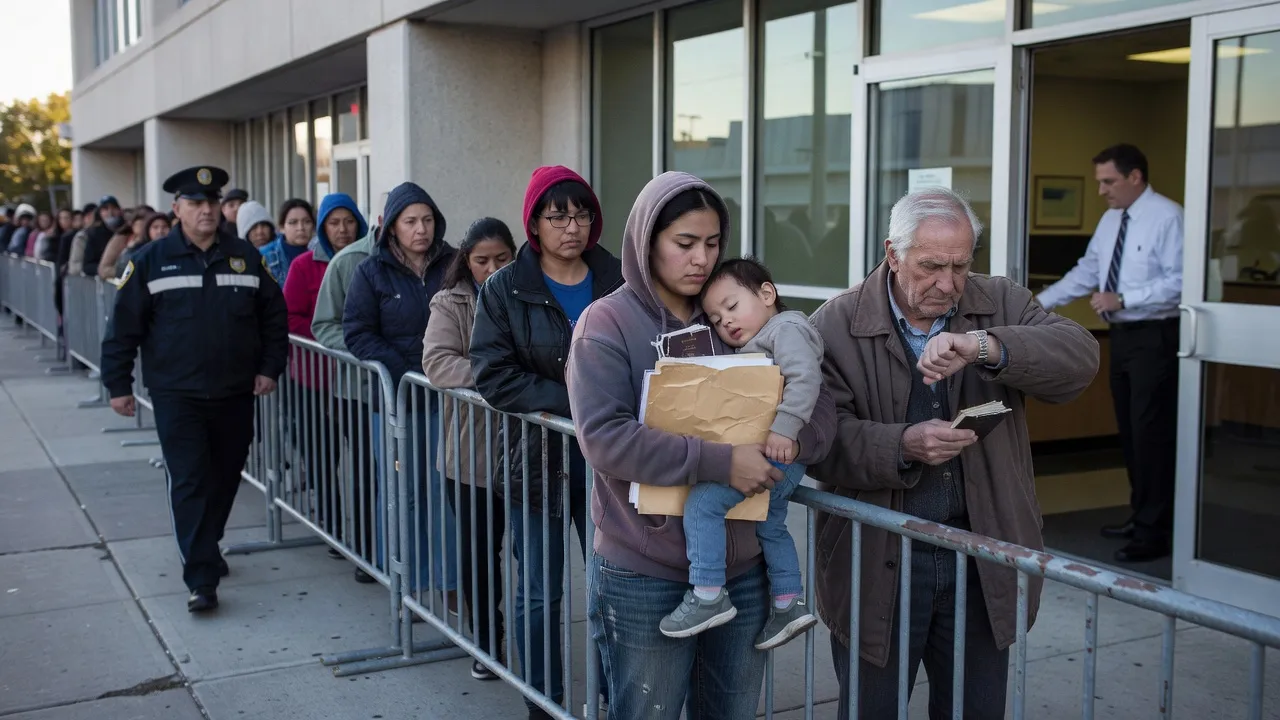
The State Department has suspended, worldwide and without a announced restart date, consular appointments for immigrant visas, citing in-depth training of consular officers on the 'public charge' criterion.
This pause comes after a federal judge (Jeannette Vargas, New York district) ruled, in late August, that the freeze targeting nationals of 75 countries was illegal, finding that Secretary of State Marco Rubio had exceeded his statutory authority.
Washington has also announced its intention to revoke up to 200,000 B1/B2 visas issued between 2016 and 2026 to individuals who have applied for asylum, presented as the largest visa revocation in American history.
Some perspectives frame the pause as a technical adjustment limited to immigrant visas, while others see it as part of a broader migration crackdown criticized by human rights organizations.
Some perspectives explicitly connect the pause to the State Department's judicial setback timeline, while others cite the official reason of consular training without establishing a direct causal link.
Uruguay reports an official and active response from its foreign ministry, shared with Argentina, while most other perspectives do not mention any stance taken by their own government on the measure.
Coverage aligned with this reading
Coverage that diverges
This grouping describes the publications analysed, not the position of these countries’ populations or of their governments.
What the coverage of each country leaves aside, while others put it forward.
France
Mexico
Pakistan
Preview: 3 of 10 media perspectives. Syntheses of the media analysed — not direct quotations. Method & limitations
Buenos Aires views the global pause in meetings as the administrative follow-up to a judicial showdown that began a few days earlier in Washington
2 sources · View sources
Peru, through the voice of its former Foreign Minister Hugo de Zela, clarifies what the suspension actually changes for its citizens: only immigrant visas, not tourism, business, or studies.
2 sources · View sources
Quito carefully distinguishes what the American consular pause actually changes for its nationals: immigrant visas suspended, B1/B2 tourist and business visas maintained, unless there is a distinct threat of revocation for asylum seekers.
2 sources · View sources
DOMINANT ANGLE
Buenos Aires views the global pause in meetings as the administrative follow-up to a judicial showdown that began a few days earlier in Washington
ANALYSIS
Buenos Aires, August 27, 2026.
DOMINANT ANGLE
Peru, through the voice of its former Foreign Minister Hugo de Zela, clarifies what the suspension actually changes for its citizens: only immigrant visas, not tourism, business, or studies.
ANALYSIS
Lima, August 27, 2026.
DOMINANT ANGLE
Quito carefully distinguishes what the American consular pause actually changes for its nationals: immigrant visas suspended, B1/B2 tourist and business visas maintained, unless there is a distinct threat of revocation for asylum seekers.
ANALYSIS
Quito, August 27, 2026.
DOMINANT ANGLE
Mexico City is dissecting the official justification: a pause presented as a simple consular training, but a calendar that coincides with a judicial setback and a wave of visa revocations.
ANALYSIS
Mexico, August 27, 2026.
DOMINANT ANGLE
Caracas is gauging the impact on its citizens, who make up a large number of candidates for family or professional immigration to the United States, already strained by lengthy consulate delays.
ANALYSIS
Caracas, August 27, 2026.
DOMINANT ANGLE
Montevideo is weighing the consequences of a consular pause that directly targets its citizens, who were explicitly named among the 75 countries affected a week earlier by a measure deemed illegal by New York justice.
ANALYSIS
Montevideo, August 27, 2026.
DOMINANT ANGLE
Paris views this pause as a direct consequence of a judicial setback for the US government, coming just five days after a federal judge ruled that the freeze on permanent visas from 75 countries was illegal.
ANALYSIS
Paris, August 27, 2026.
DOMINANT ANGLE
Pakistan's capital is closely following the showdown between the White House and the US federal justice system over immigration, without highlighting any specific impact on Pakistani visa applicants.
ANALYSIS
Islamabad, August 27, 2026.
DOMINANT ANGLE
Dhaka is closely watching the US judicial showdown over immigration, where the "consular formation" rationale barely conceals the full extent of Washington's tightening of migration screws.
ANALYSIS
Dhaka, August 27, 2026.
DOMINANT ANGLE
Bogotá views the immigration visa pause as a procedural adjustment stemming from a judicial setback for the Trump administration, rather than a new targeted migration offensive.
ANALYSIS
Bogotá, August 27, 2026.
Explore every perspective on this subject across 10 countries.
Compare viewpoints and see where they diverge.
published on
countries
sources
articles
gap
The US State Department announced on August 26, 2026, the worldwide suspension of appointments for immigration visas, citing in-depth training of consular officers on the public charge criterion, affecting only permanent residence immigrant visas, while tourist, business, study, and temporary work visas remain unchanged.
No restart date has been set; each applicant must wait for a new time slot communicated individually by their embassy
Jeannette Vargas (New York district) cited a 1965 law prohibiting discrimination by nationality in visa issuance.
The 75 countries include Uruguay, Brazil, Cuba, and Haiti; no European countries are among them.
Chancellor Mario Lubetkin says he is considering the pause, a concern shared with neighboring Argentina.
The suspension was first revealed by the Financial Times, before any official announcement from the State Department.
More divergent than 60% of recent comparable stories (reference: 91 recent stories measured with the same method).