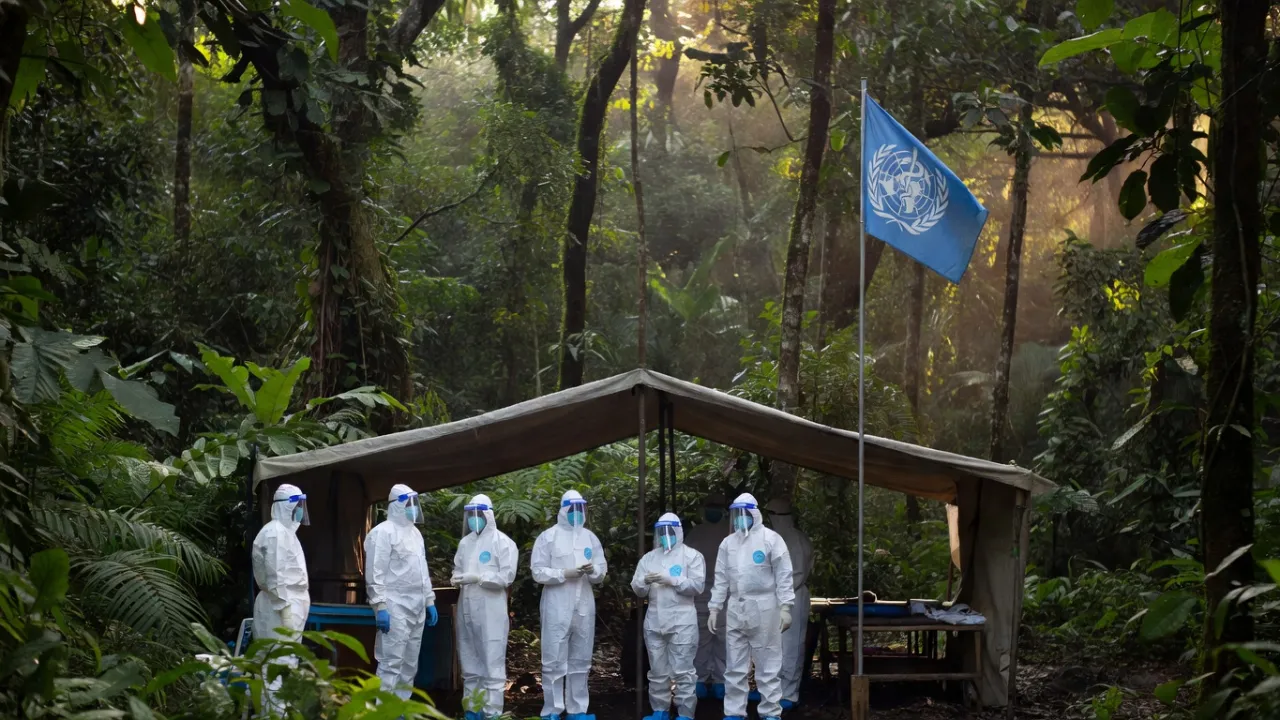
On 17 May 2026, the World Health Organization declared the Ebola outbreak affecting the Democratic Republic of the Congo and Uganda a public health emergency of international concern, its highest level of alert. At the time of the declaration, the toll stood at roughly 88 suspected deaths across more than 300 recorded cases, with the figures rising rapidly.
The strain involved is the Bundibugyo variant, for which no licensed vaccine or approved treatment exists, unlike the Zaire strains responsible for previous outbreaks. Diagnosis was delayed by several weeks: local laboratory tests, calibrated for the Zaire strain, returned false-negative results. The virus crossed an international border and reached Uganda, including Kampala, before containment mechanisms were fully operational.
The crisis unfolds against a backdrop of institutional fragility. Eastern Congo remains crossed by active armed conflict that limits humanitarian access in affected areas such as Ituri and Goma, a town bordering Rwanda. The late detection underscores the vulnerability of peripheral laboratories when faced with rare variants.
Several points remain disputed. Some actors directly link the detection delay to the 2025 American withdrawal from the WHO and cuts to USAID, which they argue weakened field surveillance; others report the American measures without drawing that connection, noting the continued deployment of CDC teams and emergency bilateral funding. The assessment of risk to national populations and the scope of travel restrictions are also read differently depending on countries' geographic proximity to and economic connectivity with Central Africa.