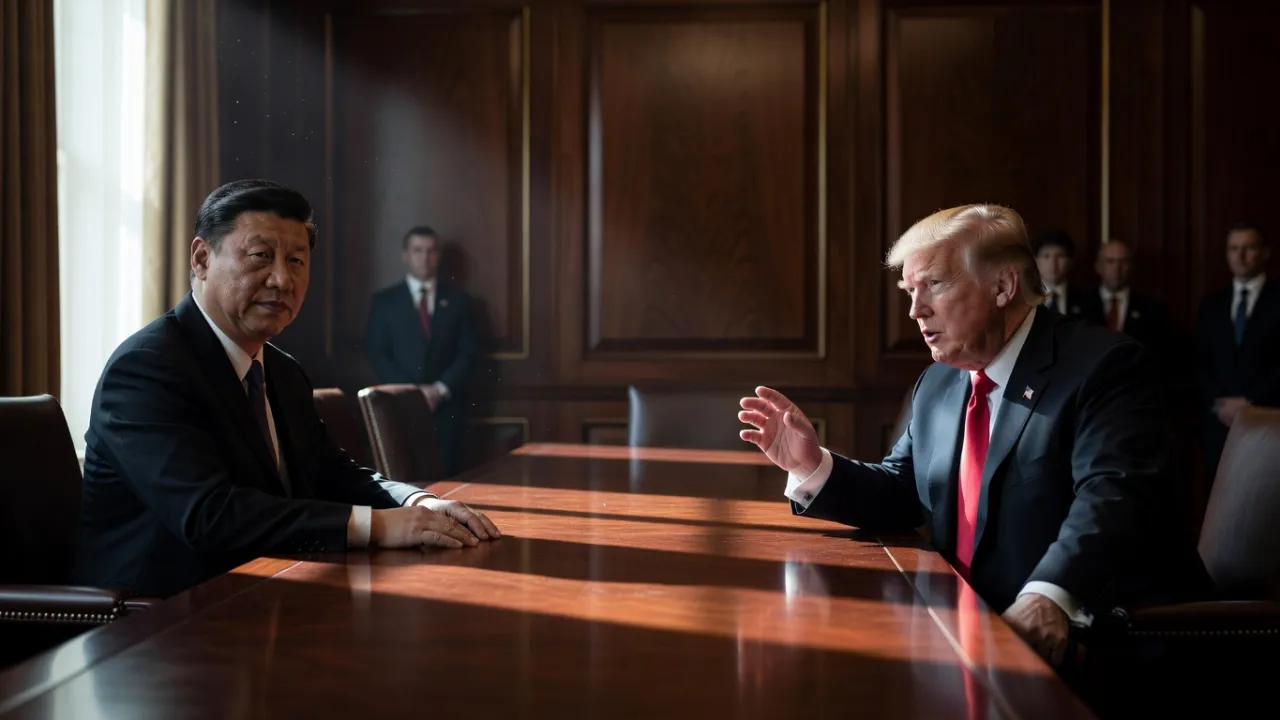
On 14 and 15 May 2026 in Beijing, Chinese President Xi Jinping and US President Donald Trump met for a summit widely recognised as a diplomatic event of global significance. At the centre of the talks were the trade and tariff questions that have shaped relations between the two powers for several years. Regional tensions around the Strait of Hormuz formed a connected issue, through their effect on energy prices and the stability of the region.
The meeting comes during a critical phase of the US-China rivalry, marked by persistent tariff tensions, technological frictions and security stakes in the Indo-Pacific. In the background, the escalation around the Strait of Hormuz — with signals of uranium enrichment near weapons grade and claims of maritime control — gives the summit a reach beyond the bilateral frame alone.
The various actors view the event according to their own interests. Some Western allies watch the implications for their defence alliances and exporting industries. Emerging economies and several Middle Eastern countries assess first and foremost the energy and regional fallout. Other countries, absorbed by domestic concerns, barely covered the event at all.
Several points remain disputed or unevenly covered. The place of Taiwan at the heart of the summit is emphasised by some actors and absent for others. Likewise, a statement attributed to Trump conceding the thesis of an American decline is presented as a major diplomatic fact by part of the observers, while it is passed over in silence or contested elsewhere.